



Ministers with the Ontario government lined up on Friday to declare that an announcement from a Volkswagen subsidiary that it was delaying the opening of an EV battery plant in St. Thomas by two years was, in fact, good news. Great news, even.
“To me, it’s a great news story,” said Vic Fedeli, the minister for Economic Development, citing the fact that PowerCo now has a contract to begin building the facility, supported by at least $10 billion in subsidies from all levels of government, that it hopes will be ready by 2029.
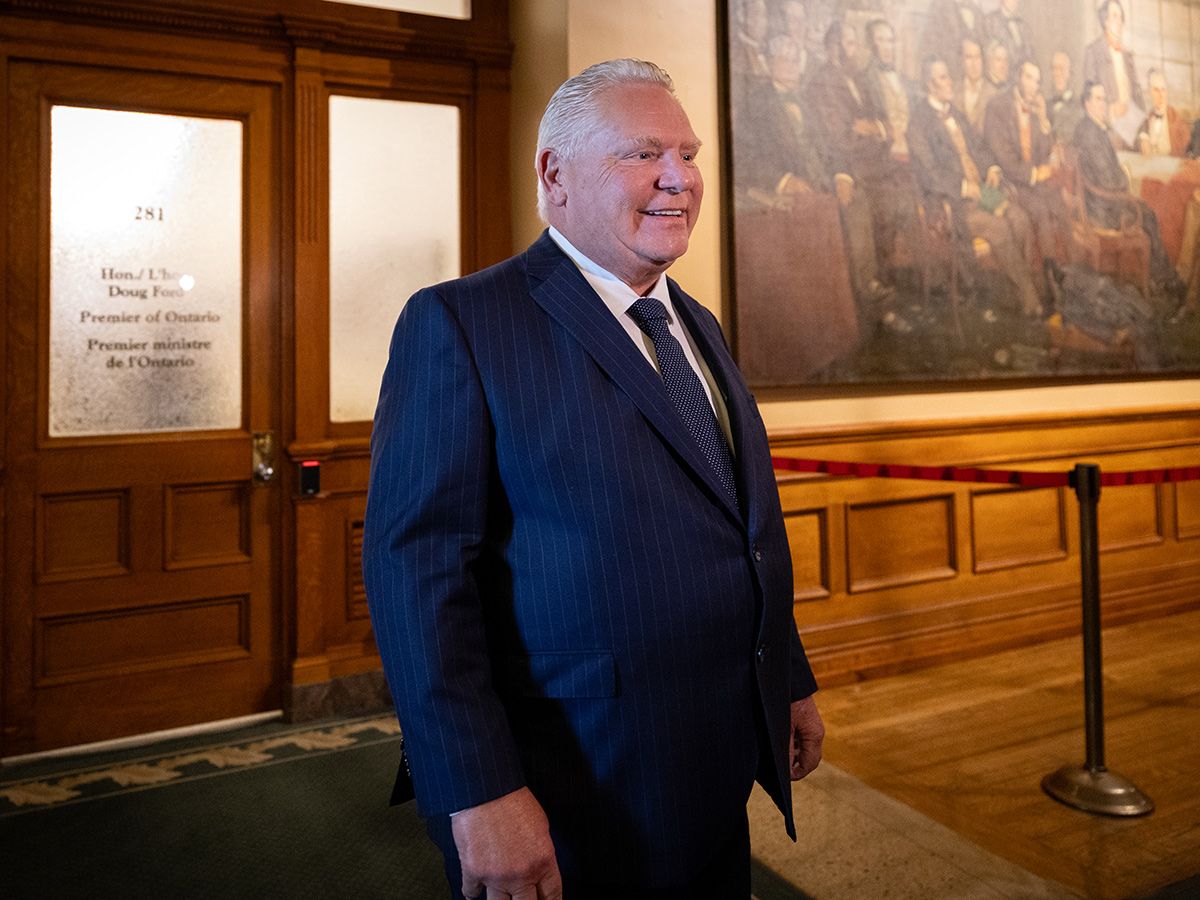
Premier Doug Ford said at Queen’s Park that the delay was a sign of confidence in Ontario’s economy despite uncertain times.
Both men sounded heartened that Volkswagen hadn’t pulled the plug on the project entirely, which given developments elsewhere in the industry was fair enough. General Motors and Honda pulled out of major EV commitments in the province last year, while Stellantis has said it plans to sell an idled Brampton plant after shifting Jeep production to the United States.
Fedeli went on to say that the estimated $400 million that the Ontario government has given to automakers in just the past year is money well spent because it is only handed out when certain milestones regarding hiring or expenditures are met.
Which leads to a question: What would the Vic Fedeli of, say, 2014, have thought of that argument? Fedeli was the finance critic when Tim Hudak’s Progressive Conservatives were in opposition at the time. Hudak told anyone who would listen that corporate subsidies were a mug’s game. He had a whole spiel about it, insisting that “government shouldn’t be in the business of picking winners and losers” and that companies were taking advantage of handouts to make investment decisions that they were going to make anyway. “Let the markets decide” was another Hudak staple.
Hudak was hardly on an island with this argument. A massive government spending review led by economist Don Drummond in 2012, ordered by former Liberal premier Dalton McGuinty, found that business subsidies were often “an inefficient use of public resources” with outcomes that were “vague or difficult to measure.”
Two years later, the provincial auditor-general found that despite having spent more than $1.4 billion on corporate subsidies over a decade, the Ontario government had “no information on whether jobs created or retained are long-lasting,” while noting that the majority of the money went to big business.
The Liberal government of Kathleen Wynne promptly ignored those worries and increased business subsidies significantly, such that they were over $2 billion annually by 2014. The opposition PCs had all kinds of criticism for that, labelling it “crony capitalism” and “corporate welfare” and other such pithy terms.
But once the PCs came to power under Ford, they found they couldn’t get enough of it. An analysis from the Montreal Economic Institute published in July found the Ford government now subsidizes private business by more than $11 billion annually. Public cash goes out the door to corporations in huge chunks: $259 million for General Motors in 2022, $2.5 billion for Honda in 2024, and more than $5 billion to Stellantis-LG Energy Solutions in 2023.
That last investment was for an EV battery plant in Windsor that was later converted to an energy-storage facility when the EV market slumped. (Stellantis also sold its stake to LG.) When that plant, now called NextStar Energy, opened in March, Ford declared that it was “worth every penny” of the subsidy. “If they decide to expand, we’ll put more money into it.”
That last statement is the kind that would give an economist fits. Would LG really need government money for an expansion, or would it expand anyway because it already built the facility and has a local workforce? Instead the premier is offering a corporate handout before the corporation has even asked for it.

The folly of all this can be seen in the Stellantis case in Brampton. Handed billions of dollars from the federal and provincial governments to help it build the Jeep Compass in the Toronto suburb, the automaker first paused those plans and then pivoted to the United States. It now wants to sell the Brampton plant to a military-vehicle producer. Ford and federal Industry Minister Melanie Joly insisted at a press event last week that Stellantis must honour its deal and make a vehicle in Brampton. Joly said Ottawa would otherwise seek to recoup its subsidies.
The governments, in other words, want the automaker to build a car, any car, even if Stellantis has decided there’s no longer an economic case for it. It is exactly the opposite of letting the market decide, which is a curious position for Ford to hold, given that he usually sounds like he loves the market almost as much as his children.
Consider that back in 2014, when the Wynne government announced plans for a $2.5-billion fund to be doled out to business, the PCs said that money could have gone to reducing corporate taxes instead.
One MPP argued that the government needed to improve “core fundamentals” first, instead of handing out corporate welfare. “That’s all you need to attract business,” he said.
It was Vic Fedeli.
sstinson@postmedia.com

