



There have been many great political cartoonists over the past three centuries. Some of the earliest known examples include William Hogarth’s A Rake’s Progress (1732-1734), Benjamin Franklin’s Join, or Die (1754), George Townshend’s The Triumph of Caesar (1757) and James Gillray’s The Plumb-pudding in danger – or – State Epicures taking un Petit Souper (1818). From 19th century political cartoonists like Thomas Nast and George Cruickshank, to modern editorial cartoonists like Michael Ramirez, Rex “Baloo” May and Tom Toles, there has been something for everyone when it comes to poking fun at the political left and right.
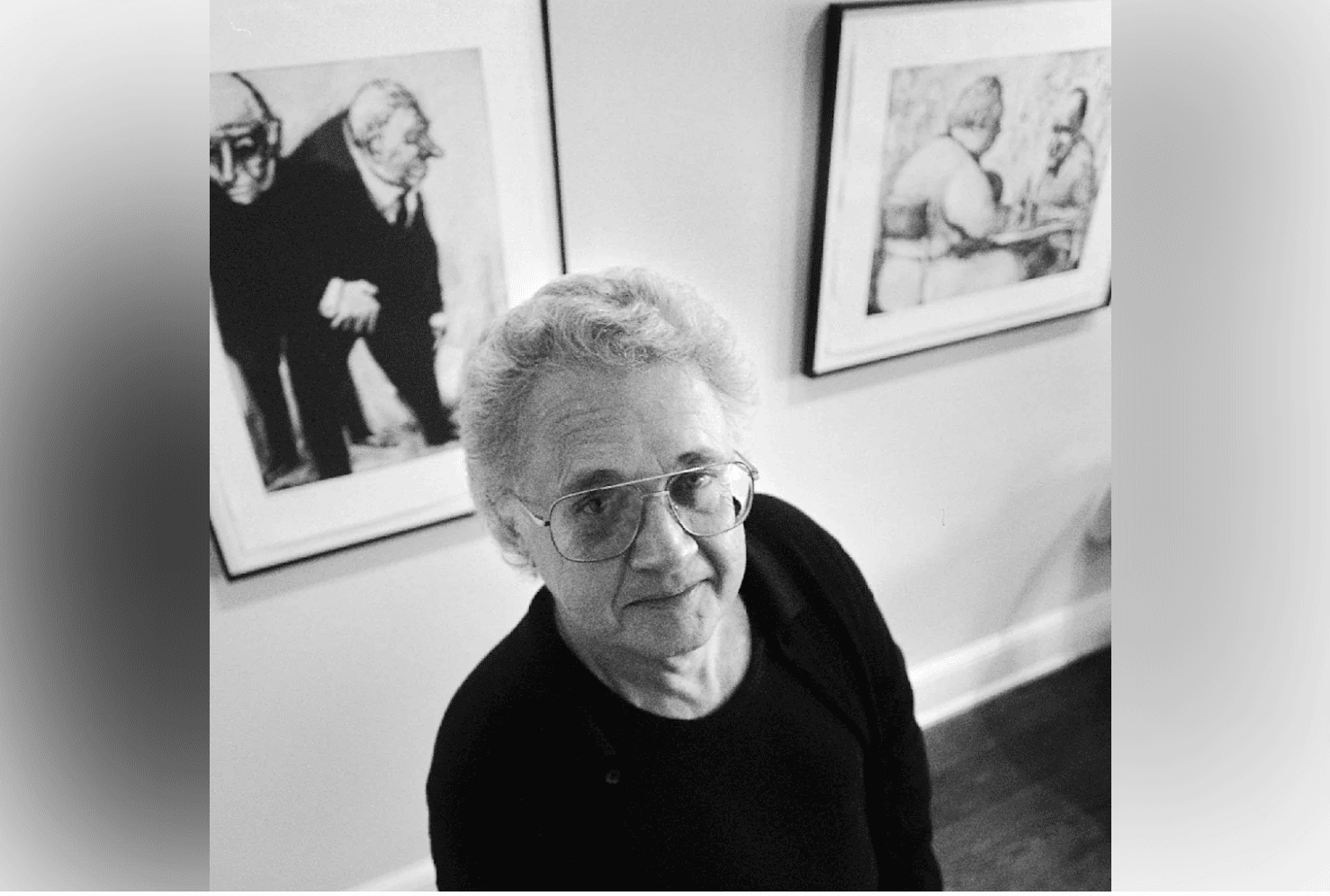
Few have ever done it quite as well as Pat Oliphant. The legendary Australian-American syndicated political cartoonist, who passed away on July 13 at the age of 90, was an old-fashioned liberal who had no issue in skewering liberal Democrats and conservative Republicans with equal amounts of fire and brimstone. As he once said at an exhibition of his work at the Museum of Fine Arts in Santa Fe, New Mexico in Oct. 2000, “I hate changes of administrations, because I have all my villains in place and they are all taken away and replaced with faceless wonders nobody knows.”
Born on July 24, 1935 in Maylands, South Australia, he came from a family with artistic talent. His father was a draftsman for Australia’s Department of Lands, and his drawings of maps served as a form of inspiration. “From a young age, Pat Oliphant enjoyed drawing,” according to Kjell Knudde on Lambiek.net. “While he attended art school for a while, as an artist he was mostly self-taught. Only very late in life, when he was already an established cartoonist, he attended William Christenberry’s figure drawing classes at the Corcoran in Washington D.C.”
Oliphant’s artistic ability was immediately identified at The Advertiser, his first newspaper job in Australia. He became the publication’s “house cartoonist,” as Knudde put it, from 1955 to 1964. He then set his sights on breaking into the U.S. cartooning market. Oliphant was hired by the Denver Post in 1965 and made the move with his wife Hendrika and their two children.
Less than a year later, his work was also being distributed by the Los Angeles Times Syndicate. He would win the Pulitzer Prize for Editorial Cartooning in 1967 for his legendary Feb. 1, 1966 cartoon, “They won’t get us to the conference table…will they?” It was a powerful depiction of then-North Vietnamese President Ho Chi Minh carrying the body of a dead Vietnamese man in the posture of a Pietà. Oliphant had already become one of the most well-recognized political cartoonists in his adopted country, but there was more for him to do and accomplish.
Oliphant jumped from the Post to the Washington Star in 1975. The conservative-leaning paper had a real legacy in political cartooning in the guise of two Pulitzer Prize-winning cartoonists, Clifford K. Berryman and his son, James T. Berryman. Oliphant would also leave the Los Angeles Times Syndicate in 1980 and join Universal Press Syndicate.
When the Star folded in 1981, Oliphant chose to remain independent and work through his new syndicate. “He became the nation’s first 20th century editorial cartoonist who wasn’t based at a newspaper,” CNN Interactive writer Kat Yancey pointed out in a Feb. 15, 1998 piece. The New York Times Magazine described him in an Aug. 15, 1990 piece as “the most influential editorial cartoonist now working.” His contemporaries felt the same way. A 1976 survey conducted by Ernest C. Hynds of 188 cartoonists found that they regarded Oliphant as the “best all-around cartoonist” on the editorial pages.
His political cartoons appeared in over 500 newspapers at its peak. He would gradually decrease his output to four cartoons per week in 1995, and three cartoons per week in 2014. That being said, Oliphant’s popularity among newspaper readers remained consistently high all the way to his official retirement in Jan. 2015.
What was Oliphant’s personal appeal as a political cartoonist? It was a combination of various things. His brilliantly designed pen-and-ink and colour creations, for instance. His choice of topics on politics, history and current events. His acerbic wit. His ability to connect with audiences. Even his strategic placement of a small penguin, Punk, in most of his cartoons.
He also wisely followed in the footsteps of political cartoonists who preceded him by checking his ideology at the door. Oliphant was a liberal by political persuasion, but he was more than happy to attack liberal and conservative politicians on a 24/7 basis. No president of any political stripe would be left unscathed, either – and he made sure of this.
It’s also worth noting that Oliphant voted for Ronald Reagan, a Republican, in 1984 when he ran for re-election as U.S. president. This was for “purely selfish reasons,” according to William C. Trott of United Press International. How so? “‘One reason being that being in D.C. your vote doesn’t count,’ Oliphant said in a Washington Post interview. ‘The second one was I need Reagan for another four years. He’s a good subject…The third reason, it was a protest vote against the Democrats for fielding a turkey like (Walter) Mondale.” (No wonder I always had a soft spot for his left-leaning cartoons!)
In the complex world of political cartooning, Oliphant was truly one of a kind. He’ll be missed by his family, friends and legions of admirers. RIP.
Michael Taube, a longtime newspaper columnist and political commentator, was a speechwriter for former Canadian prime minister Stephen Harper.

