


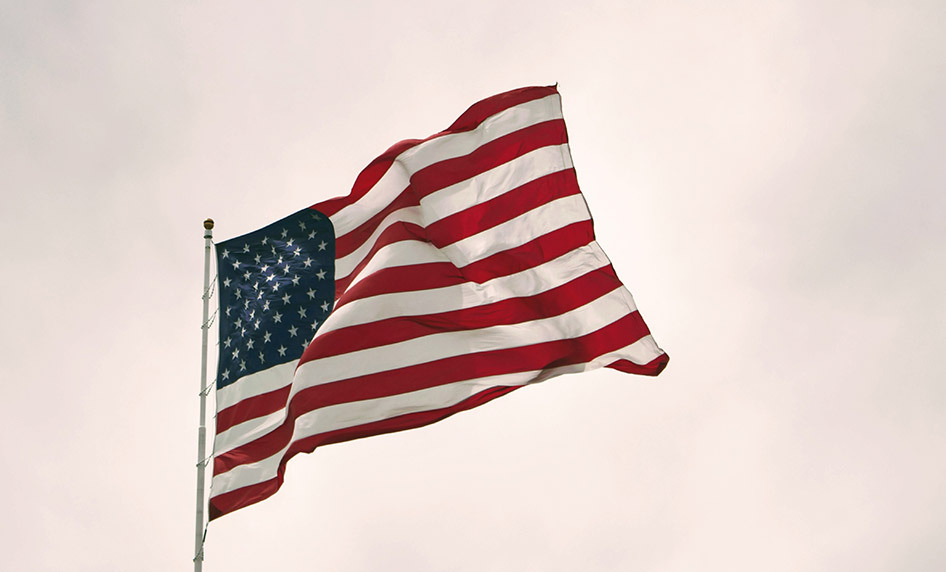
In 1867, Russia sold Alaska to the United States. It was, territory-wise, a historically big, beautiful real estate deal.
Alaska is thus a most suitable place for an ambitious real estate developer to touch down for a summit with Vladimir Putin. Ukraine is not as big as Alaska, and not even President Donald Trump is inclined to give it over entirely to Putin. As land deals go, there is more territory in Ukraine — including prime waterfront, as the president recently noted admiringly — to barter with than, for example, Trump Gaza.
The Alaska summit could well be a big, beautiful Black Sea betrayal.
President Putin should have invited his American counterpart to Yalta. Trump likes resorts, which Yalta was in 1945 and is now. Along with the rest of Crimea, Putin seized and illegally annexed it from Ukraine in 2014. Yalta would provide a fitting locale to discuss with Trump how much more of Ukraine the American president will support him seizing now.
Trump promised Europeans on Wednesday that he would not negotiate borders with Putin in Alaska. But just last week he mused about land swaps. He now
to be going to Alaska only for the ceasefire he demanded weeks ago. Putin refused and was rewarded with a summit.
It is possible that Trump sincerely desires a just peace in Ukraine. Unlikely though, as justice does not animate the Trump worldview. It is possible he sincerely desires peace, understood as a permanent ceasefire, independent of whether it is just or not. But Trump speaks more often of a “deal” rather than “peace.” What he indisputably wants is for the fighting to end and to take credit for it. Insofar as Putin — and Ukraine and the whole world — knows that, Ukrainians are right to be very anxious.
Eighty years ago, Franklin D. Roosevelt (FDR) and Churchill met with Stalin at Yalta to discuss the postwar future of Europe. In February 1945, Americans, Brits and Canadians were relentlessly pursuing the Nazis from the west; Stalin’s troops were already driving them out of Poland from the east. The allies would meet soon enough in Germany. Would they then leave? And if so, when?
FDR and Churchill were more trusting of Stalin than they should have been, but they were not naïve as to his imperial ambitions. Yet, they were in a difficult position, weaker than they would have preferred. The Soviet Red Army was too strong to drive out of Poland and Eastern Europe, and FDR was keen to have Soviet support to finish the war against Japan.
Stalin made promises to respect the sovereignty of Poland, and to permit elections there — promises he did not intend to keep. Already in May 1945, Churchill, distressed that Poland was being fed to the Russian bear, ordered military plans for Operation Unthinkable, a British attack on Soviet troops in Germany with the goal of driving them back over the Poland-Ukrainian border. The name gave it away. Operation Unthinkable was never going to happen. The result of Yalta was that the Second World War lasted another forty-five years in Poland and East Germany.
Trump is in a much stronger position now than FDR was in 1945. But Trump’s weakness is that he desperately wants his “deal,” and as every master negotiator knows, the more desperate party in a negotiation usually ends up on the wrong side of the deal. Thus, Trump vis-à-vis Russia is strategically strong, but is weaker in character, calculation and constancy.
Consider Trump’s recent trade deals as examples of the negotiator at work. He has — given the supine nature of the American Congress — the power to raise taxes on American importers, manufacturers and consumers. He does so gleefully with his tariffs. This hurts Americans, as well as those who export to the United States, including Canada, Mexico, Europe and Japan. There is nothing any of them can do to prevent Trump from raising taxes on Americans if he wants to do so. In the “deals” done with Japan and Europe, they have declined to raise taxes (tariffs) on their own people.
In order to “prevent” Trump from further raising taxes on Americans, Europe and Japan have promised to buy American energy and invest in the United States at a level that is completely implausible. That’s why these “deals” are social media announcements, not actually signed accords. It is media manipulation masquerading as a masterful negotiation.
Putin will have noted well that Trump will accept a “deal” with promises that no one has the intention of keeping, or even the capacity to do so. He will promise Trump whatever shiny baubles he figures will attract attention. Putin will allow Trump to brag that Russia has promised to respect whatever shrinking borders they agree upon
—
just as Russia promised in 1994 (Budapest Memorandum) and in 2014 (Minsk I) and 2015 (Minsk II). And Trump is likely to fall for it, as he did in trade negotiations with Japan and Europe.
The Alaska summit may well be convivial. Trump and Putin share a similar imperialist view; the former speaks of Canada and Greenland in the same way that the latter speaks of Ukraine and Belarus. They will find it easy to agree on the terms of a Ukrainian surrender.
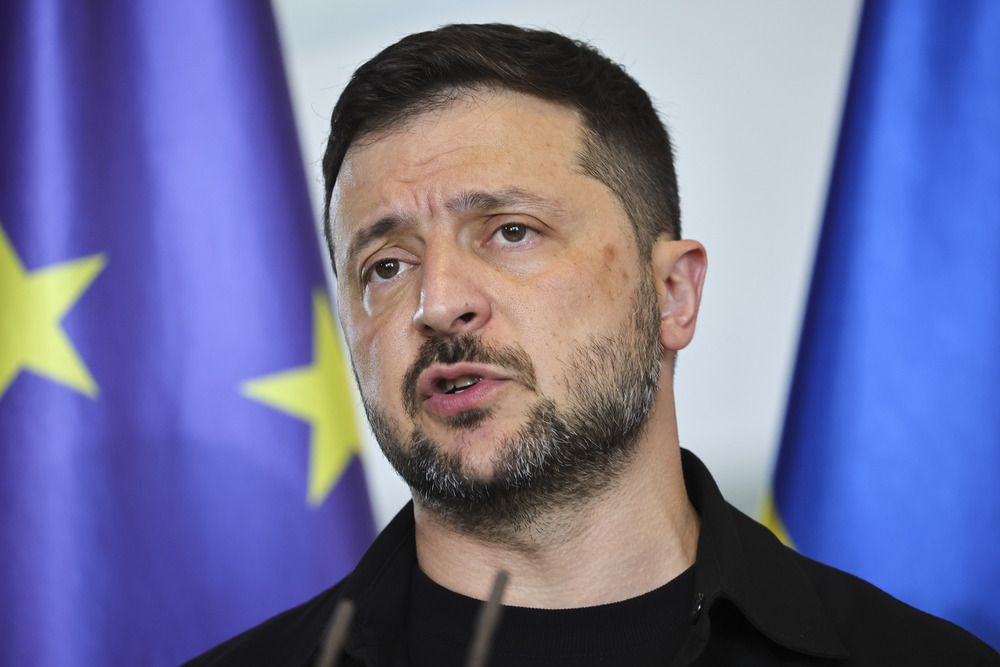
Trump has long favoured a Ukrainian surrender. President Volodymyr Zelenskyy rejects that and, in any case, does not need the help of the United States to surrender to Russia. Hence the Trump/Vance
at the White House last February.
Putin will get a much warmer welcome than did Zelenskyy. Tsar Alexander II insisted that the United States pay for Alaska in 1867. Trump will not make the same demands of Putin in offering him Ukraine’s sovereign territory.
National Post

