



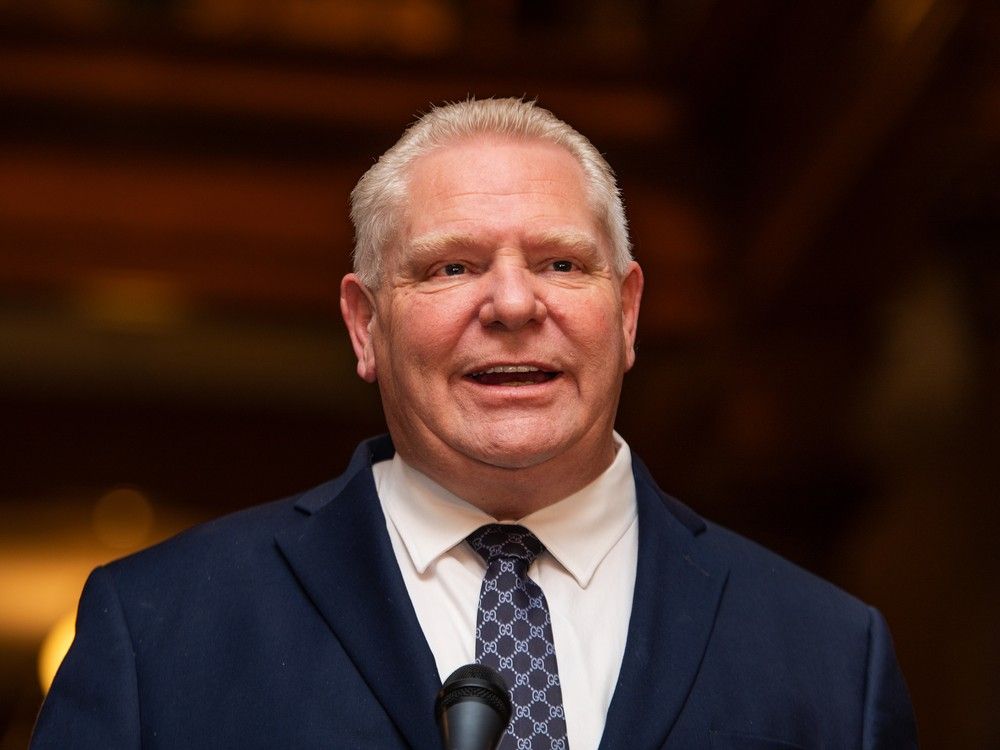
During the recent provincial election, Doug Ford promised to protect Ontarians from American tariffs and spend a lot of money doing it. The premier
delivered on the biggest part of his plan
this week, with $9 billion in temporary tax deferrals and $2 billion in workplace safety premium rebates.
At $11 billion, that sounds like a lot of business support, at least until you look at the details.
The $9 billion is simply a six-month deferral of a wide range of Ontario taxes. The idea is to give businesses more cash flow to sustain themselves during tough tariff times, but they still have to pay the taxes in the end.
If the premiums employers pay to support the Workplace Safety and Insurance Board program are higher than the program requires, they should have been rebated regardless of the tariff situation.
The tax deferral is not only temporary, it’s also not targeted. The money is available to all businesses, whether they have been hurt by tariffs or not. To do otherwise would have been an administrative nightmare, but a lot of businesses not hurt by tariffs will be in position to get what the government calls “an interest-free loan.” That dilutes the benefit to the hardest hit businesses.
To be fair, any provincial premier has limited tools to combat tariffs imposed by the country with the world’s largest economy. While Ford has done an excellent job of making Canada’s case here and in the American media, the tariff fight should never have been a provincial issue.
The federal government is much better placed to handle it. Not only is trade a federal responsibility, the tariffs imposed by Canada so far will provide money to help industries and workers hard hit by American tariffs. The 25 per cent auto tariffs announced this week by the federal government
a year. Canadian tariffs on American aluminum and steel are
expected to produce $29.8 billion
.
The Ontario tax deferral is similar to one the feds have already brought in. The federal government has already pledged $40 billion in corporate income tax and GST-HST deferrals. Again, the plan is short-term and does nothing to make Canada’s economy less dependent on the U.S.
In announcing his $11-billion plan, Ford said his ultimate goal is to make Ontario the best place to do business in the G7. That’s a lofty goal, but how to accomplish it?
American tariffs have put Ontario in a significantly worse position than it was just last year, threatening the centerpiece of Ford’s manufacturing strategy. The province’s auto sector supports nearly 150,000 jobs and Ford has tried to make it larger by investing a lot of capital in it, both political and financial. Before the tariff war, the province committed billions of dollars to support new electric vehicle battery plants.
Now the status quo of building parts and cars in Ontario and exporting them to the U.S. no longer seems like an option. If automakers can’t make a profit in Ontario, they won’t stay in Ontario. The decision to move out would be made easier by the fact that they’re all foreign-owned. Canadian patriotism is not a factor for them.
Given the volatility of U.S. President Donald Trump, it’s too soon to pivot on the auto industry, but the province should have a strategy if it needs to.
Interestingly, Vic Fedeli, Ontario’s minister of economic development and trade, was in Washington this week arguing against tariffs but focusing specifically on auto parts, asking for no additional tariffs. This is a useful avenue for the province. Unlike auto assembly, auto-parts companies are Canadian-owned.
When a business decides whether to locate or remain in Ontario, many factors come into play. But the fundamental equation is simple. Can that business sell a product at a profit, given the taxes, tariffs, labour costs and regulatory burden? If the answer is no, temporary tax tweaks won’t drive long-term decisions.
To change the equation, Ontario should consider changing the corporate tax rate, preferably in concert with a reduction in the federal rate. Ford underlined the point this week when he said, “We can’t attract the brightest minds in the world and the best companies at a 43 per cent tax rate.” That’s federal and provincial corporate taxes combined.
Governments have a tendency to view businesses as cash cows rather than drivers of jobs and economic benefits. Cutting corporate taxes would cost money, but so would losing companies that can’t compete because of tariffs.
The temporary measures the provincial and federal governments are employing are based on the premise that the tariff issue will be short-lived. Maybe, but it would be smart to have a better plan in hand.
National Post
randalldenley1@gmail.com
Get more deep-dive National Post political coverage and analysis in your inbox with the Political Hack newsletter, where Ottawa bureau chief Stuart Thomson and political analyst Tasha Kheiriddin get at what’s really going on behind the scenes on Parliament Hill every Wednesday and Friday, exclusively for subscribers. Sign up here.

