



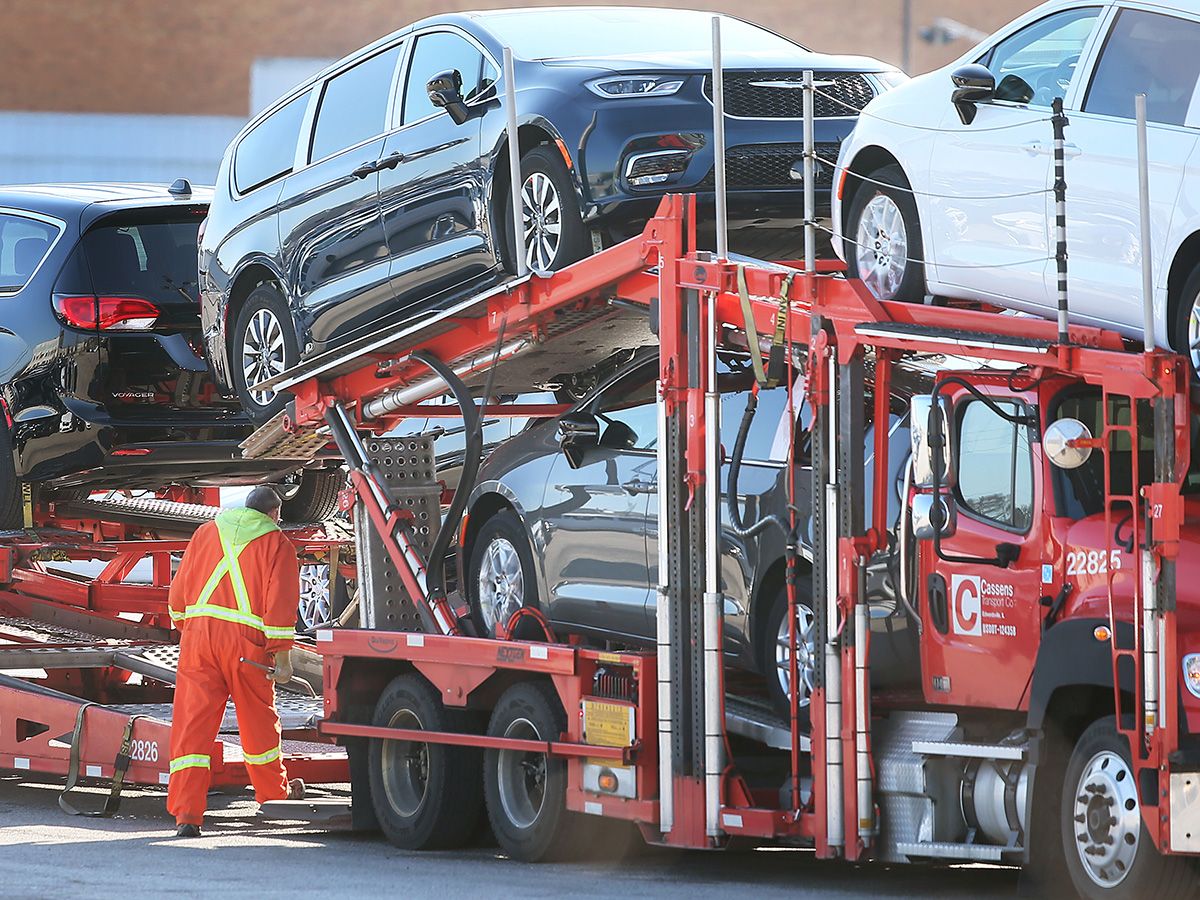
The future of Ontario’s auto sector has become a major sticking point in trade negotiations with the U.S. For Ontario Premier Doug Ford, auto parts and manufacturing must be preserved at all costs.
It’s easy to see why Ford, elected on a promise of job protection, would champion the highly visible auto sector, but is this the right battle to fight?
The so-called Canadian vehicle-assembly industry is foreign-owned and dependent on a steady flow of government subsidies. No matter how much federal and provincial governments “invest” in the industry, Ontario’s auto plants are always just one corporate or political decision away from pulling up stakes.
Despite government assistance, vehicle assembly in Ontario has declined steadily from its 1999 peak of just over three million vehicles to 1.2 million in 2025 . The share produced by America’s Big Three companies has atrophied from half the Canadian total historically to just under one-quarter now.
Ontario’s auto industry relies on the best possible trade scenario: tariff-free access to the American market. The five manufacturers who build cars here ship 92 per cent of them to the U.S.
That American access is the reason that Ontario has an auto industry, but it seems extremely unlikely to continue. Possible American tariffs range from 15 to 50 per cent. The higher number would crush the industry, the lower one would enable it to linger for a while.
Auto assembly has had a great run in Ontario, but its future seems limited. Fighting to assemble foreign cars isn’t in sync with Prime Minister Mark Carney’s vow to make Canada more economically independent. The auto-assembly industry is a symbol of dependence on the U.S., not one of national pride.
Rather than trying to protect an industry of the past, Canada and Ontario need a new approach that preserves the part of the auto industry that is truly Canadian.
Auto assembly and parts manufacturing are often lumped together, but the situation with auto parts is quite different. Canadian-owned companies lead the way. The auto parts sector produces more jobs and economic impact than auto assembly does. In 2024, there were about 71,400 auto-parts workers in Canada, most of them in Ontario. Vehicle assembly employed 46,700 workers and had a GDP contribution of $7.8 billion versus $11.3 billion for auto parts.
U.S. President Donald Trump is right when he says his country doesn’t need what he calls Canadian cars, but the Americans do need our auto parts. It’s relatively easy to relocate auto assembly, but replicating the multi-company sector that produces thousands of complex inputs is a much bigger challenge.
What if Canada were to accept high auto tariffs as part of a broader deal that guaranteed duty-free access for Canadian parts? We’d be keeping the bigger part of the industry and the piece that is Canadian-owned.
Getting rid of auto assembly would spare us from having to commit billions of dollars to buy the continuing love of foreign carmakers. Worldwide, the auto industry has adroitly played governments, threatening to move to another jurisdiction if the one they are in now doesn’t match incentives on offer elsewhere.
In Ontario, both GM and Stellantis received millions of dollars in government support but failed to keep commitments for Canadian production.
So keen are Ontario and federal politicians on buying auto industry jobs that they were prepared to “invest” a stunning $52.5 billion in EV battery plants.
If Canada is sincere about developing economic independence, helping foreign companies succeed here should be the last thing we do.
For Trump, repatriating vehicle production to the U.S. would be a high-visibility win that delivers his critical made-in-America goal. It could be the concession required to get a broader trade deal. Unlike high tariffs that drive up the cost of North American auto production, conceding tariff-free parts would help American car companies by keeping their input costs down.
If an auto assembly win isn’t enough for Trump, then it would be time for the stick. Canada is the world’s largest customer for American cars, importing about $23 billion of vehicles annually.
Canada has already threatened 25 per cent tariffs on non-Canadian content in U.S. cars. We don’t have to stop there. A significant tariff on American vehicles would easily price them out of the market. That would squeeze the Americans, but it wouldn’t hurt Canadian consumers. There are plenty of alternative vehicles; cars produced in South Korea, Japan and European Union countries enter Canada tariff-free.
Doug Ford has fought hard for Ontario’s auto industry and the jobs it sustains, but he doesn’t have a realistic plan for its future. The status quo can’t be protected. Accepting a tariff on automobiles that kills the car-assembly industry in exchange for protecting our auto parts sector would be a lot better than a tariff that killed the whole industry.
It’s time for Canadians to stop thinking like victims and make a smart business decision.
Randall Denley
randalldenley1@gmail.com

