


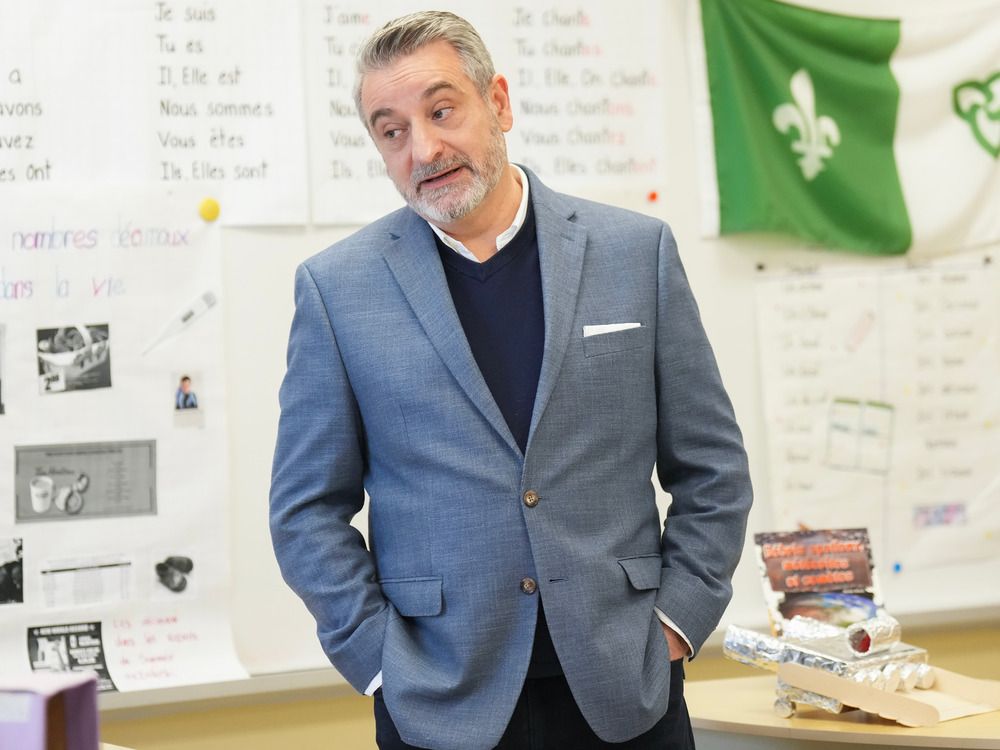
New Ontario Education Minister Paul Calandra
wants to fix apparent financial incompetence
at some of Ontario’s largest school boards, and so he should. The problem is the fixes will only be temporary unless the provincial government is willing to make fundamental changes in the way school boards are run.
Ontario’s education governance is designed to fail. Trustees are elected, but not responsible for the taxes that pay for the province’s schools. This inherent lack of responsibility has turned some boards into lobby groups for higher spending. Why not demand more if you don’t have to ask voters to pay for it?
Calandra has ordered investigations into the finances of Toronto’s English public and Catholic school boards and Ottawa’s English public board. Provincial investigators are to report their findings by May 30.
All three boards are facing significant deficits for the next school year. The Toronto District School Board (TDSB) has a projected shortfall of $58 million, the Toronto Catholic District School Board expects to be $65.9 million in the red, and the Ottawa-Carleton District School Board is looking at a $20-million shortfall.
Those boards have been struggling to balance their books for years, despite a balanced budget being a requirement of the Education Act. The boards blame the problem on things like underfunded sick-leave costs, basic grants that haven’t kept up with inflation, lack of money for special education, and a provincial rule requiring that under-utilized schools remain open.
The big three boards aren’t alone in having deficits. This school year,
31 boards are reporting in-year deficits
amounting to $200 million. Back in 2020–21, only 11 boards had deficits.
The investigators’ reports should shed light on what’s happening with the three boards, at least. Are they short of money to do their basic job or are they just bad at handling the money they have? Calandra, the education minister, says he will offer financial help if it’s warranted, but that will be a short-term fix, not a solution.
Fundamental reform is needed. The provincial government levies the taxes and the school boards spend the money. Those two functions need to be combined if there is to be any accountability in education.
Calandra has three options. He could abolish school boards altogether. The province can already appoint a supervisor to make financial decisions when a board gets into money trouble. Make it the norm, not the exception. This would be the simplest way to proceed, but there is a political downside. With this approach, the government would get all blame for real and perceived education problems.
The middle ground is to appoint a board of local people with relevant financial and governance experience. It would be decried as anti-democratic, but would surely be more efficient. That would return boards to their core job of strategic direction, policy oversight and financial accountability. As a bonus, it would end the problem of trustees who think their real job is promoting social justice, not focusing on basic education priorities and careful spending.
The third choice is the riskiest. Rather than give trustees less responsibility, Calandra could give them more. Until 1998, the province and the school boards shared financial responsibility for education. The province raised money from its array of taxes and the school boards had an education property tax controlled by trustees. That local tax covered about 40 per cent of the cost of education. It gave trustees real financial power, but with the caveat that they were answerable to local taxpayers.
The education property tax still exists, but now the province takes it, raking in about $5.9 billion a year. To put that in context, total spending on schools is about $29 billion. Why not have elected trustees take responsibility for that $5.9 billion and increase it if they think local voters will support the spending?
Every community has its own ideas of what its students require, but the province’s spending plan doesn’t accommodate that variety. The TDSB, for example, believes its students
, an expense for which the province does not pay.
If Toronto taxpayers think the swimming-pool program is essential, why not let them pay for it? The provincial government doesn’t tell municipalities how much they can tax and spend.
Such an approach would offer a useful democratic safety valve, but the risk is the trustees themselves. Some Ontario school boards are infested with people whose primary concerns are
anti-colonialism, the Palestinian cause and climate, gender and race issues
; really anything except their actual job.
When school boards had real financial responsibility, they attracted serious people with relevant skills. Give trustees meaningful work to do, and it could happen again. The 2026 municipal election would be the time to make the change. It could be the reset the system needs.
The alternative is endless fights about money that distract from public education’s many other challenges.
National Post
randalldenley1@gmail.com
Get more deep-dive National Post political coverage and analysis in your inbox with the Political Hack newsletter, where Ottawa bureau chief Stuart Thomson and political analyst Tasha
Kheiriddin
get at what’s really going on behind the scenes on Parliament Hill every Wednesday and Friday, exclusively for subscribers. Sign up here.