


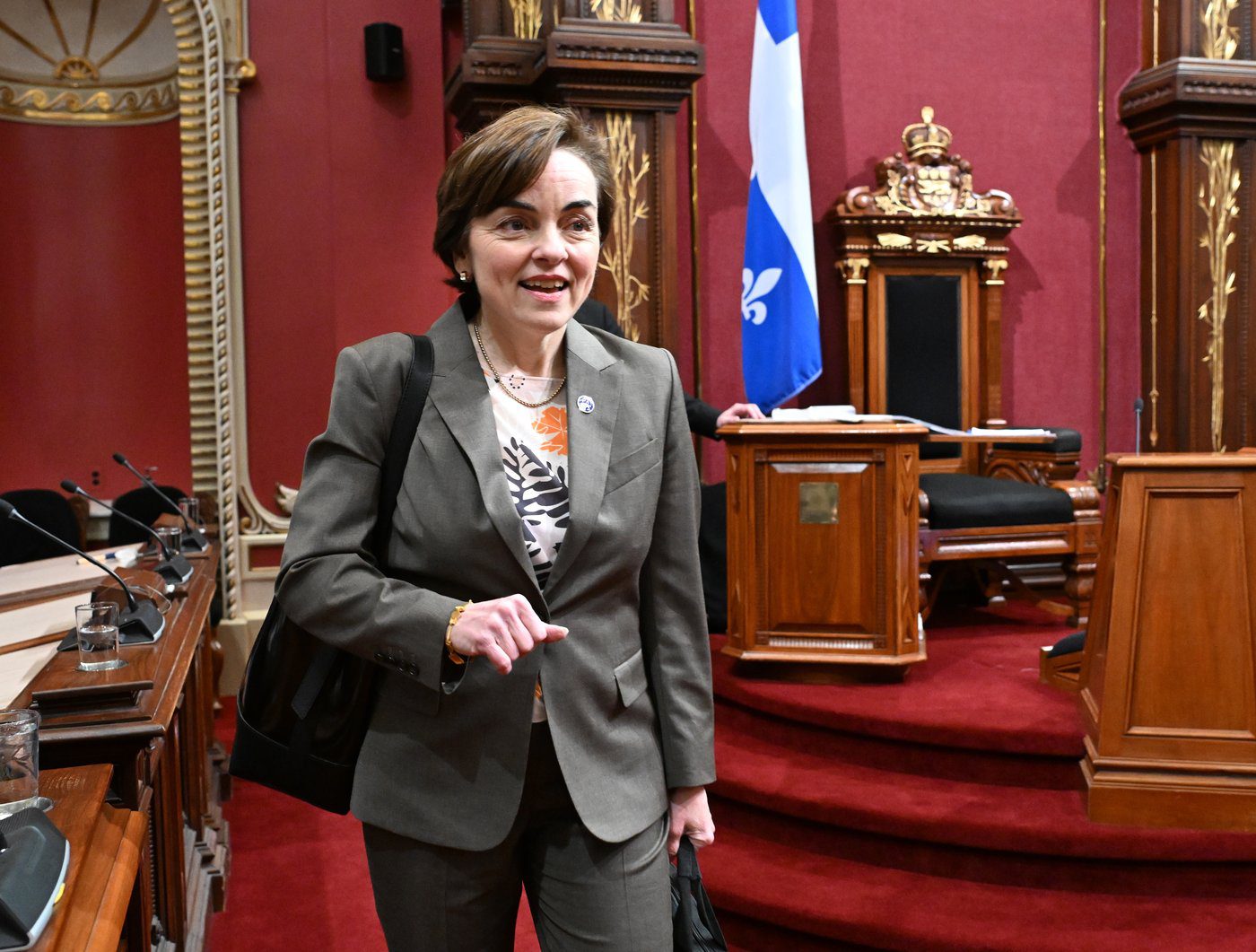
DRUMMONDVILLE — Quebec Premier Christine Fréchette has responded to pressure from the agriculture sector, promising to reimburse millions of dollars to farmers for fuel taxes linked to the province’s carbon market.
Starting in July, more than 15,000 farmers will begin to be reimbursed for the fuel taxes. The government has pledged to transfer a total of $87 million to farmers for the taxes they will pay in 2026 and 2027, with the money coming out of Quebec’s climate change fund.
With Friday’s announcement, Fréchette is fulfilling a commitment she had made and addressing the many complaints that had been raised for several years by the province’s professional agricultural trade union, Union des producteurs agricoles, or UPA.
On the sidelines of a biofood industry event in Drummondville, Que., Fréchette told reporters that despite the reimbursements, she didn’t think farmers no longer had incentives to reduce their greenhouse gas emissions.
“I am convinced that the agricultural sector will continue its efforts to reduce its carbon footprint,” said Fréchette, the new Coalition Avenir Québec premier.
In a speech at the industry event, she suggested the funding will help farmers compete with “states that do not have very high environmental standards.”
The UPA has argued that farmers were contributing more money to the fight against climate change than they were receiving to address these challenges.
In a news release, UPA President Martin Caron said Fréchette’s commitment is a “major win for the competitiveness and scalability of our businesses.”
“We are confident that the premier will also strive to increase the share of Quebec food in our institutions and reduce the administrative and regulatory burden, as she has committed to doing,” Caron said.
In 2025, the Opposition Liberals said farmers paid $480 million over four years for their greenhouse gas emissions into Quebec’s carbon market, which involves a cap-and-trade system that is linked to California’s. The CAQ, meanwhile, put farmer’s contributions at $140 million, adding that they had received an additional $290 million over four years for climate change adaptation.
Under Quebec’s cap-and-trade system, companies in the largest, most polluting sectors can bid at auctions every three months for “units,” which are essentially emission allowances. Over time, the cap on emissions decreases, driving up the price of units and encouraging companies to reduce their emissions or to purchase “units” from companies that emit less than the cap.
This report by The Canadian Press was first published May 15, 2026.
Patrice Bergeron, The Canadian Press

