



By Margaret McCuaig-Johnston and Sophie Richardson
Prime Minister Mark Carney faces a host of urgent and challenging policy issues. The first is trade with the United States, and support for sectors of the Canadian economy affected by tariffs. But the prime minister is also a person of empathy and values, and those are expected to be central to his policies, including his new approach to
.
One policy priority that will reflect the prime minister’s values: significantly stepping up efforts to protect human rights in China and to end Beijing’s human rights violations in Canada. Carney laid down markers when he
identified the Chinese government
under Xi Jinping as Canada’s biggest security threat, and committed himself to countering Chinese foreign interference.
As Carney says in his book,
Value(s): Building a Better World for All
, leaders catalyze and coordinate actions. His first chance to demonstrate this will be chairing the G7 Leaders’ Summit in Alberta, which will run from June 15 to 17. All seven member nations have developed initiatives addressing
foreign information manipulation and interference
, and Carney can lead their adoption.
Canada can also lead at international human rights institutions, including the United Nations Human Rights Council. Bodies like these are under significant
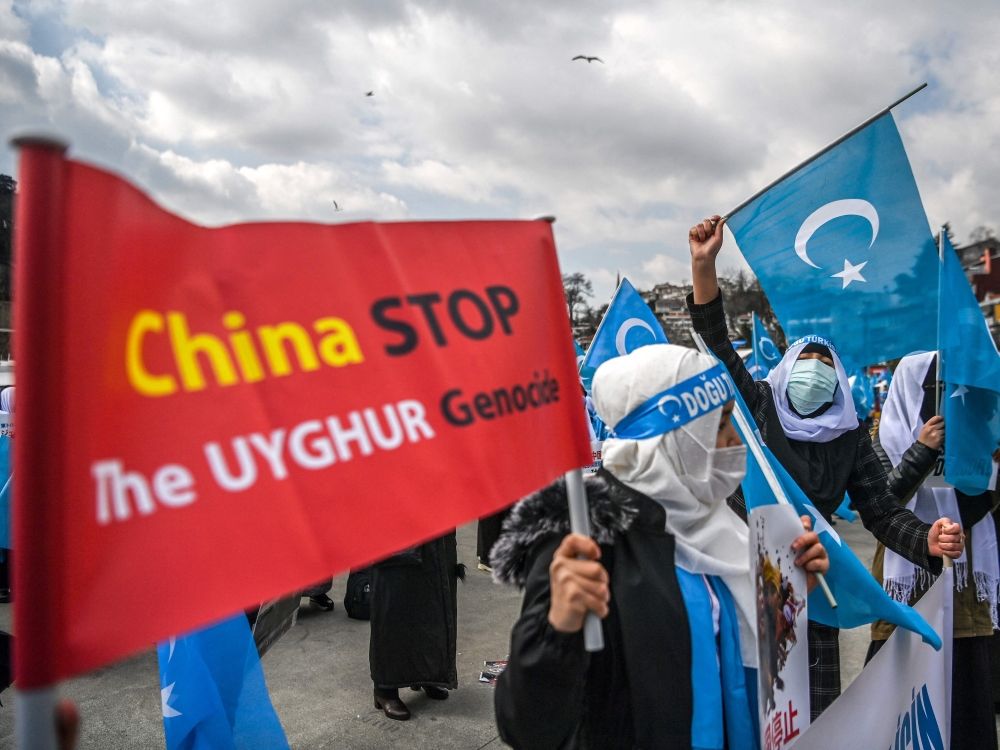
from Beijing to be silent regarding Xi’s abuses (China’s actions towards the Uyghur population possibly amount to
says the UN), and to
from criticizing governments at all.
Carney can announce Canada’s intention to run for a seat on the council, and in the meantime lead efforts to advance resolutions, hold briefings and lead like-minded governments in gathering evidence of widespread, systematic Chinese state abuses. Canada has supported similar initiatives,
violations of more than two million Tibetan and Uyghur children’s rights to education in their own language, and
an effort to hold a debate about extensive human rights infringements in the Xinjiang region of China, where most Uyghurs live. Ramping up these efforts requires a committed champion, and Canada is well-positioned to step into that role.
Canada can also redouble its longtime support for independent civil society in China. Although Xi’s government strives to erase independent activism,
working on issues ranging from public health to women’s rights to ending the death penalty still raise awareness, support affected communities and occasionally win local policy victories. Diplomats often observe that human rights gains should come from people inside the country — but greater external support is essential. New CBC funding could be deployed to salvage Tibetan- and Uyghur-language journalism
no longer supported by Washington
.
Beijing’s efforts to undermine human rights in Canada are now
, and Canadians just went to the polls again without the process being fully insulated from interference. The Chinese Communist Party’s transnational repression now cuts into Canadians’ rights to free speech, assembly and political participation. During the federal election, Beijing-generated disinformation spread on WeChat and TikTok, leading the Canadian Security Intelligence Service to
candidate Joe Tay and his team to stop canvassing door to door for their own safety. His loss is likely to embolden Beijing.
In recent months Beijing has also
bounties of HK$1 million (C$180,000) for the arrest of certain Canadian citizens, and
20 individuals in Canada for criticizing Beijing’s rights abuses. Thousands of Canadians affected by Chinese state repression were disappointed with the
unwillingness to make recommendations to address these problems. CSIS and other agencies have new authority to act on foreign interference, and effective implementation will be key. A registry of foreign agents will help clarify who in Canada is working on Beijing’s behalf.
These persistent threats, along with Beijing’s recent shocking
of four Canadians despite strong diplomatic interventions, and its
of Canadians, reflect an urgent need to work towards a “better world for all.” That includes those being repressed in China, and Canadians feeling the long arm of the Chinese Communist Party. The prime minister can catalyze that action, reflecting Canada’s values and forging a world that respects human rights.
National Post
Sophie Richardson is the co-executive director of the Network of Chinese Human Rights Defenders. Margaret McCuaig-Johnston is a board director of the China Strategic Risks Institute and a senior fellow in the Graduate School of Public and International Affairs at the University of Ottawa.

