


HALIFAX — Nova Scotia has found an energy-hungry potential buyer for the electricity the province hopes to produce from a major offshore wind project that is still in the early stages.
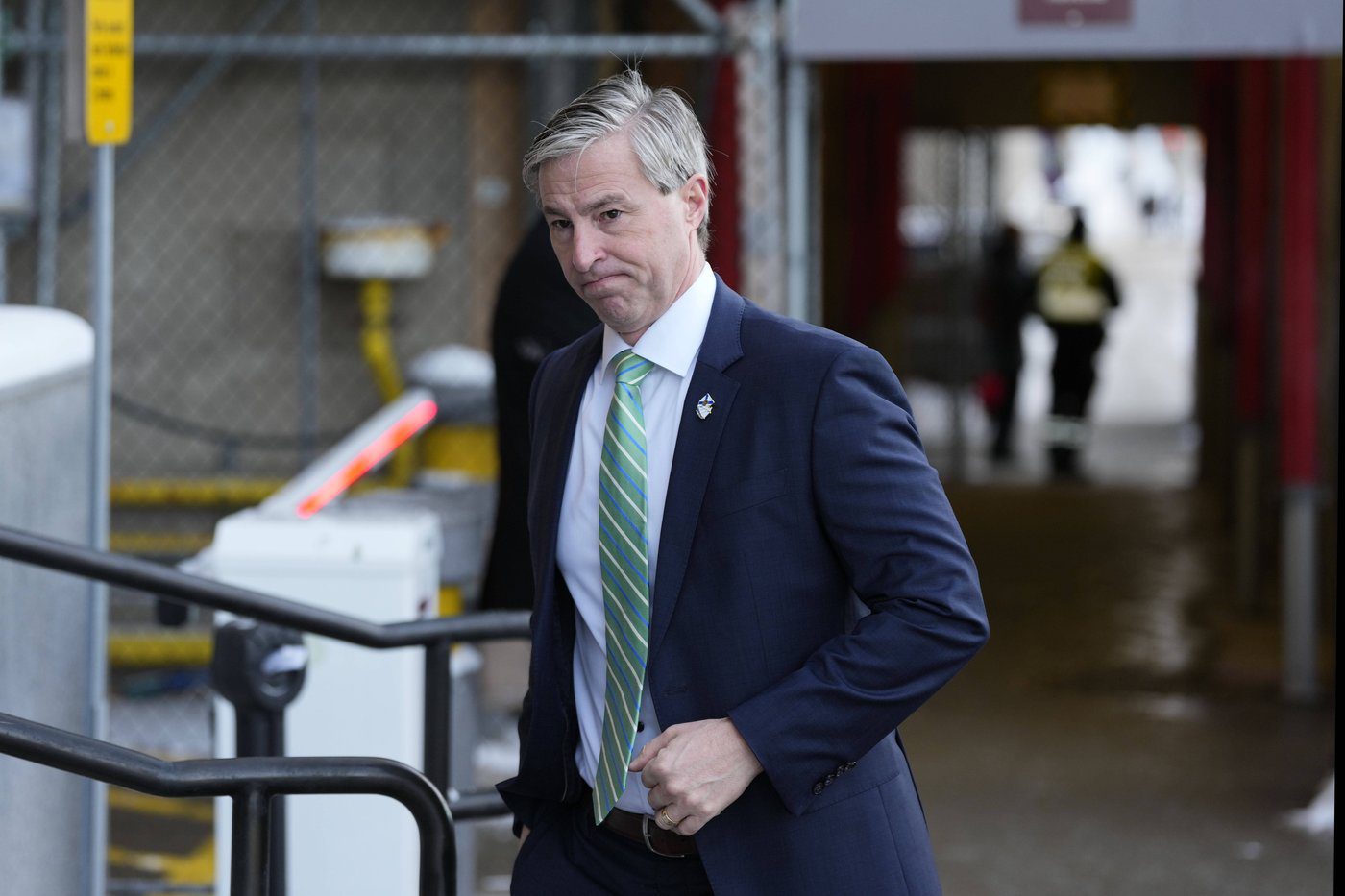
During a news conference in Boston on Wednesday, Premier Tim Houston and Massachusetts Gov. Maura Healey said they reached a memorandum of understanding committing the two governments to work together and share expertise as they develop their respective offshore wind sectors.
Massachusetts officials said they didn’t know how much energy would be on offer from Nova Scotia’s proposed Wind West development, but Houston said the project’s potential output is “remarkable.”
“We have all the conditions to create a lot of clean energy,” Houston said. “In fact, Nova Scotia only uses about two Gigawatts of energy at peak demand, and in the Nova Scotia offshore we can produce 40, 50, 60 Gigawatts.”
State officials said the deal signed on Wednesday will help determine the potential amount of energy available.
Houston, also Nova Scotia’s energy minister, first floated his province’s Wind West project over the summer, and the $60-billion first phase is estimated to produce five Gigawatts of power by 2033. If additional phases are fully constructed, the province says the project could generate more than 62 Gigawatts, about one-quarter of Canada’s total energy capacity.
Prime Minister Mark Carney has said the federal government is prepared to work with Nova Scotia to accelerate the development of Wind West. A formal call for companies interested in building the project is expected in the coming months.
Healey said her state has experience in offshore wind projects, with deep industrial ports, supply chain investment and trained workers. The governor said Massachusetts will still need more energy in the coming years and she’s pushing to bring additional wind, solar, gas, hydro and nuclear power to the state grid.
“You look at industries like AI and all that’s required in terms of computing power, that’s not just in this region of the country, it’s all over,” she said. “We just need a lot more energy, and that’s why many of us are adopting this all-of-the-above approach and hustling as quickly as we can to bring that infrastructure online.”
Sending Canadian energy to Massachusetts can present challenges. In January extreme cold weather and the resulting increase in local power demand forced Quebec’s hydro utility to temporarily suspend energy exports to the state just a week after inaugurating its new transmission line.
Hydro‑Québec’s bid was selected to supply 9.45 Terawatt hours per year to the state over a 20‑year period, under a deal signed in 2018. The total revenues from the contract are estimated at $16 billion.
The state-owned Massachusetts Clean Energy Center estimates the state will need 140 Terawatt hours of energy by 2050 and expects wind generation to increase dramatically over that span. It says designated offshore wind areas to the south of New England can support more than 14 Gigawatts of power generation but the energy needs of Massachusetts, Rhode Island, Connecticut and New York will exceed that capacity.
In December, President Donald Trump’s administration announced an immediate pause on development of large-scale offshore wind projects in the U.S., citing potential radar interference from offshore turbines as a national security risk. The courts have since ruled that development of five separate U.S. wind projects, with a combined generation capacity of six Gigawatts, can continue.
Houston said the key for Nova Scotia energy exports will be securing transmission lines to domestic and foreign markets.
“We’re in Nova Scotia at the end of the line, and we’re going to generate a lot of clean energy from our offshore wind, and we need to get it somewhere,” he said.
The province has said that about one-third of the $60-billion cost for Wind West’s first phase would be for transmission lines. Nova Scotia’s proposal identifies two options including an overland route via New Brunswick and a subsea route direct to Quebec or New England. The province has said it is open to either route.
In September the prime minister said Wind West was one of five early-stage projects that could be considered for fast-tracking through federal regulatory and environmental approvals. Carney’s government has also talked about an “eastern energy partnership” that could include building more robust electricity lines through Atlantic Canada and Quebec.
Nova Scotia has said it will be looking for assurances that it can access federal investment tax credits and low-interest financing through the Canada Infrastructure Bank. Without that help, the province says offshore wind energy would come in at an estimated $240 per Megawatt hour, which would drop to $170 per Megawatt hour with tax credits and lower borrowing costs.
Government officials have said the province is seeking a four per cent royalty on the gross revenues of Wind West, which could give Nova Scotia $100-million in annual revenue.
This report by The Canadian Press was first published Feb. 4, 2026.
— With files from The Associated Press.
Devin Stevens, The Canadian Press

