


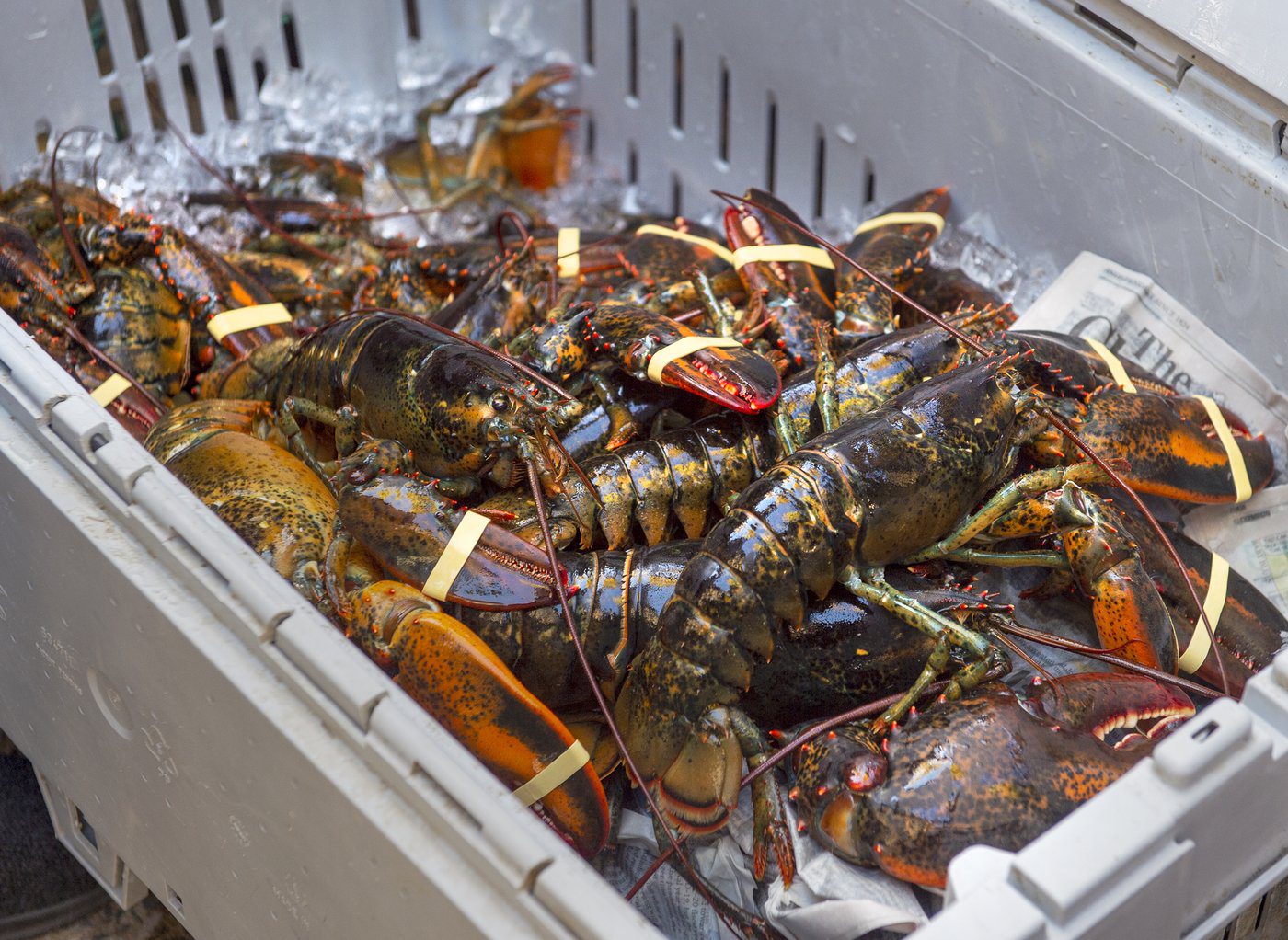
HALIFAX — Nova Scotia’s lobster sector is feeling the pinch from Chinese tariffs this year, but officials say exporters are starting to crack other international markets.
Geoff Irvine, executive director of the Lobster Council of Canada, says new data shows exports outside the U.S. and China, the sector’s two biggest markets, increased about 43 per cent in October and that’s helping to cushion the blow from the 25 per cent tariff China has placed on Canada’s exports.
Statistics Canada says China bought $11.8 million worth of live lobster in October, down about 31% from $17.1 million from a year ago.
“Our exporters are very smart and they have contacts around the world that we and others help them develop,” Irvine said in an interview Saturday.
“And so, when a market gets out of reach, like China has been for some products, they pivot, and they’ve pivoted successfully. The numbers are very, very clear.”
The October numbers don’t reflect Canada’s largest lobster fishery which opened in November across an area that starts in Halifax and wraps around southwest Nova Scotia to Digby. The more than 1,6000 license holders in lobster fishing areas 33 and 34 typically have landings worth more than $500 million a year.
Stewart Lamont, managing director of Tangie Lobster Company, said a later-than-usual molting period in those areas meant softer shells and a lower-quality lobster catch.
He said another couple weeks of development could have improved the animals, but the sector is driven by special events like Christmas, New Year’s Eve and next month’s Lunar New Year, so waiting wasn’t an option.
“Mother Nature didn’t get the memo to give us a premium quality lobster,” Lamont, whose company exports to 13 countries, said in an interview Friday.
The lower quality helped push down shore prices last month. Lamont said fishers were getting about $8 per pound in December. The price usually goes up as the winter progresses and it’s now sitting in the $10 range.
Lamont said the impact of China’s 25 per cent tariffs has been substantial, noting value-added taxes bring the total premium up to the 41 per cent range without factoring in transportation costs. In recent years China has bought about 40 per cent of Canadian lobster exports.
“It’s essentially been a deal breaker,” he said. “So many companies have been shipping to China over the last year at cost or less. Many other companies have simply chosen to sell lobsters in other markets where we weren’t subject to the tariff.”
Canada exported about 80,365 metric tonnes of lobster valued at $2.9 billion in 2024 according to Statistics Canada. Nova Scotia had about 45 per cent of the total at $1.3 billion. The U.S., which remains tariff-free under the United States-Medico-Canada Agreement, was the biggest buyer at $1.9 billion, followed by China at $535 million.
China implemented tariffs on Canadian seafood in March in retaliation for Canadian tariffs on Chinese products, including a 100 per cent tariff on the country’s electric vehicles. Next week Prime Minister Mark Carney will travel to China for meetings with President Xi Jinping. Ontario Premier Doug Ford has urged the prime minister to keep the EV tariffs in place to protect his province’s auto sector.
Irvine said the trip is a great next step in rebuilding the relationship between the countries. While the sector would love to see incremental tariff progress, he’s not expecting a major breakthrough.
He noted federal Minister of Agriculture Heath MacDonald, from P.E.I., and Nova Scotia parliamentary secretary Kody Blois will both be making the China trip and know the importance of the lobster sector.
“It’s very difficult, diplomacy, period,” he said. “It’s got stakeholders from across the country in different sectors pushing (the prime minister) and that’s how this works. He has to do what’s best for the majority and so our job is to make sure he understands what these are doing to our sector, and we’re doing that regularly.”
Carney’s China trip, the first by a Canadian prime minister since 2017, is scheduled for Jan. 13 to 17 with trade, energy, agriculture and international security on the agenda. Carney will travel to Davos, Switzerland after his Asian visit.
This report by The Canadian Press was first published Jan. 10, 2026.
Devin Stevens, The Canadian Press

