

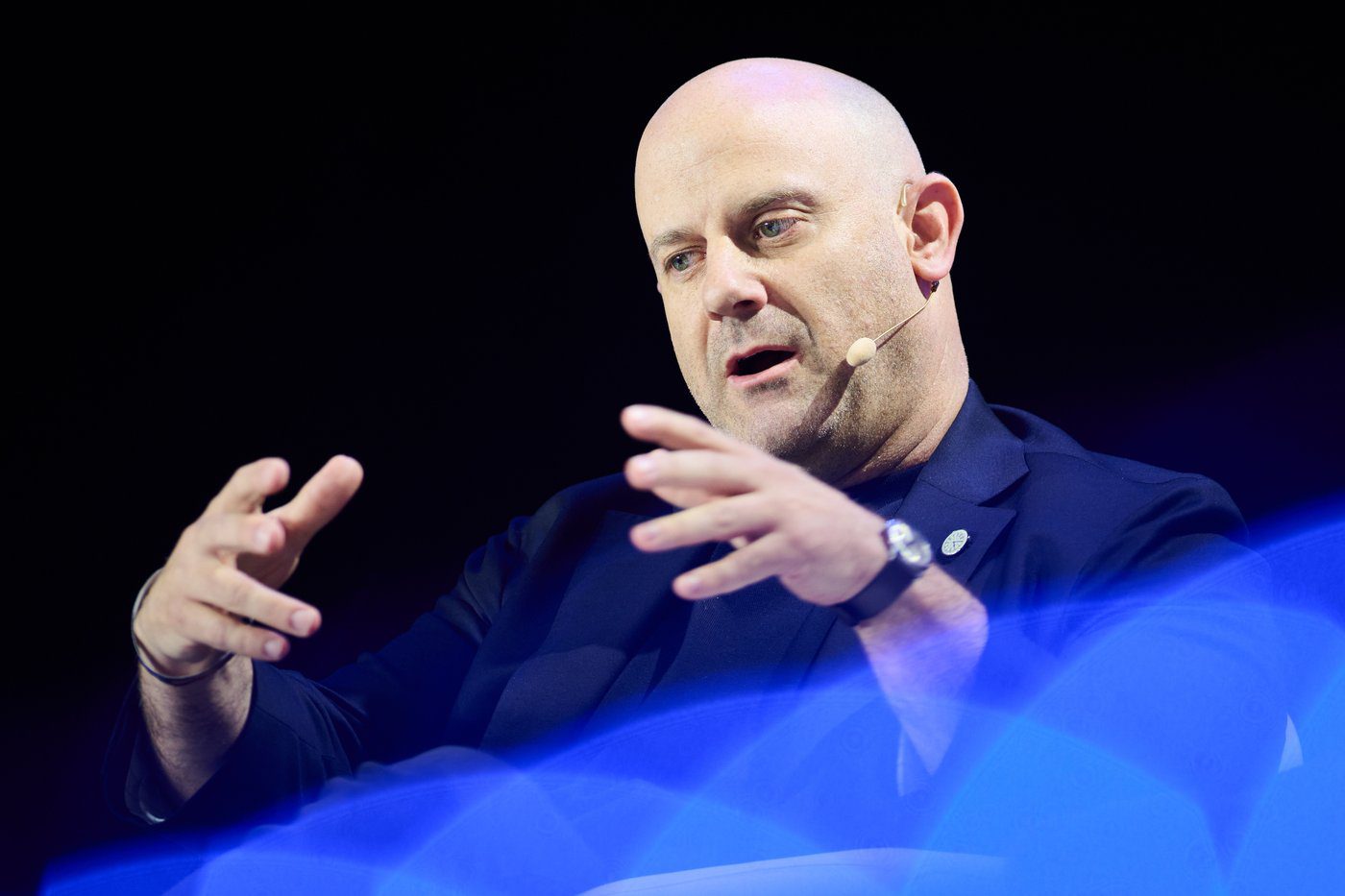
OTTAWA — Eliot Pence, the hard-charging founder of Canadian defence company Dominion Dynamics, has a message for the industry’s leading contractors around the world: We’re coming for your lunch.
The fledgling Ottawa-based startup unveiled twelve partnerships with established defence players in Canada on Friday for developing its Scout drone, an uncrewed “loyal wingman” reliant on artificial intelligence that could pair with fighter jets and fly alongside them.
Dominion is planning to compete in an anticipated future procurement to supply the federal government with autonomous collaborative platforms. It’s bringing a made-in-Canada pitch to the competition at a time when Prime Minister Mark Carney’s government is focused on acquiring sovereign capabilities and building up domestic industries.
“The intention here is for it to be the most ambitious air platform since the Avro in Canada,” Pence told The Canadian Press.
Avro Canada was a post-World War II aerospace manufacturer known mainly for its CF-105 Arrow, a highly regarded but short-lived interceptor jet.
Dominion’s project has been in the works since his company’s inception some 18 months ago. Pence is quickly assembling plans for a supply chain that would be mostly domestic.
Dominion’s early development partners include Pratt and Whitney Canada — it plans to use PW300-type engines in its drones — Telesat, Top Aces, North Aircraft Industries, PV Labs, SRC Can, Thales Canada and Altitude Aerospace.
Pence’s company would build the drone and its systems for handling data communication, sensors and intelligence, and turn to these other companies for expertise in areas such as operator training, avionics and landing gear.
Dominion also announced a stand-alone partnership with Canadian satellite operator Telesat this week to make antennas designed for Arctic use. They would connect uncrewed military hardware systems to Lightspeed, Telesat’s planned low-Earth satellite network.
With Canada’s current CF-18 Hornet fighter jets expected to reach the end of their service lives by 2032, Ottawa has started acquiring advanced F-35 stealth fighters made by Lockheed Martin, although the jets are not yet based in Canada.
Shortly after taking office in early 2025, Carney’s government launched a review of Ottawa’s plan to purchase a fleet of 88 F-35s.
Saab, the Swedish defence manufacturer that was a runner-up in Canada’s fighter jet competition, has said it could set up a manufacturing hub in Canada for its Gripen fighter jets if Ottawa chooses to put in a bulk order for those aircraft.
Pence said Dominion’s drones would work with either the F-35 or the Gripen, and with other platforms like the early warning and control aircraft Canada wants to acquire.
These companies and other large legacy defence firms are developing similar kinds of drones they can sell alongside their crewed platforms.
Pence said he believes all of these companies are at the same starting line, since the technology is so new. And he’s betting that offering a Canadian-made drone designed for the vast and harsh Arctic environment gives his company an edge.
“We are building for the specific Arctic problem set and nobody else is doing that,” he said.
“There are very specific problems we’re seeking to solve for the RCAF — range, Arctic ruggedization, gravel runway takeoff, short runways.”
Pence said he expects the government will launch a procurement competition for autonomous platforms in 2028 or 2029.
He said he intends to have the Dominion Scout flying in late 2028.
This report by The Canadian Press was first published Nov. 20, 2026.
Kyle Duggan, The Canadian Press