



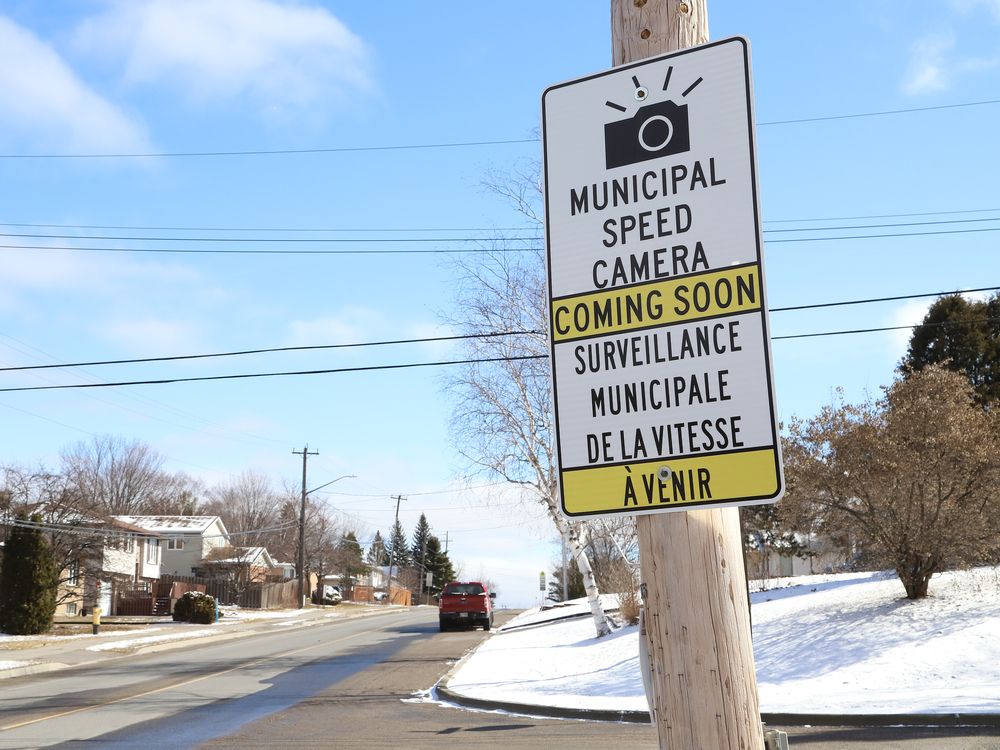
Ontario Premier Doug Ford has been focused on improving traffic flow and reducing congestion on provincial roads and highways for several years. His gaze has now turned to an electronic device that can disrupt traffic and frustrate drivers: speed cameras.
Ford and his PC government have tackled this issue on several occasions.
A 2019 amendment to the Highway Traffic Act, for example,
that municipal speed camera signs must be displayed in Ontario “not less than 60 centimetres in width and 75 centimetres in height.” Some
to the Highway Traffic Act related to speed cameras were also included in Bill 24, Plan to Protect Ontario Act (Budget Measures), 2025. “Municipalities are required to publish the location of automated speed enforcement systems and red light camera systems,” according to the third point, “and, if required by the regulations, to display signs indicating that such systems may be in use.”
Ford was asked about the deployment of speed cameras during a recent press conference in Wasaga Beach, Ont. His immediate concern was this device was a “revenue tool” (as) “opposed to safety” on Toronto streets, roads and neighbourhoods.
“The city is using it as their revenue source, and it’s a little unfair,” he
reporters on May 16. “They hide them all over the place and if you’re going, you know, 10 kilometres an hour over, you’re getting dinged…People aren’t too happy when they get dinged for 10 kilometres over, five kilometres over. It’s a revenue tool.”
Ford and the Ontario PCs naturally recognize that speed cameras still serve an important purpose. In particular, using them in community safety zones and school zones. “Everyone should be crawling through a school zone,” the Premier told the media, “but they’re putting them all over the place and they’re creating endless amounts of money.”
Ford summed up the government’s position thusly. “All we’re saying is not to take them away — I don’t like them — but let’s put signs up. The whole purpose of a radar trap is to slow people down, so let’s slow people down by putting big signs that there’s a radar ahead and we’ll go from there.”
The Premier is absolutely right. He should pass legislation to massively reduce the use of speed cameras as a revenue tool on major streets and in residential areas in Toronto and across Ontario.
The sole purpose behind enacting speed cameras in Ontario’s municipalities was always about public safety. It was a means of warning drivers to slow down and help prevent accidents, injuries and fatalities involving fellow drivers and pedestrians. Families with young children would also, hopefully, feel more safe and secure in their neighbourhoods with slower and more responsible drivers on the roads.
Speed cameras were never designed to be a source of revenue. Ontario’s cities, towns and villages already collect more than enough money from taxpayers each year. Municipal and property taxes in Toronto have gone through the roof under left-wing Mayor Olivia Chow,
by 9.5 per cent in 2024 and 6.9 per cent in 2025. Does Toronto, or any other city, really desperately need a few extra bucks from drivers who went a fractional number of kilometres above the speed limit? The answer should be pretty obvious.
What about the argument that keeping speed cameras hidden in Ontario’s municipalities would help ensure that drivers slow down?
Besides the fact that playing a game of “gotcha” with drivers is juvenile, it doesn’t make much of a difference. While popular navigation systems like GPS and Waze can
hidden speed cameras and speed traps on certain routes, there are plenty of drivers who routinely ignore these warnings. There will always be drivers who ignore (or have ignored) municipal speed camera signs sitting in plain sight, too. The one silver lining? If any of these individuals get caught driving over the speed limit or worse, they’ll be punished to the furthest extent of the law.
Ford is right to suggest there should be certain exceptions to the use of speed cameras in the province. This includes school zones where caution should always be the better part of valour. That’s why speed limits are generally reduced to 30 km/h on Toronto streets located in and around our schools.
Here’s the thing. If you slightly adjust your foot on the pedal or shift around in your car seat, which most drivers do at some point during their journeys, the chances are your speed will briefly go up a few kilometres. This would be caught on a speed camera and, in effect, mean that you’ve broken a municipal law. An inanimate speed camera obviously can’t tell the difference. Are police and city officials going to care or take this into consideration? Of course not. Hence, it’s a bit much to expect everyone to drive their vehicles to the point of a basic crawl or get fined. There has to be a certain amount of rational thinking and leniency involved in the decision-making process.
Ford has the right idea when it comes to speed cameras. Toronto needs to use them as a public safety tool, and stop robbing Peter to pay Paul — and, in turn, pay Olivia.
National Post

