



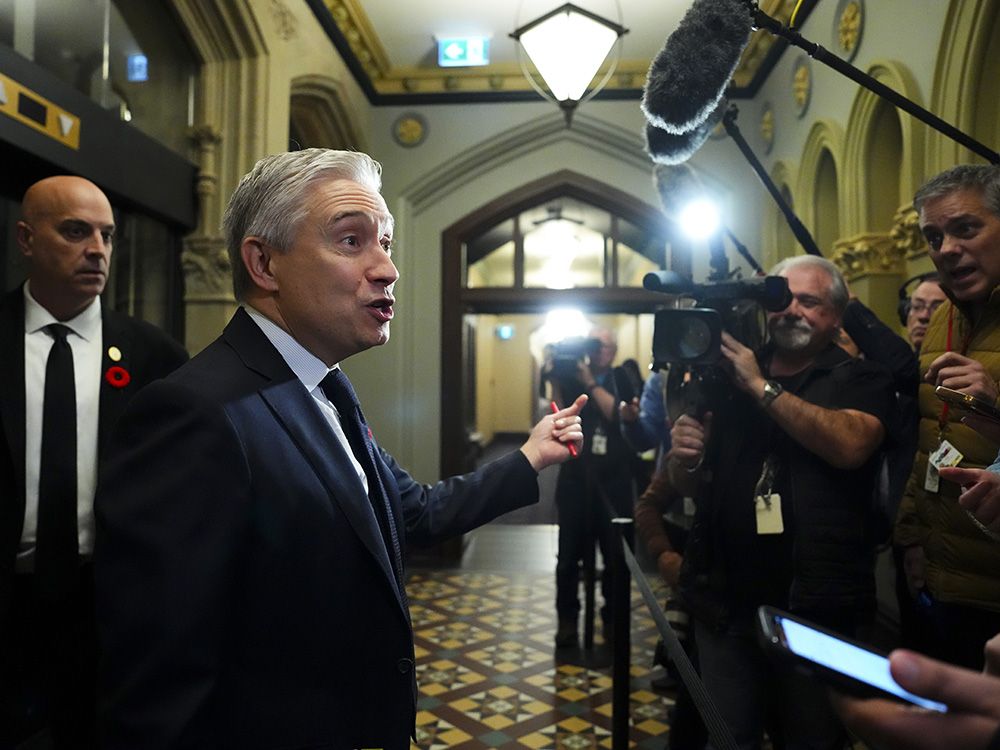
OTTAWA — Finance Minister François-Philippe Champagne
with a chorus of new spending initiatives, but also included – and notably, did not include – several measures geared at tackling affordability.
The
it wants to help youth find jobs, with nearly half a million young Canadians out of work.
While the budget addresses cost-of-living and home ownership, the fiscal plan also commits to toppling “unjustified” ATM fees and increasing access to funds deposited by cheque, among others.
Here are some key policies concerning affordability in this year’s budget.
Youth employment programs
Up to 175,000 youth across Canada may soon be supported by three federal programs aimed at developing “work-ready skills” through hands-on experience and training.
The latest budget commits to investing $594.7 million over two years in a federal program that, starting next year, would create around 100,000 summer jobs.
It also proposes $307.9 million to a program that would provide employment and training to around 20,000 unemployed youth. Carney’s fiscal plan would also earmark $635.2 million to support 55,000 internships for post-secondary students
“Canadian youth are facing challenges in the labour market,” the budget reads. “Canada’s new government is committed to supporting youth in building skills to help them gain employment in high-paying careers.”
Automated taxes, and benefits, for low-income Canadians
Striking a different tone than last year’s budget, which included measures to penalize suspected tax dodgers, the latest fiscal blueprint would automate federal benefits for millions of lower-income Canadians who do not file their taxes.
Canadians would “be able to review and confirm a pre-filled income tax return, and the Canada Revenue Agency (CRA) will automatically file these individuals’ taxes to ensure they receive government benefits they qualify for,” reads the budget.
The government clarified that these are people who “do not have the resources to [file their taxes] or … think their income is too low to owe taxes.”
However, in case these Canadians opt out of this new service, the fiscal plan promises an additional measure.
“Budget 2025 also proposes to amend the Income Tax Act to allow the CRA to file a tax return on behalf of certain eligible individuals with lower incomes in simple tax situations who do not owe tax,” the government clarified in the budget.
Middle-class tax cuts
As economic uncertainty continues to weigh on Canadians, the government is slashing taxes for those with incomes in the two lowest tax brackets, which was a signature promise from the April election campaign.
“Nearly 45 per cent of the tax relief will go to Canadians with income below approximately $57,000 (the first tax bracket) and 40 per cent to Canadians with income approximately between $57,000 and $114,800 (the second tax bracket),” reads the budget.
The Liberals’ plan states that nearly 22 million Canadians would see tax relief of up to $420 per person, saving two-income families up to $840 a year.
It added that this measure would provide $27.2 billion in tax relief to Canadians over five years, starting this year.
Tackling consumer pain points
Annoyed by pesky bank fees that take an “unnecessary” toll on your wallet? So is the government apparently.
The budget promises to review fees charged by banks and other financial institutions, which include Interac e-transfer and ATM fees.
“We will use every tool and agency at our disposal to address any unjustified fees and pain points for Canadians,” the budget reads, later adding: “We will provide an update on this work in 2026.”
Providing a reality cheque
For those who rely on legacy financial products and services, including cheques, the government says current access-to-cheque fund rules are outdated and “have not kept pace with cost-of-living increases or technological advances.”
The Liberals propose raising the amount of immediately available funds, after depositing a cheque, from $100 to $150, and removing the timing gap between cashing your cheque in person and via other means.
The budget also proposes regulating the number of days banks may hold deposited cheque funds before releasing them to their customers.
National Post
Our website is the place for the latest breaking news, exclusive scoops, longreads and provocative commentary. Please bookmark nationalpost.com and sign up for our daily newsletter, Posted, here.

