



OTTAWA
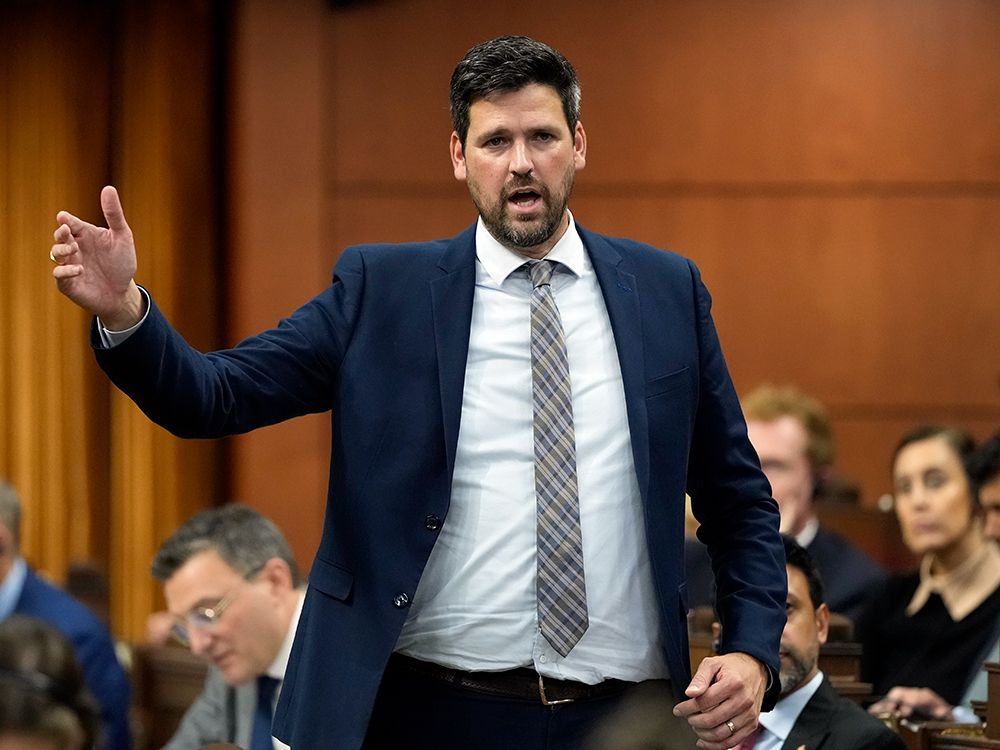
— Federal Justice Minister Sean Fraser tabled a new crime bill on Tuesday, seeking to stiffen punishments for offences committed against children and women, while also proposing to restore mandatory minimum sentences for a slew of offences.
The 167-page bill includes proposals to criminalize a pattern of behaviour seen in abusive relationships known as “coercive control,” and also declare that when a woman is murdered in the context of a controlling intimate partner relationship, which could include sexual violence and hate, that homicide be regarded as first-degree murder.
The change also includes referring to these murders as “femicide,” which was a promise that Prime Minister Mark Carney made during the spring election campaign.
The bill also fulfills his campaign commitment to include as part of the offence against the non-consensual distribution of intimate images, those which are “a visual representation” of someone that could be mistaken as real, which refers to the practice of using generative AI to make what are commonly known as sexualized “deepfakes.”
The legislation also seeks to respond to a recent Supreme Court ruling that struck down the one-year mandatory minimum sentences for the access and possession of child-sex abuse images, known as child pornography.
The Opposition Conservatives and other critics decried the top court’s decision at the time, calling on Fraser to use the notwithstanding clause in the Charter to allow the Liberal government to uphold the minimum sentencing requirement.
Tuesday’s bill responds by trying to safeguard remaining mandatory minimum sentences and include a change that states courts may allow an offender to serve less time, “but only if the mandatory minimum term of imprisonment would amount to cruel and unusual punishment,” for that specific offence.
The legislation also proposes to try addressing the issue of court cases being tossed due to an accused’s right to a trial not being met within a reasonable timeframe by directing that courts consider other options rather than granting a stay of proceedings.
The Canadian Civil Liberties Association released a statement on Tuesday, saying the bill attempts to overturn “
nearly 40 years of Supreme Court precedent” and removes the “strongest constraint requiring the justice system to run on time.”
“The federal government’s proposal to gut the (Charter right)
to be tried in a reasonable time is unconstitutional and punts the hard work of resolving delay,” Shakir Rahim, who directs the association’s criminal justice program, said in a statement.
National Post
Our website is the place for the latest breaking news, exclusive scoops, longreads and provocative commentary. Please bookmark nationalpost.com and sign up for our daily newsletter, Posted, here.

