



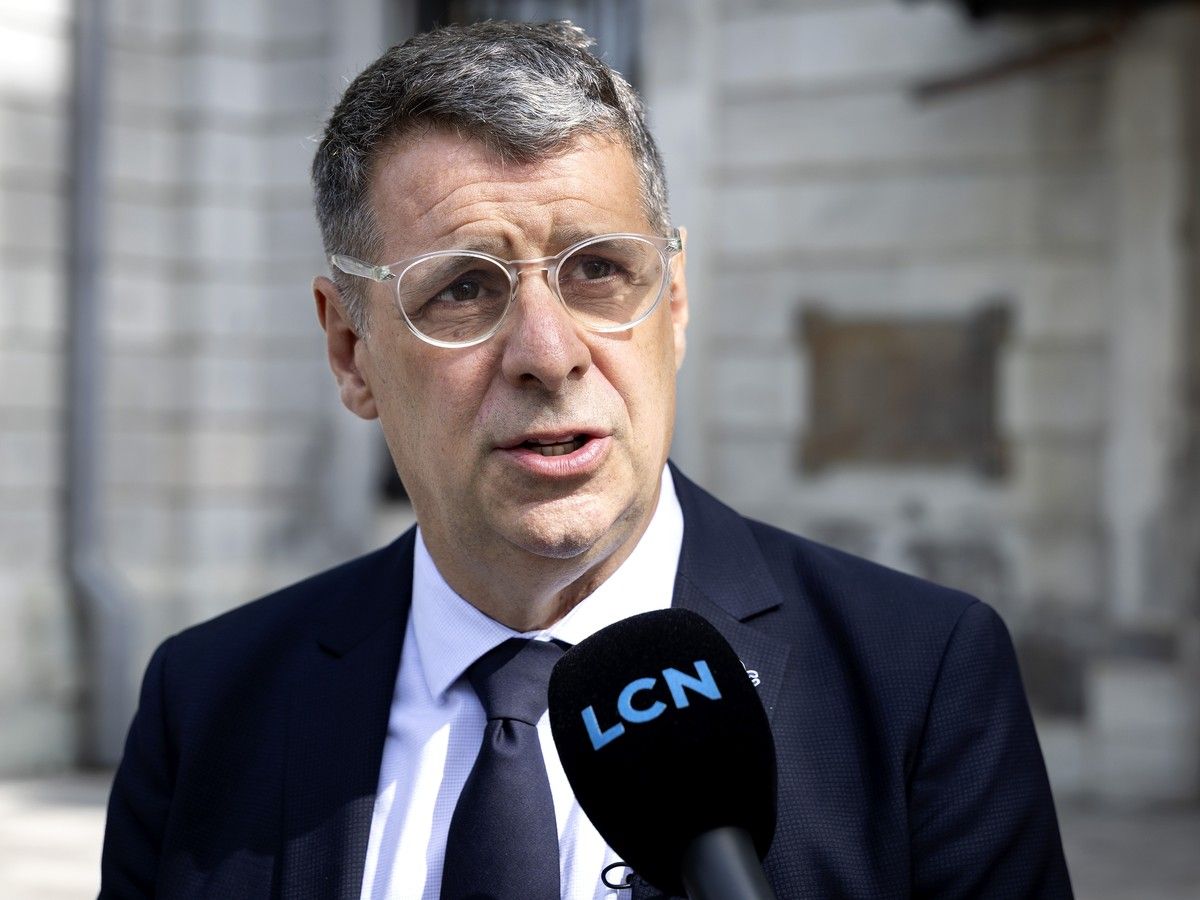
In the 2022 Quebec election, Éric Duhaime’s Conservative party received nearly 13 per cent of the vote and more than half a million ballots, yet failed to elect a single member to the National Assembly. Duhaime himself lost his riding. Normally, that kind of result sends a political party back to the margins, especially in a system where much of an opposition leader’s visibility comes from question period, parliamentary committees and a caucus generating daily media coverage.
Four years later, the Conservatives are still here. Duhaime has managed to retain much of his 2022 support and has even gained ground in recent polling, despite spending most of that time outside the legislature. More importantly, he has influenced the political debate from the outside. His message has remained fairly consistent: lower taxes, a smaller and more efficient state, less regulation and greater individual responsibility. Issues other parties could once afford to ignore have moved closer to the centre of provincial politics.
The most obvious example came last fall. With the CAQ sinking in the polls, François Legault shifted his government noticeably to the right, placing greater emphasis on law and order, state efficiency, reforming union legislation, national identity and social cohesion. The political calculation was easy to understand. Many of the voters the CAQ was trying to recover had once belonged to Legault’s coalition but were increasingly attracted to Duhaime. The problem for the CAQ was equally obvious: after seven years in power, borrowing the language of an opponent risks convincing voters to choose the original instead.
The Parti Québécois presents a different case. No one could mistake Paul St-Pierre Plamondon for a classical liberal. The PQ continues to view the Quebec state as an essential instrument of national power. Yet its vocabulary has also changed. The party now talks openly about government efficiency, reducing bureaucracy, questioning certain state structures and lowering parts of the tax burden. During much of the CAQ era, Quebec politics focused less on how large government had become than on what government should do next. Duhaime has helped reopen that debate.
That conversation is not exclusively economic either. In Quebec, language, culture and national identity are ultimately questions about what a society wants to preserve and pass on. Those instincts can fit naturally within a conservative worldview alongside attachment to family, personal responsibility and community. Duhaime has often spoken about moving Quebec’s Overton window. It is a somewhat academic expression for a fairly simple political objective: make ideas that once seemed marginal respectable enough that your opponents eventually have to address them.
Of course, the political moment has helped. Quebec’s finances are deteriorating, taxes remain high and many voters believe they are receiving less from public services despite years of additional spending. Businesses continue to complain about regulation and labour shortages. Duhaime did not create these frustrations, but the Conservatives have given them a political outlet.
The next question is whether that influence will finally produce seats. The PCQ is competitive in several ridings, particularly around Quebec City and its south shore, where the federal Conservative Party is strong. Even a modest caucus could matter considerably if Quebec elects a minority government. Budgets, confidence votes and economic legislation could suddenly require Conservative support. Duhaime would no longer be trying to influence the legislature from the outside; he could hold votes a government actually needs to survive.
That situation should interest conservatives elsewhere in Canada. Federal election results often leave the impression that Quebec has little appetite for conservative politics, but that picture is incomplete.
Quebecers may be more conservative than they sometimes believe themselves to be. The province’s attachment to family, language, culture and national identity reflects a deep instinct to preserve what matters and pass it on. Quebec also has a long tradition of entrepreneurship, local autonomy and suspicion toward distant institutions, especially the federal government, telling people how they should live.
What has often been missing is not necessarily conservative instincts, but a political narrative capable of bringing them together.
That is the opportunity for Duhaime. A party that can connect the desire to protect Quebec’s identity and way of life with frustration over taxation, government inefficiency and an increasingly intrusive state could appeal to voters who have never thought of themselves as conservatives at all.
That does not mean Quebec is about to become Alberta. It does mean the old assumption that conservative politics has a natural ceiling here deserves to be challenged.
Duhaime has already done something unusual: without a seat, without a caucus and largely without access to the National Assembly, he has pushed other parties onto issues he has been talking about for years.
If he enters the National Assembly on Oct. 5 with a caucus — and perhaps possibly with the balance of power — his influence could become much harder to dismiss.
Éric Duhaime does not need to govern Quebec to change the game.
In many ways, he already has.
Kevin Paquette is a consultant at Crestview Strategy. He was a political advisor to Quebec’s Minister of Public Security and president of the Coalition Avenir Québec’s youth wing.

