


I’m just guessing here, but it seems possible the ad campaign was the start of the problem.
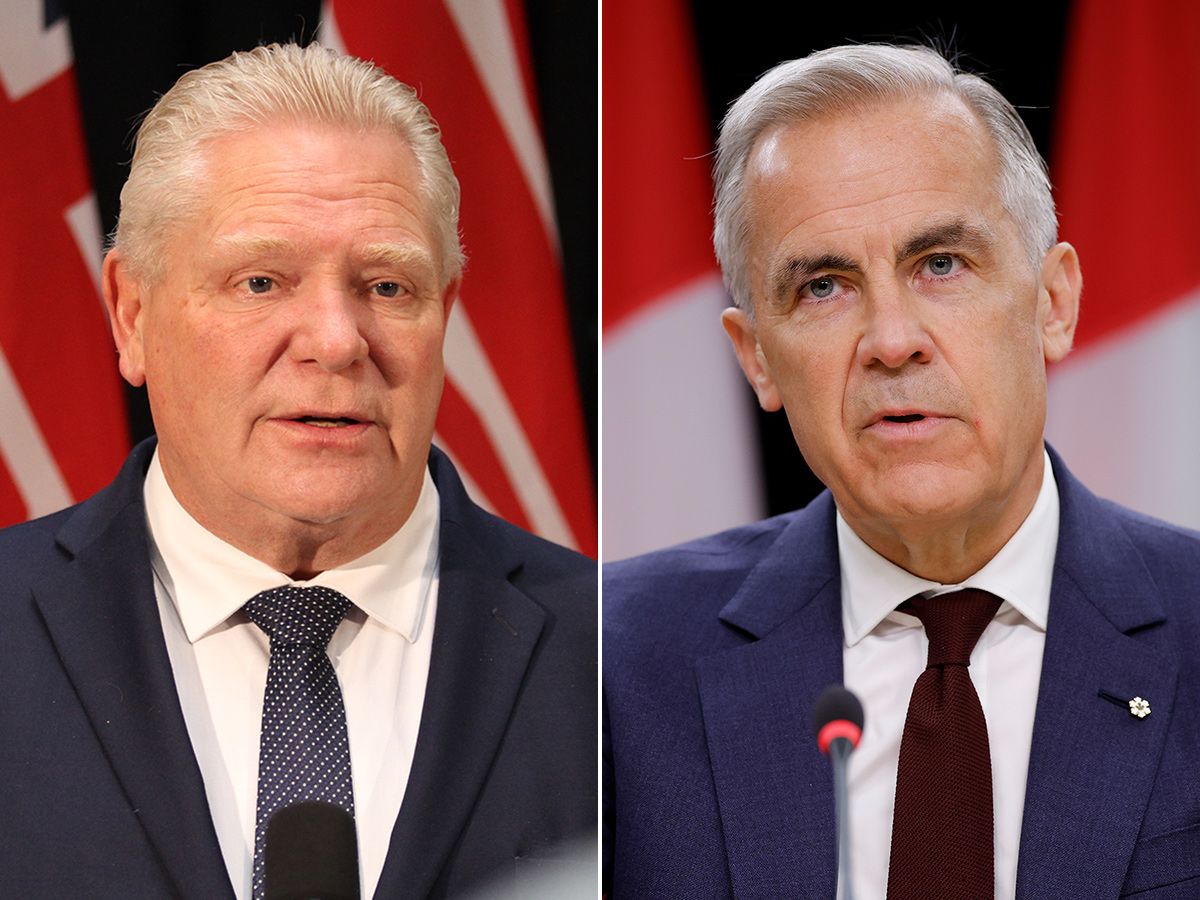
Until Doug Ford’s Ontario government launched a two-week U.S. ad blitz challenging the Trump administration’s trade practices, Ford and Prime Minister Mark Carney were getting along swimmingly.
Since their breakfast get-together at a Toronto-area diner in mid-March, things between the two were all handshakes and smiles. The polished egghead PM and the folksy high school graduate premier had found a sweet spot across the political divide that usually separates their two parties.
Then the difficulties started. Ford’s October ad , featuring clips of a tariff-critical Ronald Reagan, unsettled Carney’s delicate trade talks with Washington, predictably annoying the preternaturally sensitive occupant of the White House.
Nothing on either front has been the same since. Carney’s “negotiations,” if you can call them that, consist of U.S. representatives issuing demands, threats and a varying range of insults while Canada’s respondents roll their eyes and look for a soother large enough to fit the jaws of an oversized, uncontrollable baby in mid-tantrum.
At that point in the Ford relationship, Carney had little leeway for complaint. He’d happily glommed onto the whole “elbows up” ploy when it suited his agenda, and Ford is nothing if not up-elbowed to a fault. The Ontario leader refuses to cave to U.S. entreaties to return American alcohol to store shelves, urges tit-for-tat retaliation for every U.S. tariff hike and projects all the penitent fervour of a former Trumpist admirer who’s come to see the light.
Ford is also no diplomat, arguing that, since bullies only respond to strength, Ottawa should include oil, gas, electricity, fertilizer and anything else the U.S. needs and Canada supplies as weapons against U.S. assaults.
“We are an energy powerhouse, and we could dismantle the U.S. if we wanted to,” he proclaimed at a gathering of premiers. “They need to feel the pain, rather than us constantly feeling the pain.”
Without naming names, he questioned Ottawa’s tactics of jollying along the Americans, agreeing to moderate concessions while focusing on the bigger picture of continental trade talks.
“I’m losing patience … we can’t keep rolling over,” Ford said . “We always seem to be on our back heels. We need to be on the offence, not constantly on the defence with President Trump.”
That couldn’t have sat well with Carney, who can get snippy at the slightest hint of criticism from a questioning journalist, much less a high-profile premier.
Ford nonetheless remains all-in on Carney’s push for big projects with big investments. He’s got a bundle of his own: a tunnel under the country’s busiest highway, a 3,300 km oil pipeline from Alberta to Ontario, a long-sought all-season road to Ontario’s far-north, mineral-rich “Ring of Fire” that the premier claims will create 700,000 jobs and add $22 billion to the province’s economy.
If Carney disapproved of any of those schemes, he kept his views to himself, but trouble began when Ford announced a surprise plan to expand Toronto’s downtown Billy Bishop airport to allow commercial jets to land just a few minutes offshore of Toronto’s business towers.
Toronto’s mayor was firmly opposed, as were most of the residents of the forest of condominiums erected along the shoreline. Ford was brooking no opposition, however, announcing the province would seize whatever land it needed and exclude the city from any further part in the official body that governs the airport.
At first, Carney seemed open to the plan, calling it “a very interesting vision,” with “big possibilities.” But with public opposition mounting and upcoming by-elections to win, Transportation Minister Steve MacKinnon declared a week ago that Ottawa would have nothing to do with the project, effectively killing its chances.
That was more than Ford could stomach. A few days after he asserted that Carney “did an excellent job getting this (bridge) deal done,” reports began appearing that Ontario’s government was no longer as enthused as it used to be about a federal plan for the $90 billion Alto high-speed rail project joining Toronto to Quebec.
“Too many questions (about the rail plan) remain unanswered. Too many voices have been ignored,” a group of Ford caucus members publicly complained.
Where the bromance goes from here is unclear. Carney was notably absent from the grand opening of the Gordie Howe bridge linking Windsor to Michigan, visiting a national park in Newfoundland instead. The prime minister has attracted considerable fire for his varying versions of the last-minute deal Ottawa accepted to finally get the bridge operating, and was no doubt happy to avoid another grilling. Ford, who did attend the ceremony, noted pointedly that “Canadians and Americans are better off when we work together instead of standing apart.”
Good relations between Ottawa and the country’s most populous province are always to be desired, but are also fraught with a cauldron of political considerations. In those first brotherly days, both Carney and Ford were riding high: a popular new prime minister and a premier celebrating a third majority victory.
Stuff’s gotten more complicated since then. Ford has made a series of clumsy mistakes, his bull-in-the-airport-shop being just the latest, and his government now trails the leaderless Liberals in opinion polls.
Carney has exhibited a less-than-stellar grasp of public communications. The rollout of a B.C. affordable housing plan was grosslymishandled , he still hasn’t found an explanation of the bridge deal coherent to the unwashed, and his newly-appointed principal secretary is best known in Indigenous communities for authoring a searing 2016 indictment of aboriginal life that still resonates poorly among its leaders.
Both have time to repair things. Ontario’s next election isn’t until 2030; Carney has three-plus years until his. Ontario Liberals will choose a new leader in November; a more competent opponent than he’s faced thus far could force some renewed caution on Ford, perhaps even convincing Carney that the fact that a project costs a lot and involves a lot of construction doesn’t necessarily make it a good idea.
Carney seems yet to have allowed for the intensity of the scrutiny his job involves and the advisability of clarity in his remarks.
Both recognize that until the U.S. either hobbles its president or picks a new one, containing the damage he can do to Canada remains their greatest challenge. Good relations would go further than the alternative in making a success of that.
National Post