



In Toronto today it’s deemed entirely acceptable to build a mammoth residential/retail/commercial/hotel tower reaching 80, 90 or 100-and-more storeys into an increasingly obliterated sky, and be celebrated for your vision, ambition and architectural brashness. But just try to get permission for a modest structure able to house six families and see how far you get.
Toronto’s city council was so alarmed by the notion of six-plexes being
to local neighbourhoods that it banned them from all but nine of the city’s 25 wards. A much-watched
in June balked at a proposal to allow six-unit low-rises across the city, limiting them to a few corners of the country’s most populous burg.
Four-plexes are acceptable, if still viewed as a bit dodgy by residents wary of finding one going up just down the street. And it’s perfectly permissible
to erect a fortress/mega-mansion large enough to house Drake and his entire circle of essential hangers-on — which the singer
with his 50,000 square feet of “ultra-luxurious living space” in the tony Bridle Path neighbourhood — as long as it’s the abode of a single incredibly wealthy owner. But accommodating six families in a fraction of the space is verboten. Especially if you were foolish enough to want to put it anywhere near the Bridle Path.
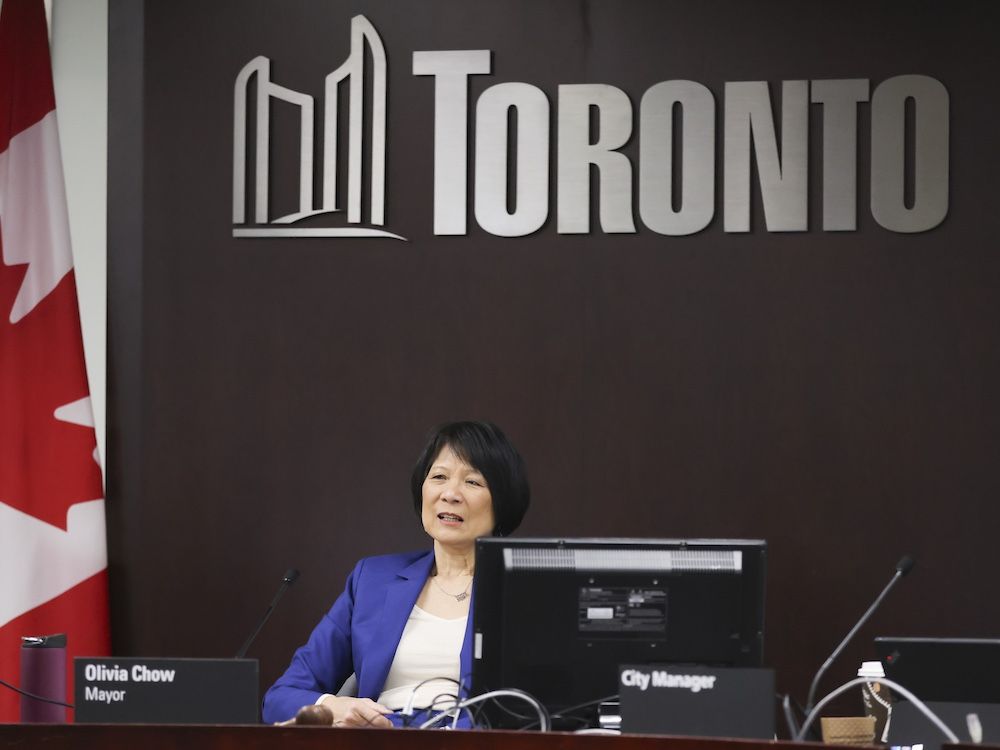
So great does City Hall view the threat of six-plexes that Mayor Olivia Chow — the long-time New Democrat and advocate for Canada’s less advantaged — refused to intercede to force through approval. Under “strong mayor”
introduced by Ontario Premier Doug Ford, leaders in many communities have the ability to override council decisions in certain instances. The contentious regulations were introduced to ensure municipal bodies adhered to certain provincial priorities, in particular Ford’s pledge to deal with a housing crunch by building more homes, roads and utilities.
Toronto was among the first to get the powers, but Chow declined to invoke them to help hard-pressed Torontonians find a place they could actually afford to live.
“I don’t believe a top-down way of doing things will mean that people are going to rush out and build housing,” she
in defence of her decision. “We need to work with the homeowners so that they feel comfortable doing it.”
Chow believes in consensus, even if it means enabling those Torontonians fortunate enough to have acquired homes before prices tap-danced into the stratosphere to continue hindering less-affluent late-comers from moving in next door, across the back fence or somewhere down the street. Current Toronto stats show the
home lists for just under $1.1 million, and don’t expect to get much even at that price.
Council’s aversion to six-plexes risks losing $30 million in
from a federal program introduced specifically to spur on home construction. Ottawa promised the city $118 million but
in March it would hold back 25 per cent unless six-plex construction was approved.
While agonizing over six-plexes, the city is eagerly filling its crowded core with a bevy of new towers so high they’ve been accorded their own descriptive. At least eight “supertall” skyscrapers are in the works, the largest (for now) being
SkyTower at the very foot of Yonge Street on the Lake Ontario shoreline, in a neighbourhood once envisioned as a sort of waterfront oasis away from the downtown crowds, but long-since abandoned to forests of obstructive condo towers and office buildings.
SkyTower is just the first of six high-rises
for an address that was previously home to the Toronto Star newspaper, traditionally a campaigner for a “liveable,” low-rise city, but which decamped last year for a posh location a short distance away.
At 105 storeys, SkyTower is six storeys
than 19 Bloor West, another “supertall” planned farther north at the confluence of Yonge and Bloor, ground zero for high-end shoppers and fashionistas. That structure, in turn, is just down the street and nine metres taller than The One, a much-troubled 85-storey real estate
that’s been through partnership battles, financial crises, creditor protection and high-wire legal
in the decade since it was announced as what would then have been the city’s tallest condominium building. It’s now being revamped and completed by a court-approved builder after failing to attract a
a year ago.
Glitzy as the supertalls may appear, they find themselves thrusting skyward in a
fast plunging in the opposite direction. A
by research firm Urbanation Inc.
that a
of just 502 condo units were sold in the second quarter across the entire Greater Toronto and Hamilton region, an area stretching well beyond Toronto itself to include some seven million people.
That’s down 69 per cent from last year, and 91 per cent below the average of the past decade, the
levels in 30 years. Only 170 of those sales were in Toronto itself. Meanwhile, 19 Bloor West alone is expected to add almost 1,300 new units when it’s completed.
Don’t reach for your hankie just yet, mind. For years now, Toronto condo sales have been largely a game of buy-and-flip. Some 70 per cent of new units went to investors hoping to make a quick profit by flipping the end product once construction ended, or renting it out at eye-watering rates. But rents are
along with the market glut, leaving investors holding units worth less than they agreed to pay and having trouble borrowing enough to cover the difference. Dozens of developments have been cancelled or delayed as a result, many stuffed with tiny units 400- to 600 square feet in size, built by developers persuaded people would happily attempt to raise families in shoeboxes.
Anyone old enough to remember when Canadian teams still won Stanley Cups should know that busts are as integral to the real estate business as tyrants are to Russia. There hasn’t been a serious one in Ontario since a crash in the 1990s that lasted about seven years, so a substantial shock now could hardly be deemed unreasonable.
Maybe it will force some useful changes. Something has to happen to that mass backlog of tiny, unwanted boxes in the sky. You can’t solve a housing shortage with base prices starting at $1 million. Nor can you pretend you’re building “homes” when seven in 10 go to quick-buck investors planning to flip them at the first opportunity.
If Toronto politicians want to get serious about a problem they love to moan about but never really address, they’ll organize a future with fewer hundred-storey playpens that will “Transform Toronto’s Skyline” — as if that should be a priority for an overcrowded city with some of North America’s worst traffic — and recognize that a few hundred six-plexes would do a lot more to serve home-hungry people than another vanity project in the sky.
National Post