



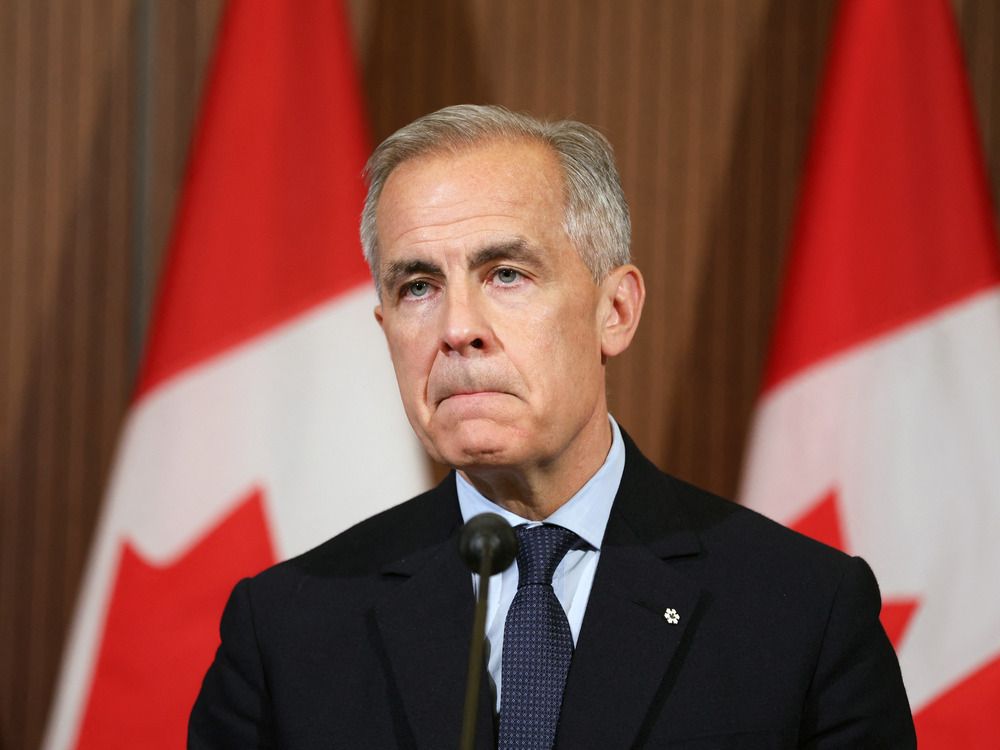
Politics is not a zero-sum game where one person’s win is automatically another’s loss. An economy is not a conserved system, so, in theory, it is possible that a government could reduce taxes, increase spending and balance budgets (if, for example, revenues rise).
But it is a theory that is as rare in real life as white peacocks.
The Carney government is
in the process of legislating a $5-billion-a-year middle-class tax cut
, while planning to increase spending on things like the military and housing, and at the same time promising to balance the operating budget in three years.
Yet, the
Main Estimates, the government’s spending plan
that was released on Tuesday at the same time as the throne speech, shows no signs of the restraint that will be needed if the government is to meet that last target.
This is the first evidence of concrete spending plans since the election and it seems the bureaucracy did not get the memo about the need for fiscal rigour.
The prime minister was critical of his predecessor’s fondness for distributing cash, saying the
Trudeau government spent too much and invested too little
. Mark Carney said his government will limit operating-expense increases to two per cent a year, down from nine per cent a year under former prime minister Justin Trudeau, while preserving transfers to provinces and individuals.
The Main Estimates suggest that message of restraint fell on deaf ears in Ottawa: total budgeted spending is scheduled to rise 7.75 per cent to $486.9 billion this fiscal year across 130 federal organizations (compared to last year’s Main Estimates). The government will ask Parliament to vote on $222.9 billion of spending measures, a 14 per cent increase on last year’s estimates.
The most egregious spending appears to be on consultants. The estimates reveal that
budgetary expenditure by “standard object”
— in this case, “professional and special services” — are set to hit $26 billion this year, if departments are granted the approvals they are seeking (the estimates are an “up to” amount; departments could spend less).
These numbers require numerous caveats. They include operating and capital spending, as well as transfer payments and contributions to Crown corporations. To add some perspective, payments to seniors (Old Age Security and the Guaranteed Income Supplement) swallow up $86 billion of that number. Some people have suggested the only way to make a meaningful dent in the spending picture is to means test OAS, but Carney has already ring-fenced all transfers.
It should also be pointed out that the Main Estimates are not the whole picture. There will be additional “supplementary estimates” over the course of the year that will likely increase spending further in response to events.
To be fair to the government, it has hardly had time to conduct a line-by-line spending review.
But it is bemusing how the bureaucracy could read Carney’s election commitments and conclude it was a good idea to increase spending in just about every department in government. My rough calculation is that 63 departments will see their budgets rise beyond the rate of inflation, compared to the previous year’s Main Estimates, and only 14 will have their budgets cut. To take just one example, the National Capital Commission will see its allocated spending increase to $179 million this year, from $94.7 million in 2024/25, most (but not all) of which is earmarked for capital spending.
Carney has said that he will institute a new system of budgets that separates investments in capital projects from operational spending. To make the operations budget balance, the government could blur the line between the two. For example, the Liberal platform promised $30 billion in new spending for the military, including a pay raise for Forces members and investments in housing on bases. All of that could conceivably be deemed to be an “investment,” though wages are clearly operational.
But there are well-established rules and principles to ensure transparency, and if the government attempts any sleight of hand it will be called out by the auditor general’s office and Parliamentary Budget Office.
In any case, the borrowing requirement will still be there, driving up the cost of servicing the debt, which is scheduled to hit nearly $50 billion this year — far more than the $35.6 billion earmarked for national defence.
The only way to truly hit the mythical trifecta of tax cuts, increased spending and budgetary balance will be by introducing an austere-looking budget later this year that prioritizes spending on housing, policing and defence, but makes meaningful cuts elsewhere.
This is a business-as-usual spending plan from a government that has promised “a fundamentally different approach to governing.”
National Post
Get more deep-dive National Post political coverage and analysis in your inbox with the Political Hack newsletter, where Ottawa bureau chief Stuart Thomson and political analyst Tasha
Kheiriddin
get at what’s really going on behind the scenes on Parliament Hill every Wednesday and Friday, exclusively for subscribers. Sign up here.

