



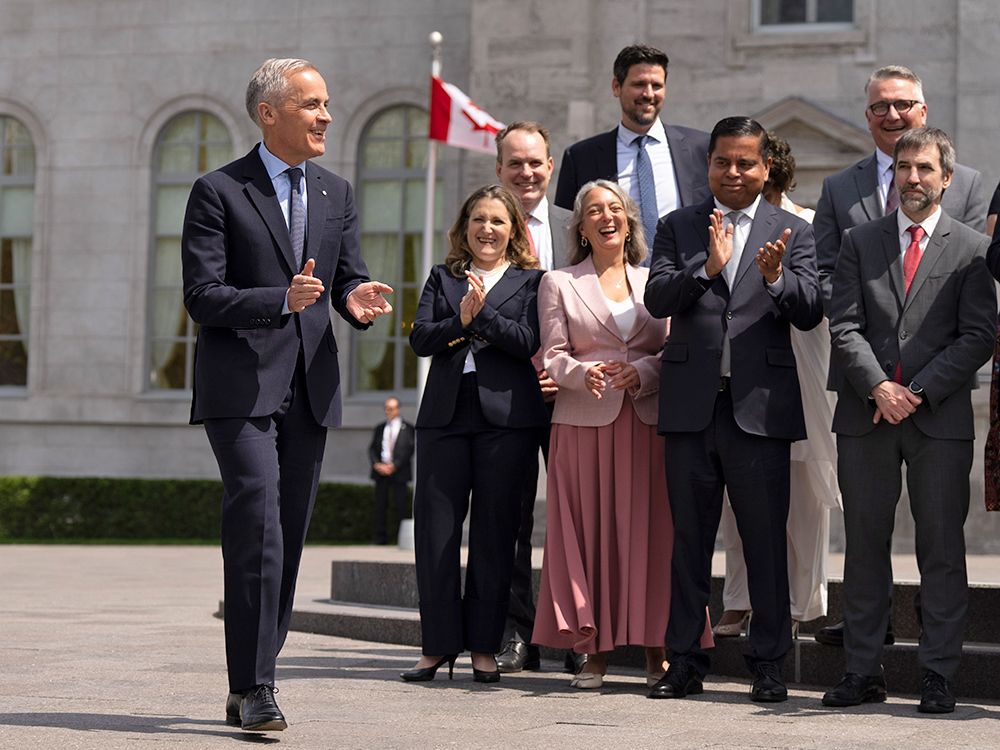
As the new prime minister reflects with pride on his unsullied cabinet, he should remember the words of P.G. Wodehouse’s Bertie Wooster: “It’s always when a fellow is feeling particularly braced with things in general that Fate sneaks up behind him with a bit of lead piping.”
The recent history of swearing-in ceremonies suggests that the day of the cabinet unveiling is the peak of the government’s popularity. After that, it’s all downhill.
Ironically, much of the damage to the governing party’s brand will be done by
the very ministers being sworn in with such fanfare
.
Some of the new cohort will prove to be ethically challenged, the wrong fit, as useless as pulled teeth or incompatible with their deputy ministers. Mark Carney, like every prime minister before him, has just made mistakes that he didn’t know he was making.
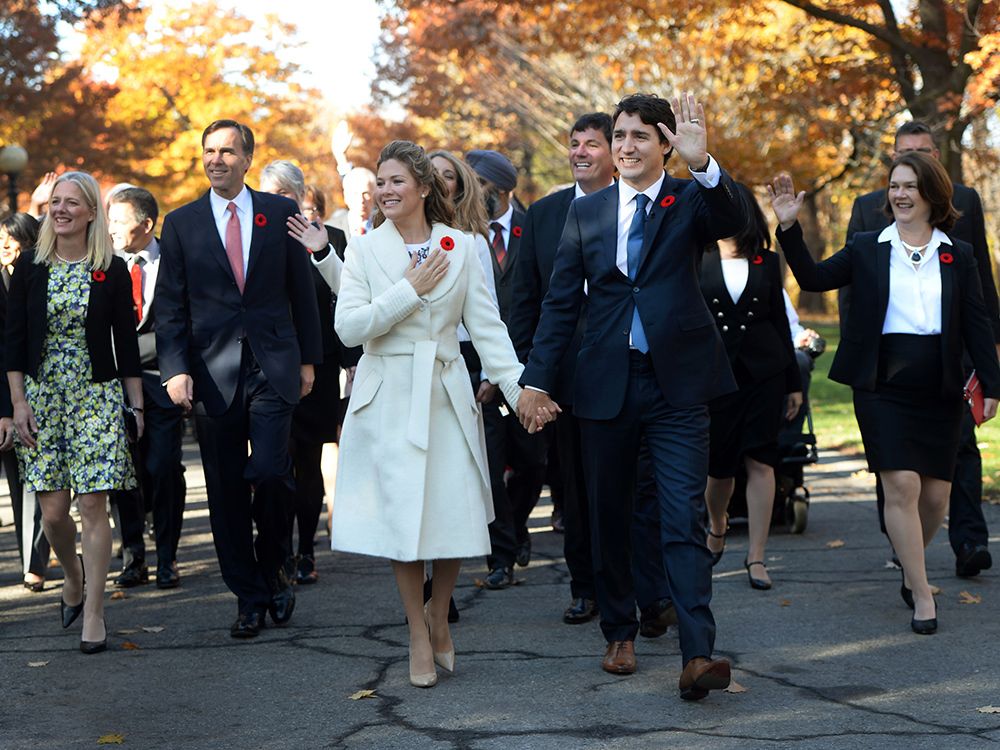
Take Justin Trudeau’s first gender-neutral cabinet, which emphasized diversity over competence. With hindsight, Trudeau would likely have made any number of revisions: step forward
,
,
,
, John McCallum, Stéphane Dion and, for different reasons, Jody Wilson Raybould.
At least, Carney’s new ministry was not chosen as if the participants would later play themselves in the movie version.
The 2015 ceremony was like a carnival: cheering crowds were invited to hail each new arrival as if they were Taylor Swift. Trudeau’s statement on why he had balanced men and women in his cabinet — “Because it’s 2015” — was his most memorable, carefully crafted but apparently impromptu line.
The 2025 version looked more like the annual general meeting of an insurance company, charged with electing new officers to the board.
This time around, there was less of a bias against anyone older than 40 and ministers appear to have been chosen largely on merit.
But the constraints of gender, ethnicity and geography mean that 50 per cent of this cabinet is female, compared to 38 per cent of the caucus. In addition, there are rookie ministers who, as Carney said of Conservative Leader Pierre Poilievre, have barely made payroll and are now running large government departments.
Ottawa is a small town and not particularly well connected to the rest of the country. The legitimacy of any government rests on it reflecting the way Canada looks and thinks. Carney said he did not want a cabinet that looked like him.
Fair enough.
But it necessitates against putting the best-qualified people in the most important jobs, with all the inevitable frustration at failing to hit targets that follows.
Cabinetmaking, as Sir John A. Macdonald once said, is reliant on the quality of the timber sent by voters.
Carney has been relatively lucky in this regard
: he had a large pool to choose from and there are a couple of new faces that will make this an upgrade on recent cabinets.
The priority files are clearly Canada-U.S. relations and national unity.
On the former, Dominic LeBlanc is such an able fixer that Carney may have been tempted to transplant him to Washington permanently as ambassador. As it is, he remains the point man on Canada-U.S. trade. Voters wanted change and new faces on the front bench. By any measure, LeBlanc’s face is not fresh. But the Trudeau government’s bias against experience meant in its early days, it discovered age-old problems for the first time. LeBlanc’s presence at least provides continuity, stability and an ability to get along with the unspeakable.
Foreign affairs is Anita Anand’s fifth portfolio in as many years. But she too is a serious person who has impressed most people with whom she has had contact.
There are some curious choices: Gregor Robertson at housing, given the soaring house prices in Vancouver when he was the city’s mayor; and Sean Fraser at justice, given that the Canadian consensus on “immigration as a good thing” was shattered while he was minister.
But the key change is the appointment of Tim Hodgson as natural resources minister to replace Jonathan Wilkinson, who had become persona non grata with the energy industry. Hodgson has Carney’s trust: the two worked together at Goldman Sachs and the prime minister brought his former colleague into the Bank of Canada as an adviser when he was governor. Hodgson also has energy experience as the former chair of Hydro One and a board member with MEG Energy.
A study by the
last week found the number of people in Alberta seeking to separate would fall dramatically if the government pursued more energy-friendly policies. No pressure, sir, but you have the power to make or break the country.
Perhaps the key formula for success with many of the rest is to ensure that rookie ministers are not teamed up with rookie deputy ministers or rookie chiefs of staff. One senior player in the Trudeau government told me that in his experience, if three out of three are experienced, all will be well; if two out of three are, you can still make progress; if one out of three is fresh in their job, you’re probably going backwards; and, if all three are new, you’re heading straight backwards.
The key to real progress is to have a senior figure at the top to push a file and navigate the bureaucracy.
Without that, cherished projects grind to a halt.
Carney is more likely to be that person than was Trudeau, who was almost entirely political.
But the prime minister can’t do it single-handedly, so he is going to have to streamline a system where the scarcest commodity in Ottawa — time — is used as efficiently as possible.
That means everyone needs to be pushing in the same direction, which is not the norm in politics.
Carney will be aware of Louis XIV’s famous quote that each appointment creates hundreds of malcontents and one ingrate. He has just bumped senior figures like Wilkinson, Bill Blair and Ginette Pettipas-Taylor from cabinet. Inevitably, that means thwarted ambitions and bruised egos.
He will be equally aware that Trudeau’s failure to manage or even show interest in his caucus sealed his fate.
Carney has promised the return of “more traditional cabinet government,” after years of complaints that the unelected advisers at the centre are too dominant.
Yet, as his predecessors found out, modern politics demands that the message be co-ordinated from the centre. Eddie Goldenberg, who was senior adviser to former prime minister Jean Chrétien, recalled in his account of Ottawa life, The Way it Works, that the government in which he was a key player tried to involve the whole cabinet in priority setting. It stopped when it became clear that they were too busy with their own departmental responsibilities to give serious thought to the government’s agenda.
During the campaign, Carney joked that instead of campaigning in poetry and governing in prose, he campaigned in prose and will govern by econometrics. But he is no longer running a central bank where his will quickly became his subordinates’ command.
Now, he’s at the helm of a great, unwieldy machine where an order becomes a request as it moves down the chain, before turning into a recommendation and finally a suggestion at the operational level, if it makes it that far.
Why? Because it’s 2025. The political will is about to meet the administrative won’t.
National Post
Get more deep-dive National Post political coverage and analysis in your inbox with the Political Hack newsletter, where Ottawa bureau chief Stuart Thomson and political analyst Tasha Kheiriddin get at what’s really going on behind the scenes on Parliament Hill every Wednesday and Friday, exclusively for subscribers. Sign up here.

