



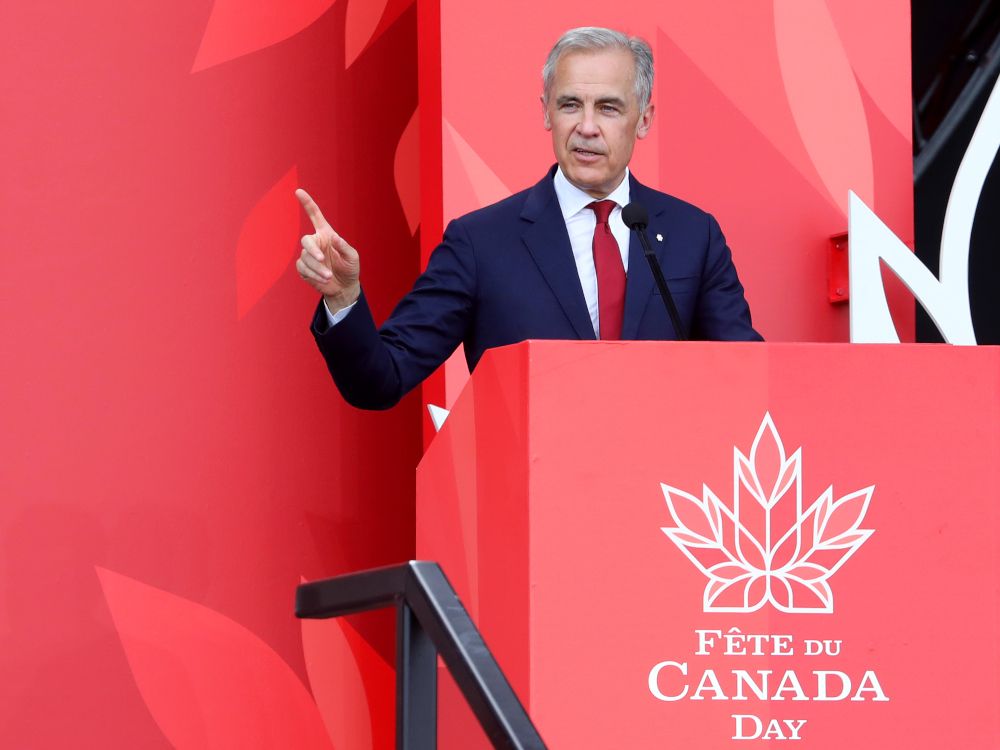
When globalism was hot, then-prime minister
tried to be hotter by deciding that Canada has “no core identity, no mainstream,” and suggesting Canada had become a “post-national state.” Now that nationalism is back in vogue, Prime Minister Mark Carney, unwilling or unable to counter U.S. President Donald Trump’s taunts and
, has become an odd recipient of Canada’s quest for a U.S.-like national identity. Even as he rails against America’s temperamental chief executive, he has shown little interest in curbing his country’s own
.
But Canadians, indulging in a rare burst of
, may be jumping on the wrong train. Even as people reject globalism, the “national state” is also losing its appeal — not only in
, but throughout Europe and the United Kingdom, as well. Some of this, on the left at least, reflects
, epitomized by DEI and the
of First Nations land rights, which are now deeply entrenched in the education systems of the U.S.,
and Europe.
Support for a highly centralized state also represents a rejection of
and American attempts to balance national and regional concerns. As enormous countries, we each have populations that have predominately different origins and exist in often wildly different economies. A suburbanite at the edge of
or in the endlessly expanding sprawl north of Dallas has very different ideas and priorities, whether in terms of schools or
, than an arts or non-profit worker in central Toronto or Manhattan.
The differences get greater when you look across the continental expanse.
and the Prairie provinces depend on raw material production, which is not exactly in line with
, as Conservative Leader Pierre Poilievre has rightly
. British Columbia inhales new urbanist dogma and seeks to
, and Ontario remains divided between its industrial base and its greener-than-thou urban elites. Like them, Carney seems more focused on things other than finding ways for Canada’s various communities to thrive.
But more power to the provinces or the states does not really go far enough. For most things, outside of national defence and foreign relations, the real goal should be to bring decision-making down to as local a level as possible. This notion is popular among Canadians,
wish to see decisions made closer to home.
This notion is also embraced in the U.S., notes Gallup. Big companies, banks and media receive low marks from the public, but small business continues to enjoy widespread support across party lines. Millennials, largely liberal on issues such as immigration and gay marriage, are as one commentator suggests, more “socially conscious,” but they do not necessarily favour the
embraced by earlier generations; many prefer small units to larger ones.
Support for localism is widespread elsewhere, as well. In
, there have been
against globalization and
with the European Union, of which it is a founding member.
and the rest of
, recovering from decades of central control and imperial edicts from Moscow, also tend to favour localism. This is also true in
, particularly as Basque and Catalan cities look for more self-determination. There’s also push-back against federal encroachment in
and in the U.K., exemplified by Britain’s withdrawal from the EU.
So even as both Canada and the U.S. thump around nationalist braggadocio, grassroots sentiment wants something neither global nor controlled by federal authorities. This tendency could grow as suburban centres — where local governance, even in places like
, seem far better run than the city itself — continue to grow.
Rather than submit to the tyranny of distant rulers, we need to instead seek to drive economic, political and social decision-making to local levels as much as possible. The habits of self-government, as Alexis de Tocqueville
, are only acquired through civic association. It’s in local venues where the practice of democratic citizenship is most
.
In contrast, the centralization of power seems only to
, even in
, as whole populations and regions see their interests abandoned. In the U.S. under President Joe Biden, southern states grumbled about secession. Now under Trump, it’s the northern and Pacific cities that embrace open
on issues like
and climate change. Some even call for
.
Maybe it’s best to let communities decide what they want as much as is feasible and in keeping with broadly democratic standards. If British Columbia wants to attach itself to California and play the fool for China, let it do so. If Alberta, with
to the U.S., wants a policy that sustains its economy, or if it wants to have police that reflect its
, as opposed to that of Ottawa , why not?
We no longer live in age where only centralized bureaucracies, corporate or governmental, necessarily possess better information or expertise than informed locals. The internet and artificial intelligence should be used not to regulate everyone, but to provide communities, down to the local level, with tools to help them determine their own fate.
Decreasing the power of central authorities is critical to creating a more sustainable and democratic society. An empowered local level can restore the dynamism and promise of our creaking democracies while breathing life into community and social life. It provides a buffer both to the national nanny state dreamt by progressives and the increasingly conformist, opportunity-crushing global capitalism.
National Post