



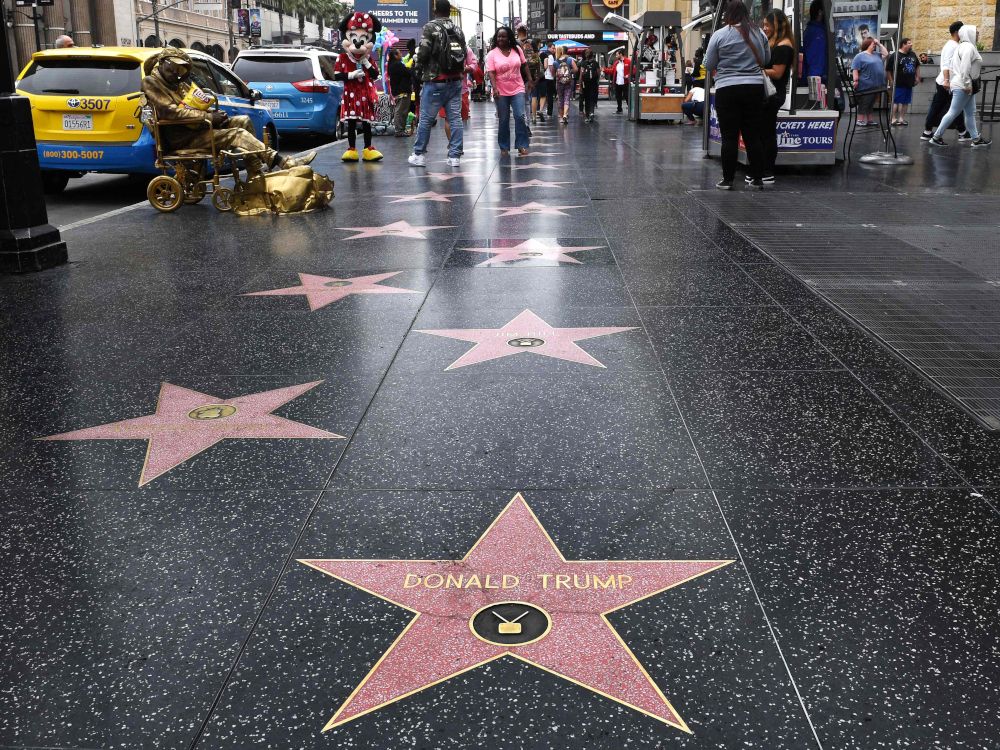
Canadians know better than anyone just how much the United States dominates cultural industries. Our theatres are filled with American movies. All the best TV shows, even on Canadian channels, have always come from the U.S. Most of the streaming services are owned by U.S. studios and tech companies. Those that aren’t are filled with American content. The
are generally populated with American talent. And our sports channels rely heavily on games taking place south of the border.
So of course U.S. President Donald Trump would
that the American film industry is dying “a very fast death,” which he preposterously calls a “national security threat,” and float the idea of instituting a “100% Tariff on any and all Movies coming into our Country that are produced in Foreign Lands.”
It’s an odd gambit given that the industry itself isn’t exactly thrilled that the president is looking to significantly increase their costs, either by taxing films or forcing studios to shoot in the U.S., which is often significantly more expensive than filming in places like Canada. As one unnamed “industry insider”
, this “would represent a virtually complete halt of production.”
Nor does Trump have a warm relationship with liberal Hollywood. When China announced last month that it was reducing the number of American movies it will import in response to Trump’s tariffs,
, “I think I’ve heard of worse things.”
As some “industry executives” mused to CNN, this whole proposal may be yet another way for Trump to punish his favourite whipping boy, Canada, due to the
we offer movie and television studios. But I wonder if it’s not a means of hurting both Canada and the Hollywood elite who never miss an opportunity to bash Trump and the people who voted for him.
Regardless, Canada has a lot to lose, especially provinces like British Columbia and Ontario that have large film industries and regularly welcome American production. According to
from the Canadian Media Producers Association, foreign production represented 56 per cent of Canada’s $12-billion film and television industry, with foreign companies investing nearly $8 billion into Canadian production in 2023.
Of course, like most of Trump’s outlandish proposals — how’s that waterfront resort in Gaza shaping up? — his Sunday post on Truth Social floating the film tariff idea should be seen as little more than an opening gambit. By Monday, the president was trying to reassure industry executives, saying that he’s going to meet with them and “make sure they’re happy about it.” And a White House spokesman said that “no final decisions” have been made and that “all options” are on the table.
Keeping its options open would seem prudent, given that no one actually knows how such a scheme would work. Unlike physical goods that cross a border, movies are considered services. The money made from selling them stems from the intellectual property rights the owners have over the films, not any physical media on which they’re transported. The proposal thus sounds more like a tax than a tariff, but questions remain about what exactly would be taxed.
Would all foreign films be subject to a 100 per cent tax, or just those that are shot overseas by American production companies? Would the tax apply to the total cost of producing the movie, or ticket sales within the United States? What happens if only part of the film is shot in a foreign country, or if the editing is done in the U.S. but the special effects are designed in Canada? And what about movies that are set in Europe, Asia or elsewhere in the world?
Given the logistical challenges, and the fact that most of Trump’s tariff announcements end up getting significantly watered down following backlashes from consumers and industry, the Ontario government is right to take a “
” approach.
But for Prime Minister Mark Carney, this is yet another sign that despite growing opposition to Trump’s economic policies and the negative impact they’re starting to have on the American economy, the president continues to think tariffs are the best idea he’s had since he bought the
to gain access to the dressing room.
It shows how determined he is to use tariffs and taxes to give American companies an edge, even when the industry he’s supposedly “protecting” doesn’t need any help — according to the Motion Picture Association of America, the U.S. ran a US$15.3-billion (C$21-billion) trade surplus with foreign markets in 2023.
It also shows that Ottawa cannot continue to drag its feet as Trump systematically attempts to destroy our economy. We need an economy that’s competitive enough to attract international investment; a creative industry that can sustain itself without taxpayer subsidies and rules forcing TV networks and streamers to create lame Canadian content; and leaders who will stand up for free markets and globalization in the face of the Bond villain who’s currently occupying the White House.
And we needed these things yesterday.
National Post
jkline@postmedia.com

