



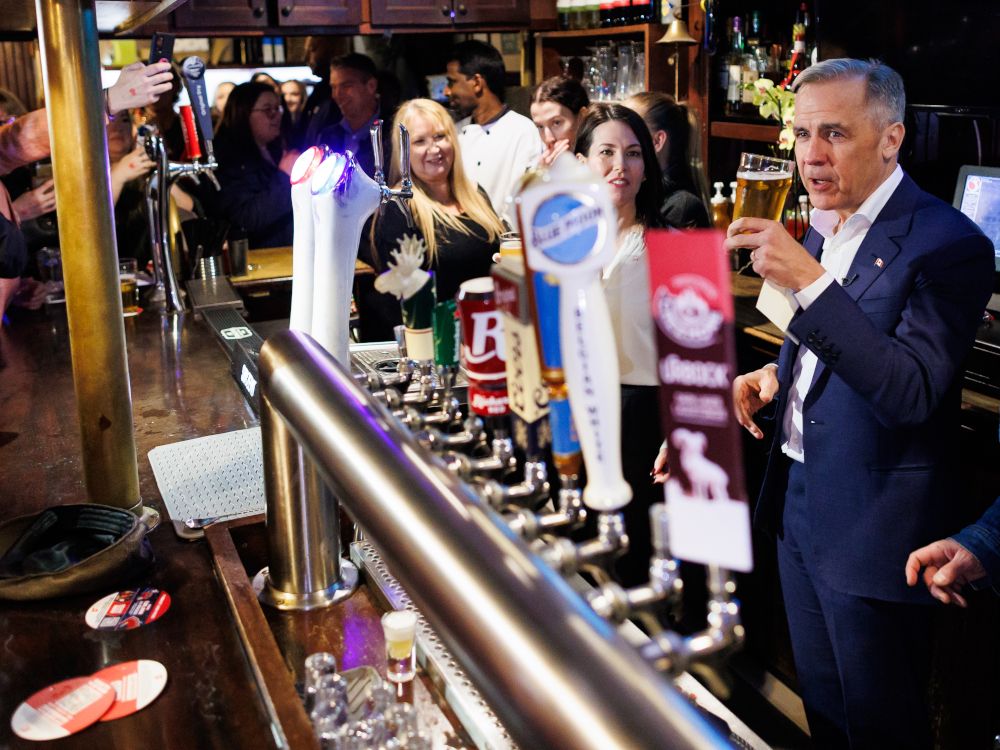
When Prime Minister Mark Carney adopted “elbows up” as a de facto campaign slogan, Canadians thought he was referring to the forceful way his government would tackle the economic crisis caused by the trade war with the United States. But judging by his post-election plans, it seems more likely that he was actually referring to the proper way to hold a beer on the summer barbecue circuit.
Less than a month ago, Carney was hammering home
that this was the “most consequential election of our lifetime.”
The
noted all the problems this country faces, including the worst “housing crisis” since the Second World War, “unsustainable” immigration, a military that’s not prepared to face “a world of growing threats” and slumping private-sector investment that’s “undermining long-term economic growth.” It used existentialist language, claiming that our “sovereignty” is “under threat” and that a “change of course is desperately needed.”
Despite sharp differences between the visions offered by the Liberals and Conservatives, there was remarkable unanimity on the need to develop our natural resources, diversify our export markets and reform some of the previous government’s more extreme environmental policies.
Given this government’s ambitious agenda, and the fact that Parliament has been
since Dec. 17, 2024, one would expect Carney and his new cabinet to buckle down and get to work fixing the myriad problems Canada faces and fortifying the economy to withstand the effects of U.S. President Donald Trump’s fast-moving tariff war.
Instead, we learn that following the throne speech on May 27, our new MPs will put in less than a month’s work before breaking for the summer on June 20. The Liberals won’t even bother
until the fall. Even teachers are wondering how a group of public servants could have it so good.
Normally, I would be celebrating the fact that the House hasn’t been sitting since December and won’t actually get down to business until the fall session begins on Sept. 15.
When former prime minister Justin Trudeau prorogued Parliament in January, a number of
died on the order paper. Normally, I’d thank my lucky stars that our federal politicians haven’t had the opportunity to make things worse, as they are apt to do, over the past five months.
But again, these are not ordinary times. In his
in office, Trump issued 142 executive orders, upended the global economic order, signed five bills into law, laid off tens of thousands of public servants and launched a major crackdown on illegal immigration.
By the time our Parliament actually gets down to business in September, 140 days will have passed since the election and Carney will have been prime minister for 185 days. Aside from the three-week spring session, Parliament will not have convened for a full nine months — enough time to make a human baby!
Yet Carney will have practically nothing to show for it — no legislation (unless his government miraculously gets a bill through the House and Senate during the spring session), no budget, not even a
coherent counter-tariff policy
.
Instead of staving off the threat of Alberta separatism and making it easier to get pipelines approved, Liberal MPs will be flipping flapjacks at the Calgary Stampede. Rather than finding ways to get Quebec to buy into a pro-Canada agenda and ratifying new trade deals to bring down grocery costs, they’ll be enjoying the cuisine at
barbecues and
in Prince Edward Island.
Politicians generally excuse their lengthy time off by noting that much of their work involves dealing with constituents. Having spent a summer working at a provincial constituency office in my youth, I can attest that this is absolutely true. But during what Carney acknowledged in
is a “critical time” in our history, Canadians need their elected representatives to focus on big-picture items.
We need them to simplify the tax code, not help us deal with the Canada Revenue Agency; to spend their time removing red tape so new housing and infrastructure developments get approved, rather than helping individual constituents navigate municipal bureaucracies.
Canadians would be right to question why their elected representatives receive such generous compensation to do so little work. Statistics Canada
that in 2024, the average Canadian worker made just over $35 an hour. Assuming a 40-hour work week and no time off, that amounts to an average salary of a little more than $73,000.
Meanwhile, returning MPs, who will have been on Parliament Hill for a mere 20 days in the first eight and a half months of 2025, earn a base salary of
— 177 per cent more than the average taxpayer. The prime minister makes double that amount.
If Carney wants to send the message that he is serious about cleaning up the mess Trudeau left behind and confronting the economic threat posed by Donald Trump, he would keep Parliament open for the summer and use that time to craft a budget and start implementing his agenda. Waiting until the fall will only serve to exacerbate the problems that have been piling up in the country and put the lie to his promises of implementing reforms at breakneck speeds. So much for “elbows up.”
National Post
jkline@postmedia.com

