



In 2021, the National Film Board decided to become a political organization. It adopted a
to hire based on identity, create new management roles focused on enforcing diversity, equity and inclusion (DEI), promote progressive concepts like intersectionality and reconstitute its policies around race. And reconstitute it did. That year, it began restricting the use of archival footage by race.
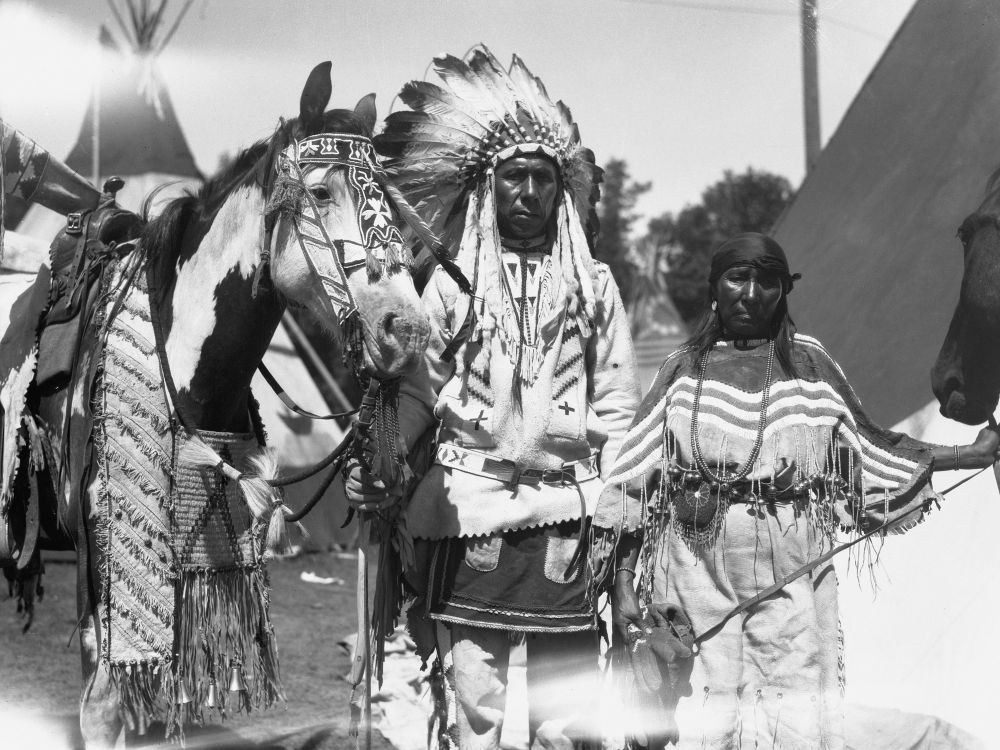
As part of its DEI overhaul, the film board instituted an “Indigenous Content Moratorium,”
the “licensing of archives, excerpts and photos portraying Indigenous participants to clients who do not self-identify as Indigenous (First Nations, Inuit or Métis).” The policy, which the NFB described as “temporary,” applies to about 600 entries in the archive. An archive entry that contains mostly white people and only one Indigenous person would not be covered, however.
“All requests to license Indigenous excerpts and photos from films for commercial reuse by non-Indigenous filmmakers or production companies are reviewed on a case-by-case basis, in consultation with the Indigenous filmmakers and communities concerned,” the NFB explained in an email on Thursday.
“This process allows us time to explore and incorporate relevant and evolving best practices, and to determine what considerations will best guide the organization, honouring protocols, partnerships, and pathways built on respect and trust.”
The NFB says that it’s received hundreds of requests over the years, and has denied less that 30. But even this is too many: what the NFB is doing is engaging in censorship, releasing what should be universally available material only to vetted producers whose intentions have been investigated.
The policy was designed by an organization called imagineNATIVE, an Indigenous
that holds an annual film festival, does screening tours and, mostly with money
to it by Netflix, sponsors professional development for its artists. The majority of its funding (59 per cent) came from government according to its latest charity filing, so it’s more accurately described as a shadow Crown corporation.
In effect, every non-Indigenous Canadian is paying for this organization to lobby the film board, which they also pay for, to restrict content on the basis of race. While it’s not a total ban on access because it applies only to commercial licensing — the NFB assured me that all Canadians can still look at the material covered by the moratorium — it’s race-based discrimination nonetheless.
This didn’t happen in a vacuum. Many corporate entities under the Department of Canadian Heritage umbrella have jumped on the systemic racism bandwagon and made DEI a big part of what they do.
The Canadian Media Fund (CMF), which funds the production of drama, kids’ programming, documentaries and video games, was given a series of diversity quotas by the federal government a few years ago. Government-funded projects led by minorities were required to reach 45 per cent by 2024, and key creative positions were supposed to be 25 per cent staffed by minorities in that time as well.
In addition, it brought in a
“narrative positioning” policy
banning anyone receiving CMF funding from making content about any minority unless they are part of that group, or have demonstrated “comprehensive measures” that their project will take to prevent harm to the group in question. Straight people can’t make documentaries about gay people, the able-bodied can’t make documentaries about those in wheelchairs and no racial group can make video games about anyone else — except white people, of course.
Meanwhile, Parks Canada introduced an
last year that gives more power to First Nations over federal parklands. It’s vague and preachy, and seeing how poorly park-sharing has gone in British Columbia, with First Nations unlawfully seizing control of parklands without resistance from government, it’s a model with a poor track record.
Then there’s the National Gallery of Canada, which in recent years
the power of curation to make veiled accusations of racism against the Group of Seven. And the Canadian Council of the Arts, which openly claims to have gone on a
in 2021. Telefilm Canada in 2022 brought in
of 50 per cent for new hires and 30 per cent for those in management. It applies
to various programs it funds, requiring some projects to have a majority-Black production staff, and others to have a majority of non-white writers.
The National Arts Centre, tasked with stewarding the performing arts,
“Black Out” nights; the centre’s
back in 2023 was to restrict these by race, but after some public grilling it switched its stance to “everyone is welcome.”
The National Film Board’s race-based content licensing policy is emblematic of the federal culture sphere. Once, the mission was to nurture cultural unity; now, maintaining division seems to be the goal.
Normally, government entities are supposed to treat individual Canadians in a manner consistent with the Charter, which means race-based discrimination is off the table. However, because the Charter excuses discrimination when it’s done for an ameliorative purpose — that is, when it’s used to advance the interests of a minority group. The result? Exactly this: the open and jubilant denial of opportunity as revenge for the actions of long-dead men.
National Post

