


The whole point of bringing King Charles III over to deliver a
was to assert Canadian sovereignty, so it’s curious that some of the first words out of his mouth denigrated Canada’s legitimacy.
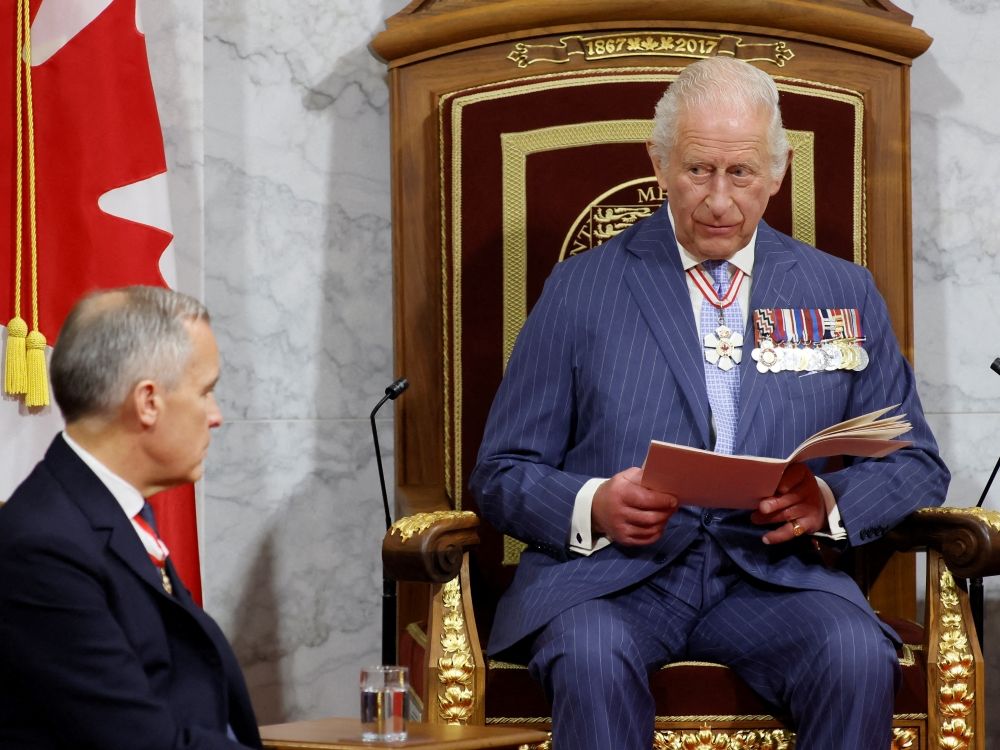
“I would like to acknowledge that we are gathered on the unceded territory of the Algonquin Anishinaabeg people,” said the King in his opening remarks to Parliament on Tuesday. His words were largely written by the government, but he
the government that he’s not comfortable reading them. Whether he did, well, we’ll never know.
He continued: “This land acknowledgement is a recognition of shared history as a nation. While continuing to deepen my own understanding, it is my great hope that in each of your communities, and collectively as a country, a path is found toward truth and reconciliation, in both word and deed.”
Well, at least he referred to one nation, that being Canada. But he also spoke of territory, that is “unceded,” that belongs to the Anishinaabe, which somewhat puts that first label of “nation” into question. If they never gave it up, and it still belongs to them, then are they not sovereign? Of course, the matter of sovereignty in the Ottawa region is more complex than that, but the King left himself open to that interpretation.
Which isn’t ideal, since the bedrock of our nation as a concept and legal entity — Crown ownership of all land and holder of ultimate jurisdiction within its boundaries — has been under attack for some years. Yes, many people own their own estates within Canada’s territory, but the fundamental holder of all title is the Crown. At least, that’s how it should commonly be understood, because that’s the reality of the situation.
Indigenous sovereigntists — who consist of both Indigenous and non-Indigenous people who don’t recognize Canada as the legal owner of Canadian lands — believe that the fundamental holders of Canadian territory are the Indigenous people. Usually, they misunderstand the numbered treaties, which were land cessation agreements, as international treaties with sovereign nations. They deny any conquest of Canada occurred. They view Canadian land as a product of theft against these sovereign nations.
And their solution involves restoring Indigenous sovereignty, bit by bit, by extracting greater rents from more parts of the Canadian economy, returning more government powers and responsibilities to Indigenous groups, and shifting public opinion to be amenable to these changes.
The land acknowledgement plays a big part in that last one: it’s the recitation of a creed that holds Canada to not be the ultimate authority in these lands, often made by officials in a position of power over the general public.
The past several years have seen land acknowledgements go from a brief few words to
Indigenous-related government or government-adjacent announcements to
paragraphs recited during
with the Canada Energy Regulator,
of veterans’ affairs policy groups,
explaining benefit payments to new immigrants and even RCMP
about missing children. For good measure, they’re also pasted into
,
government reports about tuberculosis
and various other webpages. And now, King’s speeches.
And that’s just at the federal level. In Alberta, the provincial court’s 2024 Indigenous Justice Strategy
to install land acknowledgement plaques in court foyers. Such plaques have been
in some B.C. schools. Scroll to the bottom of any major university’s homepage and you’re likely to find one. The
has one. Through sheer memetic power, they’ve colonized our public institutions.
They normalize the idea that Canada is illegitimate, and that its non-Indigenous citizens are occupants of lands to which they don’t belong. It becomes such a regular feature of life that when B.C.
provincial park entry by race (for more than a quarter of the year, in the case of Joffre Lakes Provincial Park) and overhaul its mining industry rules, it’s shrugged off by enough people that the provincial government faces no consequences.
The same goes for the Canadian fisheries, which are increasingly subject to race-based quotas and marred by apparent illegal fishing by individuals who claim their catch is covered by treaty rights. In Nova Scotia last year, federal officials
they didn’t know how much lobster was being harvested anymore. The province, which is becoming
for its
, seems unperturbed: in the last federal election, it voted mostly Liberal, a nod in favour of the status quo.
Resources in the ground are made artificially hard-to-get, too. It’s no surprise when pipeline proposals are
, even when they’re informed by extensive consultations with Indigenous people. It seems these processes need to be lengthy, cumbersome and costly if they’re ever to satisfy a court. At the same time, they make us poorer.
And at this point, we’re lucky if they even make it to court. B.C. folded like a house of cards when Indigenous stakeholders challenged its mining claim system for not being consultative enough (instead of appealing the court decision in question, the NDP simply
, adding red tape to an already lengthy process). A similar challenge is
in Saskatchewan, at least.
Prime Minister Mark Carney supposedly invited King Charles to open Parliament as a display of sovereignty directed at United States President Donald Trump, who
to express interest at the thought of acquiring Canada. But it’s the Liberal government that led the retreat of Canadian authority and allowed a void of chaos to take its place where order is needed most, off the coast of Nova Scotia, and in the path of essential
.
Now, even the man who personifies our nation can be perceived as being unsure as to whose land it really is, just like our decolonial bureaucrats and busybody school administrators.
National Post

