



Workplace hazards can be a lot of things: fall risk at construction sites, mice in kitchens, hydrogen sulfide at oil rigs, bears at remote sites, violence in high-crime areas, etc. But in Alberta, that list has now been stretched to include exposure to images of aborted or miscarried fetuses.
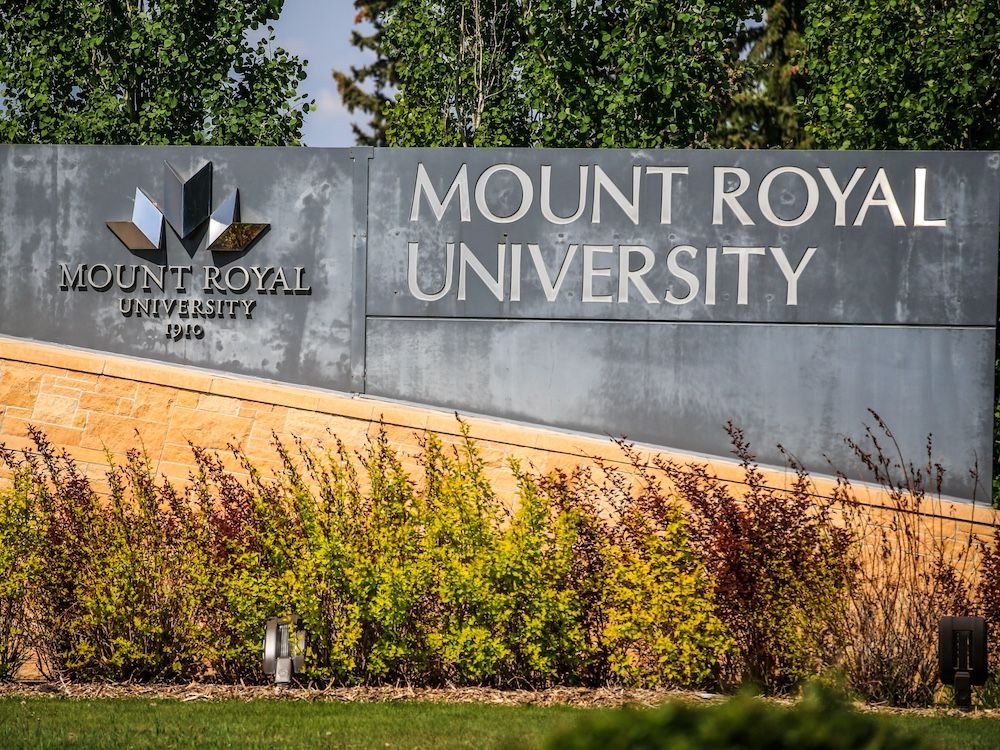
The pronouncement came down from a labour arbitrator who decided last Tuesday that anti-abortion displays at Calgary’s Mount Royal University constituted a psychological hazard which the administration “did not adequately control.”
The case arose from a string of complaints by a staff member from 2019 to 2024. She had a miscarriage some 15 years prior, and was retraumatized at the sight of posters displayed by the anti-abortion, or “pro-life,” group that assembled regularly in a high-traffic part of campus.
“The images displayed on the obscenely large posters that the group chooses to convey their message is frighteningly similar to what I saw when I miscarried,” she wrote in a 2022 health and safety complaint.
The staffer had first requested the removal of the protesters from campus in 2019, but out of concern for free speech, the university sought compromise. It had an app which it used to send out safety notifications, so it set up a new type of notification to alert subscribing users of when and where anti-abortion displays popped up, and when they left. The university also had security staff place six or seven “WARNING GRAPHIC MATERIAL” signs in the areas leading to the protest display. Eventually, QR codes linking to support services were added to these signs.
The staffer approached her concerns in a number of ways. She spoke to human resources about it in 2019 but was rebuffed for free speech reasons; she made a health and safety complaint in 2022; she yelled and swore at the protesters in 2023, a video of which was published by Rebel News. And finally, she got her union to file a grievance in 2024.
Throughout this time, Mount Royal University made what appears to be a fair attempt to juggle the interests of the protesters and the staffer. Beyond the notification system and the dedication to posting warning signs, it consulted with the provincial health and safety agency in 2023 and was advised that the sign-notification system was adequate. In 2024, it began asking the protesters to provide 30 minutes’ notice the following year so that the signs and notifications could go out beforehand. All the while, it maintained that free expression meant allowing these protests on campus.
In the spring of 2025, the university stopped sending out notifications for the protests because, went the evidence, the person in charge feared that the volume of notifications would cause people to stop using the app. It was a strange concern because only those who signed up for these specific notifications were supposed to receive them. After some pressure from the campus community, the notifications resumed in the fall.
When this all fell on the labour arbitrator’s lap, he took a look at Alberta’s definition of workplace hazard, which is a “situation, condition, or thing that may be dangerous to health and safety.” Did the images of bloody fetuses meet that definition? To answer that, the arbitrator looked to the staffer’s experiences. She testified to her trauma; colleagues testified to instances where she shook and cried; even the Rebel video helped her case — the arbitrator said that the yelling and swearing was evidence of emotional dysregulation. She took medical leave in April 2024 and testified that she sought counselling that month.
“Based on the impact on (the staffer’s) mental health and emotional well-being, I have no difficulty concluding that exposure to the graphic images regularly displayed by the Pro-Life Demonstrators on campus is a situation or condition that is dangerous to (her) health and safety,” wrote the arbitrator. “Hence, I agree that the graphic imagery constitutes a ‘hazard’ within (health and safety) legislation requiring the University to take appropriate steps to control the hazard, as the University originally concluded.”
While Mount Royal University had taken steps to accommodate those who did not wish to see the protesters’ posters, the arbitrator said it had not gone far enough. In his view, the university should have required the protesters to give advance notice far earlier in the process; it should have limited them to use only one side of the high-traffic area where they demonstrated to make it easier for people to avoid the images; and it should have set up a personal notification system for this particular staffer — phone call, email and text. He ordered the university to do this going forward.
Though Mount Royal University has been embroiled in a lengthy legal battle over its firing of professor Frances Widdowson , it defended free expression when it came to the protesters. When it was asked to kick the protesters out, it refused. When it wanted advance notice from the protesters, it asked — this, it later reasoned to the arbitrator, was more likely to attain co-operation (the arbitrator, on the other hand, insisted that it was fine for the university to give the protesters orders if the reason had to do with worker health and safety). Mount Royal tied its decisions to Alberta court precedent as it went along. Even so, it lost before a mere labour arbitrator.
So, that’s the direct consequence of loosely defined workplace safety legislation: all it takes is a picture of something that makes a worker experience psychological distress for it to count as a hazard worthy of health and safety attention. A single disgruntled, committed staff member might not be able to shut down a protest (at least, not yet), but they can make it much more complicated for their workplace to accommodate a protest, which can still be quite effective.
Now extend that logic of this decision to other areas: Can a university require a professor to teach core subject matter if they find it personally triggering? Is it psychologically hazardous for clothing stores to display images of thin, attractive female models given the effects it might have on retail staff? Is there a point when the number of spiders found in a shop or garage becomes offensive to the mental health and safety of an arachnophobe? There is a world of small terrors out there if you take into account every kind of mental frailty.
National Post

