



Hockey has entered into the Canada-U.S. trade war again. Not over tariffs on hockey sticks or President Donald Trump’s AI-generated meme of himself knocking down Prime Minister Mark Carney on the ice, but as part of the conversation surrounding the departure of American-born players from Canadian teams.
There hasn’t been a flood of players leaving, and plenty of players from the U.S. joined Canadian clubs in the off-season, but when elite players are involved — including three who played for this year’s Olympic gold-medal-winning Team USA — the moves are subject to extra scrutiny.
Asked to weigh in on the apparent American exodus in a pre-season interview aired by Sportsnet this week, the Edmonton Oilers’ Connor McDavid said he hopes it’s not because they don’t want to be in Canada.
“Canada and the U.S. has had a great relationship for years and years and years, and I hope that continues for a long time,” he said.
Without specifying any players who have left or want to, the Oilers captain reasoned it could be that players simply “don’t see the opportunity to win on that specific team.” He highlighted his organization signing Ryan Shea, from Massachusetts, and St. Louis native Trent Frederic this season.
“Americans still want to play in Canada,” he said. “At least, that’s the sense that I get. They want to play for teams where they see a future.”
Late last month, Michigan-born Winnipeg Jets goaltender Connor Hellebuyck made public his desire to waive a no-movement clause and be traded from the organization after only two years of a seven-year, US$59.5 million contract signed in 2023.
The three-time Vezina Trophy winner who is the league’s best goalie didn’t specifically say he wants out of Canada for a U.S. destination, nor did he provide a list of teams where he’d be willing to move, but NHL insiders believe he’s bound to land with a U.S. club.
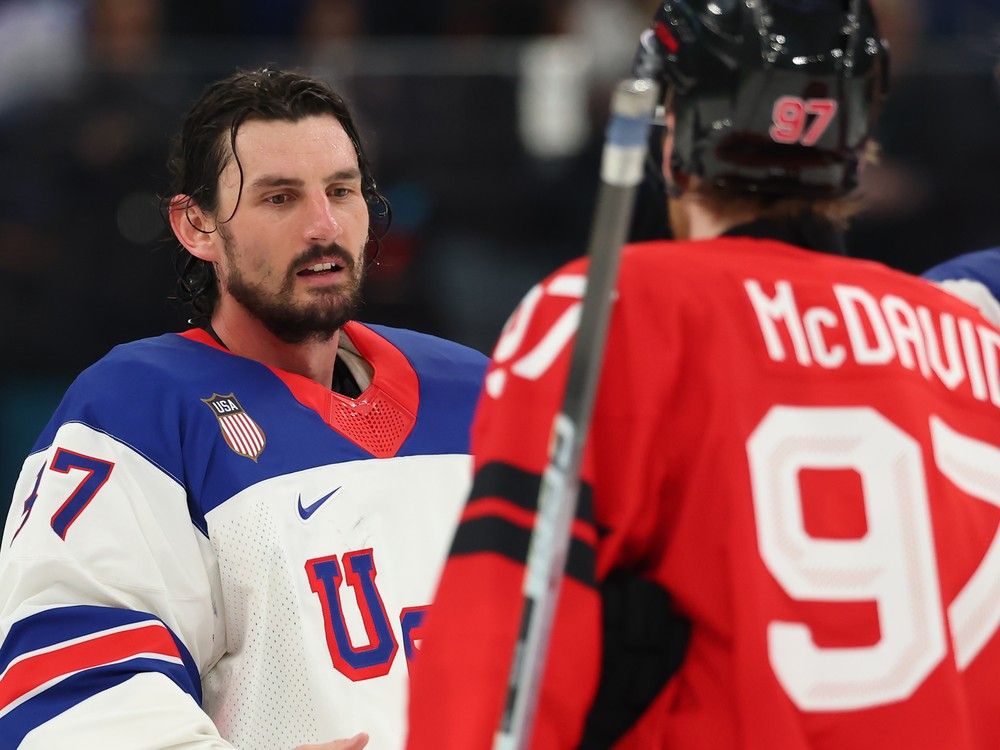
After the Jets failed to make the playoffs last season, he made it clear he wants to compete for a Stanley Cup.
“That’s my goal, and that’s all I have left, and that’s what I want on my resumé,” Hellebuyck said in April, according to TSN. “I don’t play this game for the money. I don’t play it for the fame. I do it for my own personal fun and, you know, part of that is winning a Cup. So for me, I’m just looking at how I can get that. How can I get there?”
Should the Jets receive an acceptable offer for Hellebuyck from one of the league’s 25 U.S. teams, he’ll join Brady Tkachuk as the second player from the Team USA squad to be traded from a Canadian club to an American in recent months.
The Ottawa Senators sent their Arizona-born captain to the Florida Panthers on June 21, one of four teams the four-time All-Star submitted as destinations when he made it clear to management that he would not extend his contract before it expired in 2028, according to Sportsnet. The trade came less than two months after he said he was “fully committed” to the Senators and questions about his contract were becoming a “distraction,” Reuters reported.
The Panthers’ pedigree of back-to-back Stanley Cups and a chance to play with older brother Matthew — who’d requested a trade from the Calgary Flames in 2022 — were big draws for Tkachuk, according to NHL.com
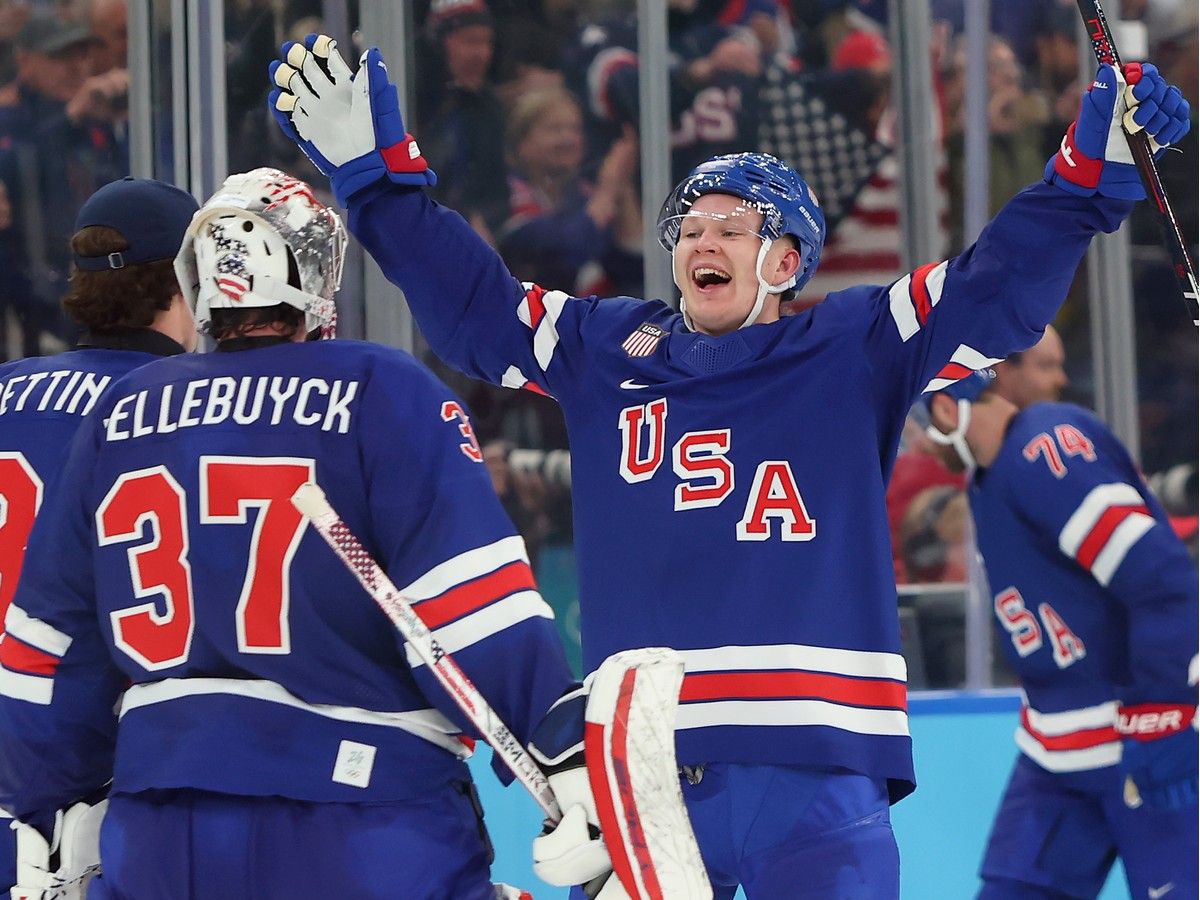
Counting Florida-born defenceman Quinn Hughes, the number of departing players from the U.S. squad that defeated Canada in the February gold medal Olympic final rises to three.
The Vancouver Canucks traded the two-time All-Star to the Minnesota Wild on Dec. 12, 2025, after he indicated months earlier that he wouldn’t renew his contract, due to expire in 2027, TSN reported.

Michael Naraine, associate professor of sport management at Brock University, said NHL players may be drawn to certain U.S. clubs — the Panthers, Tampa Bay Lightning, Vegas Golden Knights, or Dallas Stars, for example — for a “multitude” of reasons unrelated to the trade war.
“Would we be talking about this if not for the trade war? Probably not, but I think the trade war has certainly elevated the star players wanting out and not just wanting out, but wanting out to specific destinations,” he told National Post.
Part of it is the “glamour” of their preferred destination.
He said NHLers, like their NBA brethren, operate in an “isomorphic” or “monkey see, monkey do” way, in that when they see a friend or former teammate find success with a club, they’ll want to join them.
At the same time, for NHL players, moving to an American market affords them a degree of anonymity they might not find under the intense media and fan scrutiny in Canada.
“If Brady (Tkachuk) walks down Elgin Street in Ottawa, everyone’s gonna know who he is,” Naraine said. “Brady Tkachuk could walk down the streets of Florida and no one is going to know who the heck he is.”
Taxes are clearly a factor, with multiple states charging an income tax rate of zero per cent, he noted, which makes states like New York or Illinois, Democratic states with higher taxes, a less appealing destination.
On the subject of taxes, Naraine said many players are “spooked” by Toronto Maple Leafs’ John Tavares’ court battle with the Canada Revenue Agency.
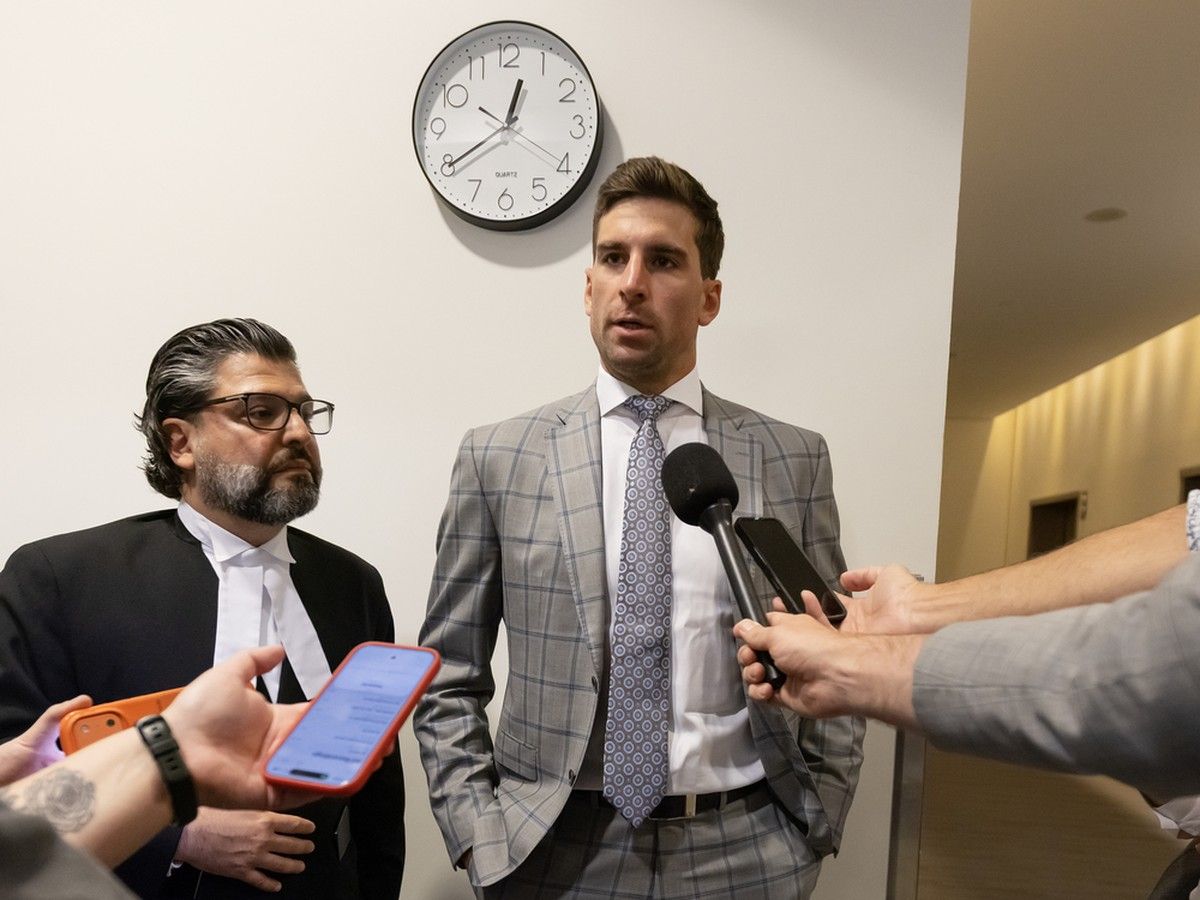
Tavares argues that the millions of dollars he received for signing with the team were legitimate signing bonuses designed to entice him to come to Canada and therefore deserve special tax treatment. The CRA counters that they were really just salary dressed up as bonuses, meaning the player would owe millions more in taxes.
Should the CRA win and limit teams’ ability to offer those bonuses, Naraine expects smaller-market Canadian teams like Ottawa, Vancouver and Winnipeg will “really struggle.”
While that may not be the case for Hellebuyck, Naraine said the Tavares situation could prompt more agents to advise their clients that “maybe now’s the time to strike while the iron’s hot and get out, make things even keel, get to a place where you feel more comfortable.”
Naraine also posited that what’s happening with American NHL players is akin to a shift that took place in the NBA following the 2008 Summer Olympics.
Bonds were forged as the best U.S. players came together to dominate on their way to a gold medal, and two years later LeBron James, Dwyane Wade and Chris Bosh reunited to form one of the NBA’s first super teams. Naraine thinks similar friendships were formed in the U.S. Olympic men’s team locker room.
“I wouldn’t be surprised if like three or four of these guys in a couple of years go, ‘look, let’s all go to Seattle, make bank, and live it up and just make a powerhouse squad’ or ‘let’s all go to L.A.’ or ‘let’s all go to Dallas,’” he said.
Our website is the place for the latest breaking news, exclusive scoops, longreads and provocative commentary. Please bookmark nationalpost.com and sign up for our newsletters here.