



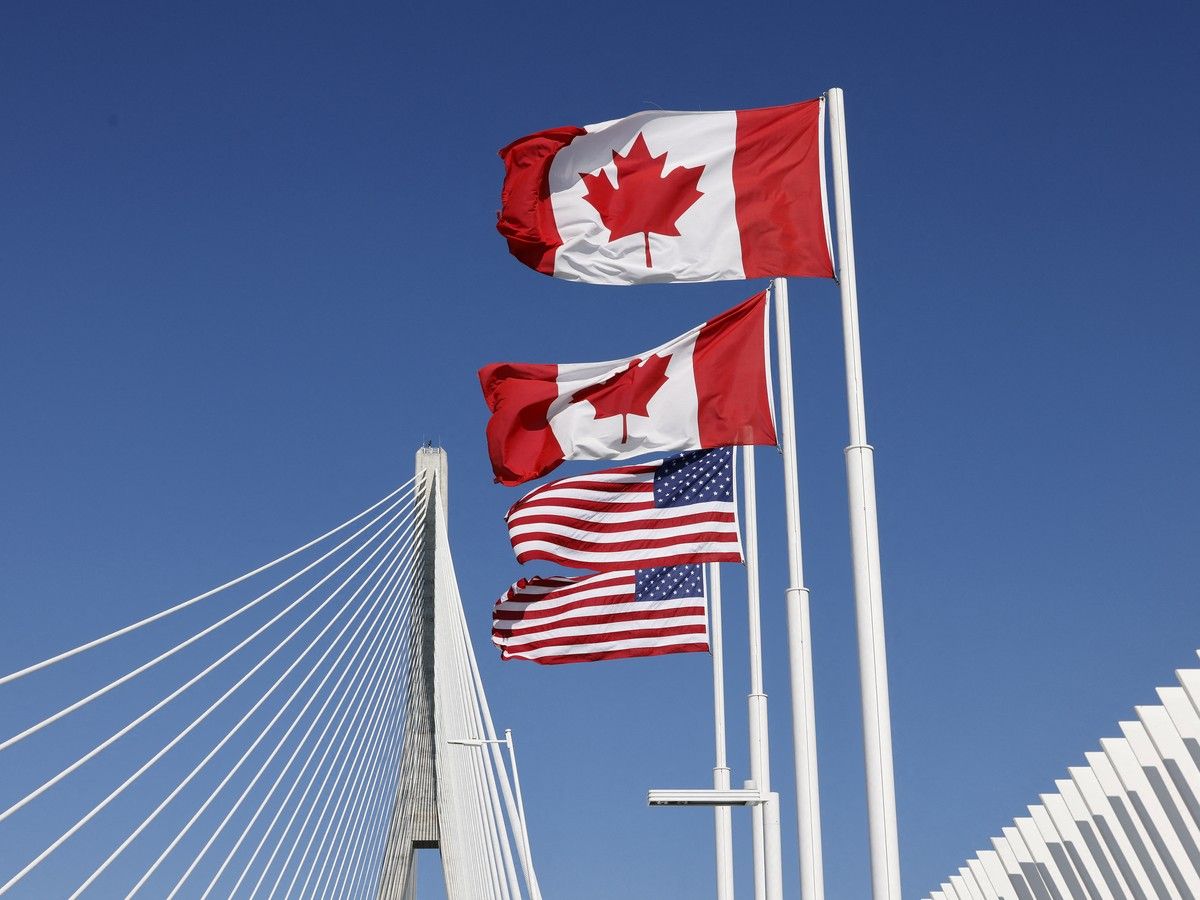
In a video address on Tuesday, Prime Minister Mark Carney warned that the ongoing trade conflict with the U.S. “will come at a cost” — but he didn’t say how much.
He made the comments the same day that Canadian counter-tariffs on $28 billion worth of U.S. imports came into effect, with the new levies of between 15 and 50 per cent impacting a long list of U.S.-made products from toilet paper and cutlery to motorcycles and refrigerators.
These tariffs are a response to U.S. President Donald Trump’s 50 per cent tariff on $28 billion worth of Canadian goods imposed on Aug. 22, after trade talks between Canada and the U.S. broke down last month.
Conservative Leader Pierre Poilievre called on the prime minister on Tuesday to share what the impact of the counter-tariffs on Canadian consumers would be, saying in a video shared to social media : “Every single mother, small business owner, and senior should know what they will pay in these new counter-tariffs.”
Here’s what economic experts are saying about the potential cost.
What will counter-tariffs on U.S. products cost Canada?
Trevor Tombe, an economist at the University of Calgary, estimated in an analysis published by The Hub that Canada’s counter-tariffs carry a $4 billion hit to Canadian consumers, which will fall hardest on lowest-income households.
His report suggests that households earning under $30,000 a year will lose more than 0.5 per cent of their disposable income as a result of retaliatory tariffs, which is three times larger than the hit on households earning above $150,000. Meanwhile, he says families with kids face costs of roughly $250 per year from the tariffs while those without kids face costs of less than $170.
Tombe previously spoke to National Post’s Rob Breakenridge and explained that Canada’s counter-tariffs “are very much a tax on ourselves.”
“Ultimately this is a tax on a purchase decision that a Canadian has made, either a Canadian household or individual, or a business buying an import from the U.S.,” he said. “And that means that, for the most part, tariffs are paid by Canadians, not Americans.”
How will counter-tariffs impact Canada?
Joseph Steinberg, professor of economics at University of Toronto, said that estimating the impact of the new counter-tariffs starts by looking back at March last year, when Canada imposed 25 per cent tariffs on $30 billion of U.S. goods.
Steinberg told National Post that those tariffs, which remained in place until September 2025, were focused on consumer products, meaning they visibly raised prices for Canadian consumers. Despite this, he said, that is a way of doing tariffs “that is going to cause the least economic harm for our economy.”
“The best estimates indicate that those measures increased the inflation rate here in Canada by about half a percentage point during the period in which those tariffs were in force,” he added.
However, the latest counter tariffs are instead focused on “intermediary inputs,” such as insulated conductors, construction machinery parts, and freight trailers, to name a few. What this means is that the cost of production for Canadian firms will increase.
“These companies respond by raising the prices of the products that they sell here at home, and in some cases by laying off workers or shrinking how much they produce. It’s going to hurt the economy more than tariffing consumer products will,” Steinberg said.
Retail prices
A Bank of Canada report published in May looked at how retailers adjusted prices during the six months Canada imposed 25 per cent counter tariffs on U.S. products last year. It found that prices for goods that were subject to counter-tariffs increased by about 6 per cent more than those of non-tariffed goods — or roughly one-quarter of the 25 per cent counter-tariff — adding roughly 0.3 percentage points to consumer price inflation.
However, Loblaw CEO Per Bank shared on LinkedIn on Tuesday that he expects roughly half as many products as last year to be impacted by counter-tariffs, which he says is “good news.”
The challenge, he added, “is that tariffs on some impacted products could be much higher, reaching up to 50 per cent in certain categories.” The impact will also be more concentrated, he said, in categories including health and beauty and paper.
“Consumers will not see prices rise in the short term,” Steinberg said of this round of counter-tariffs. “This is going to be a slower burn.”
Small businesses
Both Steinberg and Tombe agree that it is Canadian businesses, rather than consumers, that will feel the effects of the counter-tariffs first. In fact, a Canadian Federation of Independent Business (CFIB) survey found that 49 per cent of business owners are affected by the Canadian counter-tariffs, with 28 per cent reporting major negative impacts.
Affected importers estimated the median monthly financial impact of both the U.S. and Canadian tariffs to be $55,000, with 40 per cent saying they will absorb most of the tariff-related costs.
And 11 per cent of importers affected by the Canada-U.S. trade war said they would stop being financially viable if the trade war lasts three months or more.
Jobs
Tombe previously put Canadian job losses as a result of U.S. 50 per cent tariffs at an estimated 87,200, while Steinberg said he expects Canada’s retaliatory measures to be “at least as harmful as that.”
Tombe previously told National Post that his estimate amounts to roughly 4 per cent of total employment, which is “not a recession-scale shock, but certainly for the individuals involved, a pretty significant cost to be borne.”
Federal debt
At the same time as the counter tariffs were announced, Ottawa also unveiled a $7.5 billion aid package for firms and workers impacted by the trade war.
Tombe previously told National Post: “If we’re not paying for that through taxes, then we’ll be paying for it through higher levels of public debt.”
How quickly will Canadians feel the impact of counter-tariffs?
Unlike the counter-tariffs Canada imposed last year, economic experts agree that it will take longer for Canadian consumers to feel the effects of the current retaliation.
Tombe said that the immediate hit is felt by businesses instead of consumers “because about 75 per cent of the affected trade will be in the form of industrial supplies and capital goods.”
Steinberg agreed. “The hit to prices will be slower to build, because it’s going to have to work its way through the entire Canadian supply chain,” he said.
“But eventually it will be larger because it will affect not only imported products but domestically produced products too.”
Our website is the place for the latest breaking news, exclusive scoops, longreads and provocative commentary. Please bookmark nationalpost.com and sign up for our daily newsletter, Posted, here.

