



Sweden has fallen to the left, many online commentators have lamented.
More accurately, Swedish voters have simply returned to form, choosing progressive parties at the expense of the right. After all, Sweden did not gain its reputation as a social democratic stronghold because its voters historically favoured conservatives.
The “Red-Green” opposition alliance and its liberal sidekicks have narrowly defeated the centre-right Moderate Party and its nationalist Sweden Democrat allies and other partners in the “Tidö” bloc. The Red-Green bloc is likely to hold 176 seats, compared with 173 for the Tidö parties.
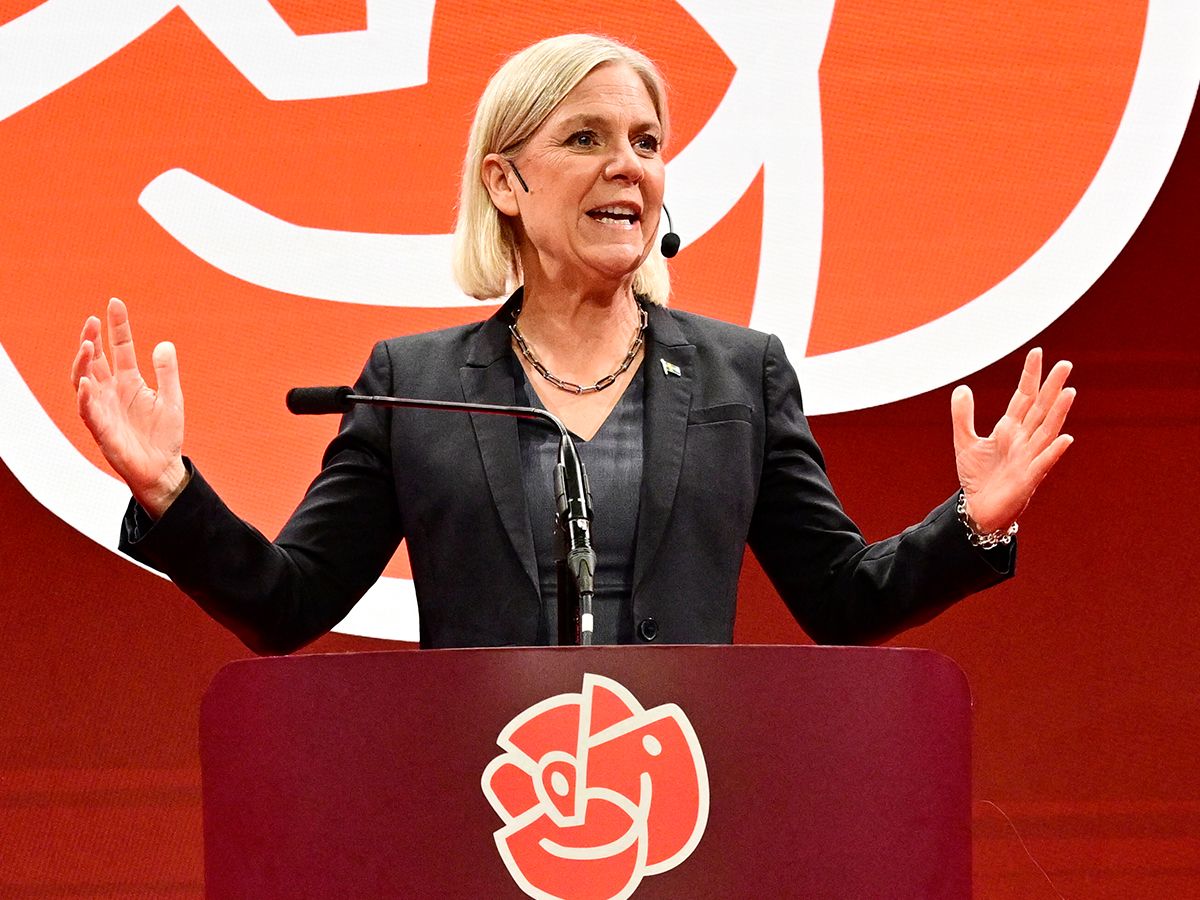
Former prime minister Magdalena Andersson of the Social Democrats, the largest party in the Swedish parliament, will likely return to office. Immigration was a top issue, with opposition to mass immigration and ethnic minority enclaves animating supporters of both the Tidö bloc and the Social Democrats.
Now, it is clear that the voters from an immigrant background overwhelmingly rejected the right, and that had an impact in such a tight contest. However, the right’s failure to make inroads with working and middle-class voters who have traditionally voted for the Social Democrats mattered more.
Assuming the Social Democrats do not renege on their campaign promises , Sweden will remain alongside Denmark among the countries with the toughest policies on migration, asylum and integration, with deportation programs on the table.
The Social Democrats, Moderates, and Sweden Democrats have reached a consensus, particularly on returning unsuccessful asylum claimants to their countries of origin and deporting foreign criminals more effectively.
Andersson’s party has demanded that newcomers speak Swedish and have a thorough understanding of the country’s civic life to qualify for permanent residency. She has also pledged to tightly control labour immigration and limit asylum provisions to the minimum required by the European Union.
The Social Democrats had some quibbles with the Moderate-led government over revoking permanent residency, it is true. But there will be no return to the open-door policies of the 2010s that unsettled Swedish society and helped make it one of Europe’s most gang-ridden countries.
This new consensus has upset some progressive Swedes, who lament that strict entry rules mean the country has “lost its soul.”
Denmark’s left-of-centre government, headed by Mette Frederiksen, has implemented one of Europe’s toughest migration programs , coupling restrictions with demanding integration requirements and a strict deportation policy.
Just this year, the Danish parliament strengthened deportation provisions for foreign nationals sentenced to at least a year in prison for serious crimes. A decade ago, such policies would have been attacked as a lurch to the far right. Now, they are championed by capital-S Social Democrats who believe bad actors do not deserve a share of the welfare state.
It is an effective, straightforward political strategy that acknowledges voters’ opposition to soft borders, allowing elections to be fought on jobs and the economy. Andersson looks set to ride that approach back to power.
Sunday’s Swedish election was shaped not only by immigration but also by crime and the economy. Unemployment in Sweden reached 8.9 per cent last year, and the conservative government faced criticism over deteriorating health care and other public services.
Andersson’s acceptance that the right had won the argument on immigration does not erase voters’ other concerns. Wanting fewer bogus asylum claims is perfectly compatible with demanding better hospitals.
Many on the left have tried to dodge the fact that voters are fed up with the permissive immigration policies that dominated western politics for a generation. They have psychoanalyzed the electorate and publicly dismissed concerns over immigration as mere expressions of economic anxiety and frustration over unaffordable housing. Is it possible that people believe their countries are full and do not want more strangers waltzing in with the government’s endorsement?
The economy and immigration are intimately connected. As the local board of trade always laments, there is a “labour shortage” in times of plenty and scarcity. A rapidly expanding labour supply can depress wages when it outpaces demand. Immigration can also intensify competition for expensive housing, while Sweden’s immigration debate has been sharpened by a surge in gang warfare.
Put simply, people are arriving too quickly and in numbers too great to readily become neighbours. Citizens do not want their country to become an “ island of strangers ,” as former British prime minister Keir Starmer reasonably put it last year. As Andersson stated back in 2022, not everyone in Sweden is comfortable with ethnic enclaves springing up: “We don’t want Chinatowns in Sweden; we don’t want Somalitown or Little Italy.”
Swedish opinion polls have found that 86 per cent of respondents want foreigners imprisoned for violent crimes to be expelled from the country. At the same time, 76 per cent back helping legitimate refugees adapt to Swedish culture and traditions. Restriction and integration go hand in hand for those voters.
Sweden’s National Council for Crime Prevention has documented the overrepresentation of people with foreign backgrounds among homicide perpetrators and victims. Social cohesion is a real, heartfelt concern, despite attempts by many leftists to dismiss it as a rhetorical bludgeon or a “dog whistle.”
As the Social Democrats in Sweden and Denmark are showing, people want to share their welfare state only with those they think deserve it. Andersson can expect pressure from some of her hard-line left-wing allies to soften her policies, and resisting that pressure will be a major test of any government she forms.
Andersson’s government was toppled in 2022, and she has gotten a second chance to lead the country. If she does cave on her promises, a third chance is unlikely to be granted.
National Post