


First Reading is a Canadian politics newsletter curated by the National Post’s own Tristin Hopper. To get an early version sent directly to your inbox, sign up here.
TOP STORY
At the precise moment that Canada was handing electoral victory to one of the world’s most vocal boosters of green energy, 60 million Europeans were plunged into a catastrophic blackout caused in part by green technology.
And in Alberta, at least, last week’s blackout in Spain and Portugal is being cited as a preview of coming attractions if the green visions of Prime Minister Mark Carney come to pass. “Albertans would be left to freeze in the dark,” said Alberta Premier Danielle Smith.
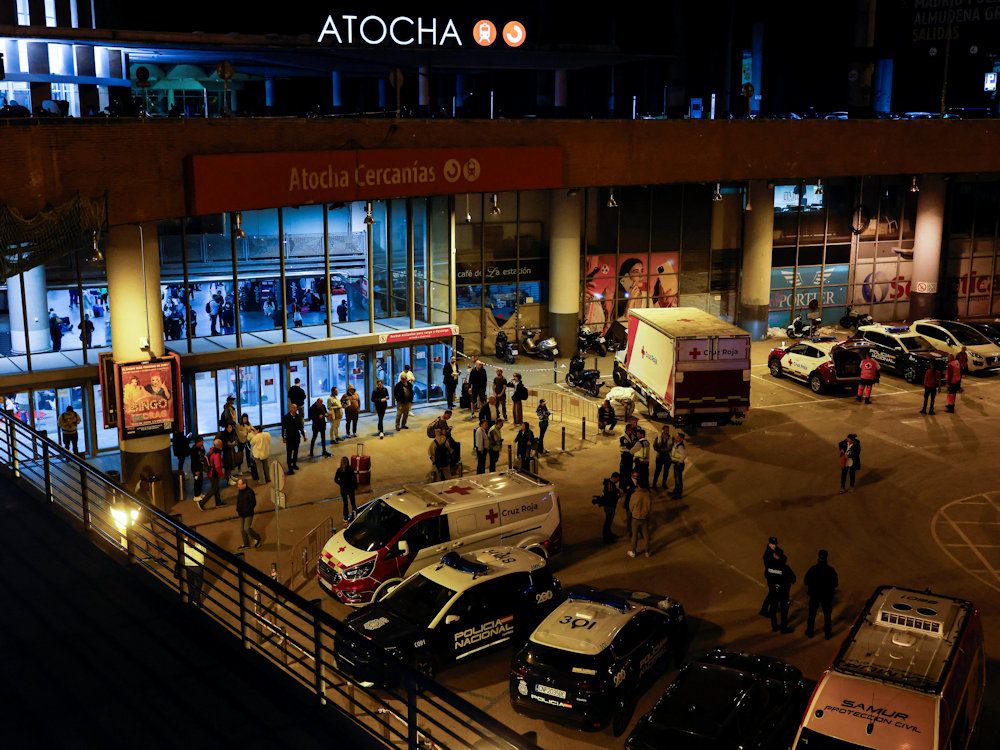
On April 28, the conjoined power grids of Spain and Portugal plunged into complete shutdown, leaving both nations without electrical power for 10 hours. Grid operators were ultimately forced to reboot the system from a cold start; the “nightmare scenario” according to
an analysis out of University College Dublin
.
Although blackouts of this scale have happened before, it’s not a coincidence that the disaster struck a region of Europe notable for its heady embrace of renewable energy. At the precise moment that the Iberian peninsula was plunged into darkness, 78 per cent of its electricity was
, mostly solar.
When an as-yet unknown hiccup hit the power system, all these renewables proved unable to take the strain and plunged into shutdown.
An analysis
published out of Spain’s Universidad de Salamanca
noted that when an electrical grid is powered by large, baseload sources such as hydro dams or nucelar power plants, they’re able “to keep the frequency stable in the face of sudden changes in generation or demand.”
“However, variable renewable sources, such as solar photovoltaic, do not have this capability,” it read
For European policymakers, the blackout has highlighted that decarbonization can come with massive unintended consequences.
At the very least, it highlighted the vulnerability of a country fixing all of its energy needs to the electrical grid. More than half of the Spanish rail network is electrified, meaning the April 28 blackout
instantly stranded passenger trains
all across the country.
Headlines everywhere from India to the U.K. called the blackout a “wake up call.” The term was also adopted by Eurelectric, an association representing the European electrical sector. “Yesterday’s blackout was a wake-up call,” wrote the group.
Even the pro-decarbonization Stockholm Environmental Institute concluded that the Iberian blackout highlighted the perils of overburdening aging electricity systems with green technology.
“The question isn’t whether the energy transition should continue, but whether we’re investing fast enough to keep the system stable as it evolves,” it
The Canadian energy grid is somewhat different than in Iberia, in that more than 60 per cent of Canadian electricity comes via hydroelectric dams, which aren’t subject to the same fragility as wind or solar.
Nevertheless, Canada has pursued the same tack of pushing the economy towards increased electrification, while failing to keep pace with electrical capacity. A 2023 report by the Public Policy Forum noted that if Canada was going to meet all its stated net-zero goals, it would need to double its electrical generation capacity
— all while phasing out huge swaths of the grid now dependent on fossil fuels such as natural gas.
Although Carney did not mention green issues all that often during the 45th electoral campaign, it was only a few months ago that he was one of the world’s leading advocates for the concept of “net zero.”
Carney was UN Special Envoy on Climate Action and Finance, and also co-founded the Net-Zero Banking Alliance, a club of banks and financial institutions pledged to reorient their portfolios away from fossil fuels. Although the alliance has
massively hemorrhaged members in just the last few months
.
Iberian renewable energy projects happen to be among the many green energy assets held by Carney’s former firm, Brookfield Asset Management. Just last year, Carney was CEO of Brookfield when it acquired the Spanish renewable energy firm Saeta Yield SA.
His 2021 book Values also focuses heavily on the need to both purge the Canadian energy grid of fossil fuels, and to make more of the Canadian economy dependent on electricity.
“The core will be to electrify everything and simultaneously develop green electricity,” wrote Carney. For Canada specifically, he wrote that the future would require “completely electrifying surface transport and a large share of building heating” — and phasing out all but “clean, non-emitting” power by as early as 2030.
IN OTHER NEWS
As Alberta separatists find new purpose in response to the election of Prime Minister Mark Carney, a
different kind of separatism is being proposed by Alberta NDP Leader Naheed Nenshi.
The longstanding deal with the NDP is that joining any of its provincial branches automatically confers membership in the federal NDP (an arrangement that doesn’t hold for provincial Liberal and Conservative parties). But after the electoral immolation of the federal NDP in last week’s election, a majority of delegates at an Alberta NDP convention on Saturday voted to sever official ties with their federal big brother. The rumour is that this could eventually yield a name change, although the last time a provincial party tried that it
was an immediate disaster for them
.
Another Anglophone country has retained its unpopular center-left government largely as a reaction to U.S. President Donald Trump.
Australia’s incumbent Labor Party had long been fated for defeat at the hands of the Australian Liberal Party (which, confusingly, is Australia’s main conservative option). That is, until the mere threat of tariffs from Trump sunk public support for the Liberals, ensuring
. Trump appears very pleased with all of this. Just as he celebrated the victory of Canadian Prime Minister Mark Carney, he seemed equally happy about the re-election of Australian Prime Minister Anthony Albanese, saying he’d always been “very nice and respectful to me.”
Get all of these insights and more into your inbox by signing up for the First Reading newsletter here.

