




First Reading is a Canadian politics newsletter curated by the National Post’s own Tristin Hopper. To get an early version sent directly to your inbox, sign up here.
TOP STORY
Back in January, something near-unbelievable happened. One of Canada’s most vocal and influential anti-pipeline activists said that maybe pipelines weren’t such a bad idea.
Stewart Phillip, grand chief of the Union of British Columbia Indian Chiefs, told reporters that he had changed his mind on Northern Gateway, a proposed $8-billion heavy oil pipeline to Kitimat, B.C., that Philip had worked for years to destroy.
The spur for the epiphany was U.S. President Donald Trump pledging an all-out trade war with Canada. “I would suggest that if we don’t build that kind of infrastructure, Trump will,” said Philip.
The backlash was immediate, and Philip would end up reversing himself within 24 hours. The Union of B.C. Indian Chiefs rushed out a statement clarifying that they still opposed “fossil fuel pipelines,” and quoted Phillip as saying “I do not support resuscitating dead projects.… I sincerely apologize for any confusion on this point.”
But Phillip’s one-day odyssey as a pipeline booster would turn out to be a template for what was to come.
Despite a brief glimmer of possibility that Canada would start building oil pipelines to spite Trump, the last few months have been a whirlwind of Canadian figures returning to their old anti-oil positions almost immediately.
“If you’re not buying oil and gas from Canada and British Columbia, the alternative is Venezuela,” said B.C. Premier David Eby on Feb. 6 in a direct appeal for Canada to start selling more of everything to non-U.S. customers, including oil.
Eby even made glowing reference to the recently completed Trans Mountain pipeline, a project his own B.C. NDP predecessor, John Horgan, had actively tried to sink. Where Horgan had called the pipeline a bringer of “catastrophic oil spills,” Eby now said Trans Mountain was a “critically important” means to “ensure our sovereignty.”
“It doesn’t matter what the product is, we should be looking at how we get that product to other markets,” he said.
The comments were arguably the high-water mark of a flurry of public enthusiasm for new export pipelines. It didn’t matter which coast; Canadians suddenly wanted a way to get more Alberta oil into tankers.
Liberal MP François-Philippe Champagne, who is now minister of finance, said on Feb. 9 that his government’s 2019 decision to cancel a pipeline to the Atlantic Coast should probably be reversed. “Things have changed … you cannot be in the past,” he said.
Even in famously anti-pipeline Quebec, Premier François Legault conceded that the political winds might be shifting.
“What Mr. Trump is doing may change the situation in the future. So, if there is a social acceptability, we will be open to these kinds of projects,” he said on Feb. 3.
A Feb. 10 poll by the Angus Reid Institute found that a record 68 per cent of Canadian respondents now favoured the Energy East pipeline, a project to bring Alberta crude to ports on the Atlantic Coast.
Northern Gateway got the thumbs-up from 55 per cent of respondents, against just 25 per cent who said they opposed it.
A month later, in March, a Nanos poll found that a new pipeline was suddenly one of the most popular pieces of public policy in the country. Three quarters of Canadians endorsed a “national energy corridor which would have a pipeline to move Canadian oil and gas from Alberta to Eastern Canada.”
The context for all of this was the beginning of Trump’s trade war against Canada, and his frequent threats to annex the country as the 51st state. Canadian politicians of all stripes began embracing the idea of shifting the Canadian economy away from its historical reliance on U.S. exports.
And in any strategy to decouple Canada from the U.S., arguably the most impactful thing Canada could do would be to sell its oil elsewhere. Oil is not only Canada’s most valuable export, but it’s an export almost entirely dependent on U.S. customers.
More than 97 per cent of Canadian oil exports leave the country via a pipeline heading to the U.S. The only way Canadian oil can ever find its way to non-U.S. customers is via the occasional tanker filling up either at a Newfoundland offshore platform or via the Trans Mountain terminus in Burnaby.
There’s no immediate evidence that the Canadian public has soured on its enthusiasm for some sort of Trump-spiting oil export pipeline. As recently as April, a poll commissioned by Bloomberg News found 77 per cent of Canadians not only supportive of a new pipeline, but of one that would be “government-funded.”
But it’s a different story at the political level, where specific proposals to actually build and approve a new pipeline are already being met with hedging or new conditions.
In mid-May, Prime Minister Mark Carney said he would support “just doing one pipe,” but only if there was “consensus.”
When he was asked this week in Saskatoon about whether his vision for “nation-building projects” included an oil pipeline, he said that any such project would need to be filled with “decarbonized” barrels of oil — a term that seemed to confuse environmentalists and oil advocates alike.
Then, on Friday, Carney said nothing was getting built without “a consensus of all the provinces, and Indigenous people.”
In Quebec, opponents haven’t even needed a specific pipeline proposal to start mobilizing against it. “We will not allow the government to build a pipeline through Quebec,” Bloc Québécois MP Patrick Bonin said in the House of Commons this week.
But probably the most dramatic about-face was Eby.
At a premiers’ meeting last month, Eby dodged questions about whether he would support a revived Northern Gateway project, saying that getting “heavy oil to tidewater” was an Alberta priority.
“My priority is to … decarbonize and drive our economy in British Columbia,” he said.
IN OTHER NEWS
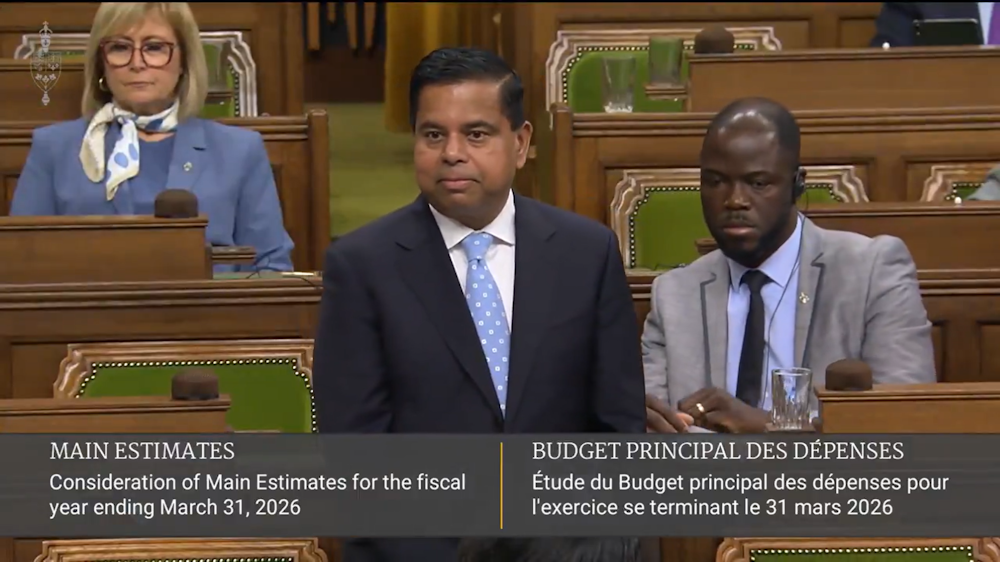
The Liberals have reintroduced a measure that would extend Canadian citizenship to people who have never lived in Canada – and may not even speak either of the official languages. Under the new terms, anyone looking to claim inherited Canadian citizenship needs only one parent who is themselves a Canadian and has lived in the country for a cumulative 1,095 days. So, in extreme case, this technically extends citizenship to the children of people who left the country as toddlers.
This wasn’t the Liberal government’s idea, though. It’s the result of an Ontario Superior Court decision ruling that a “first generation limit” on inherited Canadian citizenship was unconstitutional. Specifically, the court found that the measure violated the Charter right to freedom from discrimination based on “national or ethnic origin,” since being born outside Canada is technically a kind of national origin. As the decision reads, “it treats differently those Canadians who became Canadians at birth because they were born in Canada from those Canadians who obtained their citizenship by descent on their birth outside of Canada.”

Get all of these insights and more into your inbox by signing up for the First Reading newsletter.

