


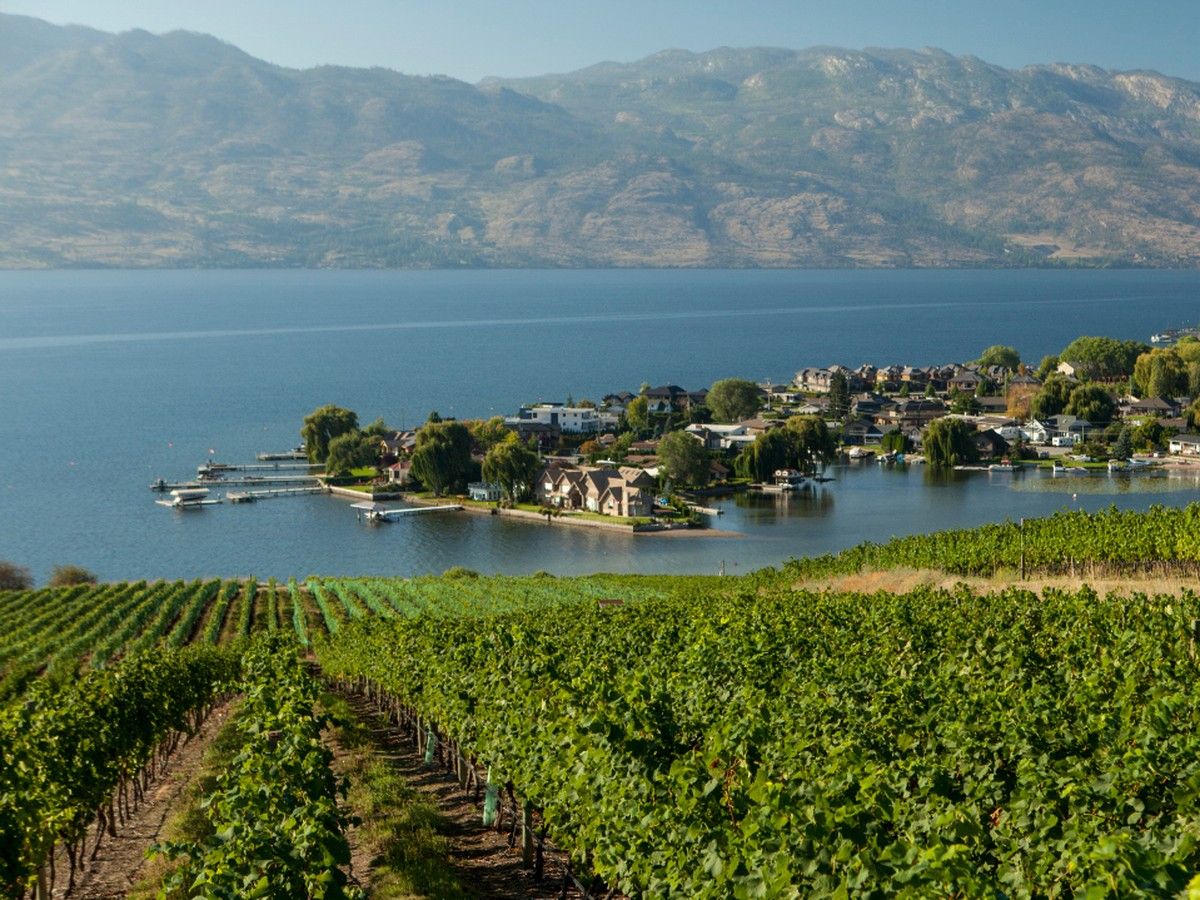
With news that Canadian wine producers are being hit with 50 per cent U.S. tariffs, the immediate reaction of B.C.’s Lightning Rock Winery was to note that the tariffs are still not as high as the markup they face when selling within Canada.
As detailed on the winery’s website, Lightning Rock is hit with a 75 per cent markup in sales to the Liquor Control Board of Ontario (LCBO).
In a Monday Substack post by National Post columnist John Ivison, Lightning Rock owner Ron Kubek said that while the new tariffs have devastated his U.S. sales, it’s ironically still cheaper for an American to buy his rosés than a customer in central Canada.
Even with the new tariffs, a U.S. wine drinker can obtain Lightning Rock wines for $30 a bottle, while interprovincial markups mean that the same bottle sells for $38.17 in Ontario’s LCBO and $43.66 at La Société des alcools du Québec (SAQ).
It’s been more than a year of official pledges to slash Canada’s interprovincial trade barriers as a response to the U.S. trade war. As Prime Minister Mark Carney pledged after the official breakdown of U.S. trade negotiations on Sunday, his government will “tear down the barriers that have divided our economy for generations.”
And yet, liquor continues to be the most conspicuous symbol of how many of those barriers remain in place.
According to official Government of Canada estimates, the Canadian economy loses up to $200 billion each year due to a latticework of interprovincial barriers that make it difficult to “buy, sell, and transport goods and services across the country.”
According to a recent report by the Toronto Board of Trade , alcohol is “one of the most well-known and visible examples” of these barriers.
In fact, provincially controlled liquor stores often have wider selections of foreign liquors than out-of-province liquors.
“It’s easier to get a bottle of wine from Chile than it is (to get one) from British Columbia,” Matthew Holmes, a representative with the Canadian Chamber of Commerce, told Global News in January 2025 , right at the beginning of the current trade war.
Nevertheless, official attempts to reduce internal trade barriers have repeatedly failed to liberalize alcohol sales.
In November, a meeting of Canada’s first ministers in Yellowknife struck the Canadian Mutual Recognition Agreement on the Sale of Goods, a concord billed as an “unparalleled agreement” to increase interprovincial trade.
However, the agreement explicitly excluded “alcoholic beverages” from consideration.
Then, just last month, another meeting of Canadian premiers — this time in Charlottetown — actually did come to an agreement on interprovincial liquor sales.
“In the face of President Trump’s latest tariffs, it’s more important than ever that Team Canada work together to build a more united, resilient and self-reliant Canadian economy,” said Ontario Premier Doug Ford in a statement.
But the agreement the premiers presented contained no timeline for implementation and covered only the relatively boutique sector of “direct to consumer” alcohol sales. It had no effect on retail sales; the means by which most Canadians buy beer, wine and spirits.
The agreement also specified that none of it was “legally binding.”
“This Agreement sets out the understanding of the Parties with respect to their cooperation and does not create any legal obligations or enforceable rights,” reads a clause.
“All the agreement says is that we say we’re going to do it at some point,” wine lawyer Mark Hicken said in comments published by Business in Vancouver. “There’s no timeframe at all for when they’re actually going to do it.”
What’s more, the agreement gave provinces a wide berth to levy new taxes and fees on direct-to-consumer alcohol sales — all of which would technically qualify as new interprovincial trade barriers.
As Kubek, of Lightning Rock Winery, wrote in a critique of the agreement published in the Edmonton Journal, it left the door open to new layers of “liquor board markups, fees, registrations, reporting requirements and administrative barriers on Canadian products sold to Canadian consumers.”
“The premiers removed the roadblock. Then they protected the toll booths,” he wrote.
And even this limited agreement on liberalized alcohol sales couldn’t garner unanimous support. The government of Quebec refused to sign it, as did the territories.

