


EDMONTON — Alberta Premier Danielle Smith is ordering the City of Edmonton to ditch rule changes designed to promote multi-unit housing development.
It’s a decision Edmonton’s mayor and municipal leaders call uninformed and insulting.
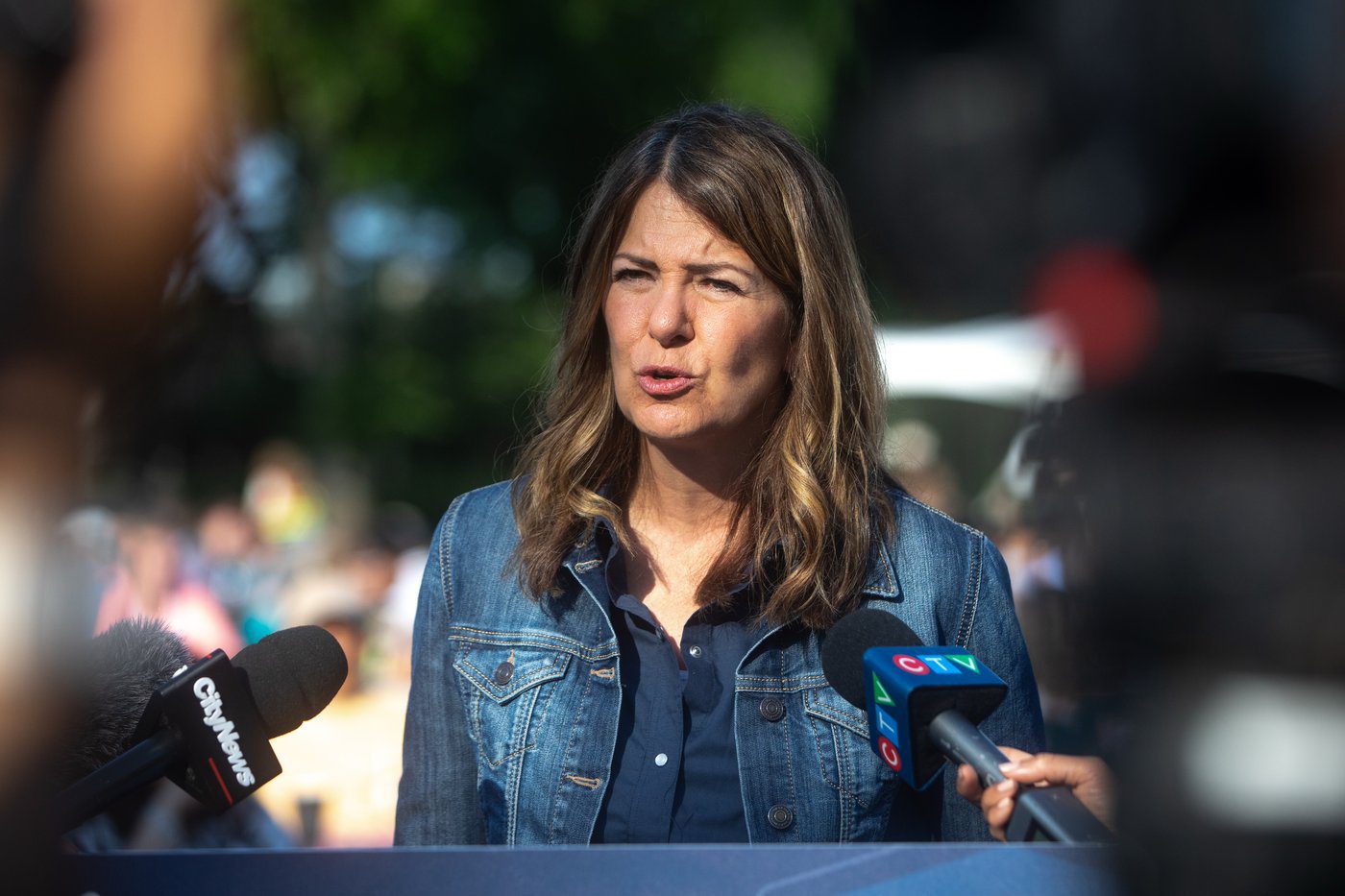
Smith, speaking Thursday to reporters in the backyard of a single-family home, said she worries that multi-unit complexes are going up in established neighbourhoods without due consideration on whether the units are a good fit or can handle the parking.
She said the city isn’t getting the necessary buy-in from residents, turning infill development into a property rights issue.
“You can’t just take 10 single-family homes and put up 10 units that have 16 people in them without considering all of these things,” she said.
Smith was joined by a handful of advocates who have been calling for Edmonton to change its approach. One group recently held a protest outside city hall with a few hundred people in attendance.
The controversy dates back to 2024, when Edmonton city council overhauled its zoning bylaw for the first time in 60 years in order to increase density and accommodate population growth.
It paved the way for single-family homes in many of Edmonton’s older or established neighbourhoods to be easily redeveloped into multi-unit buildings. It also permitted those multi-unit properties to have a maximum of eight units rather than six, though maximums use to vary by neighbourhood.
Municipal Affairs Minister Dan Williams, with Smith on Thursday, said Edmonton city council will have three months to comply with the order. And he said Edmonton will have 18 months to review and consult on land use rules before developing a new policy.
Edmonton Mayor Andrew Knack called Smith’s announcement “uninformed,” and said it would only lead to higher property taxes and less affordable housing.
“I’m not entirely convinced the premier understands what she is doing and what the consequences will be,” Knack told reporters. “Limiting homes in established neighborhoods doesn’t stop growth. It pushes it to the edge of the city.
“Every new suburb needs new roads, pipes, fire halls, and bus routes, and that lands on your tax bill forever.”
Knack said he was considering options on how to fight Smith’s order but conceded that if he and members of council don’t follow it they could be removed from office.
In 2024, Smith’s government gave itself the power to rescind municipal bylaws deemed to be at odds with provincial policies. Her government also granted itself the right to call a vote on whether a local elected official should be removed from their post if the province believes the official is unwilling or unable to do their job.
Williams said the province wasn’t issuing an ultimatum, but rather was launching a “conversation.”
Knack pushed back on that, saying a conversation after a decision has been made is not a conversation at all. “Deadlines mean that they’re forcing,” he said.
The province is also ordering Calgary to maintain its current infill rules. That city’s council reversed its own zoning policies on infills earlier this year, a move Williams commended as being responsible.
Municipal leaders from outside of Edmonton, and the Opposition NDP, also criticized Smith’s announcement, calling it the latest example of a government determined to erode local democracy.
Dylan Bressey, president of Alberta Municipalities, said the province has been getting involved in multiple municipal issues such as rolling back speed enforcement, regulating campaign signs and rewriting tax policy.
Bressey also pointed to the government’s stated plans to table legislation this fall that could see bike lanes in Edmonton and Calgary be ripped out.
He said the interference offends voters who just a year ago went to the polls across the province to elect new mayors and councils.
“Municipal leaders across the province are saying enough is enough,” said Bressey, a councillor in Grande Prairie.
Edmonton’s infill polices were an issue in last year’s civic vote. Voters elected a mayor and council that largely reflected support for the existing policy. Smith, asked about that on Thursday, said voters vote for many reasons – not just one – and said the province has a higher obligation.
“When municipalities have taken actions that are undermining people’s property value, when you see the kind of reaction that we’ve seen from residents, then we have to step in,” she said.
Opposition NDP Leader Naheed Nenshi said Smith was straying out of her legislative lane. “This is a municipal responsibility, full stop,” he said.
A few candidates who campaigned against the existing infill direction in the 2025 election but failed to win a seat celebrated Smith’s announcement.
“Thank you (Premier Smith and Minister Williams) for listening to citizens and taking action,” mayoral candidate Rahim Jaffer wrote on social media. Jaffer placed fifth in the mayoral race with 4.3 per cent of the vote.
This report by The Canadian Press was first published Oct. 8, 2026.
– With files from Lisa Johnson and Daniela Germano
Jack Farrell, The Canadian Press

