


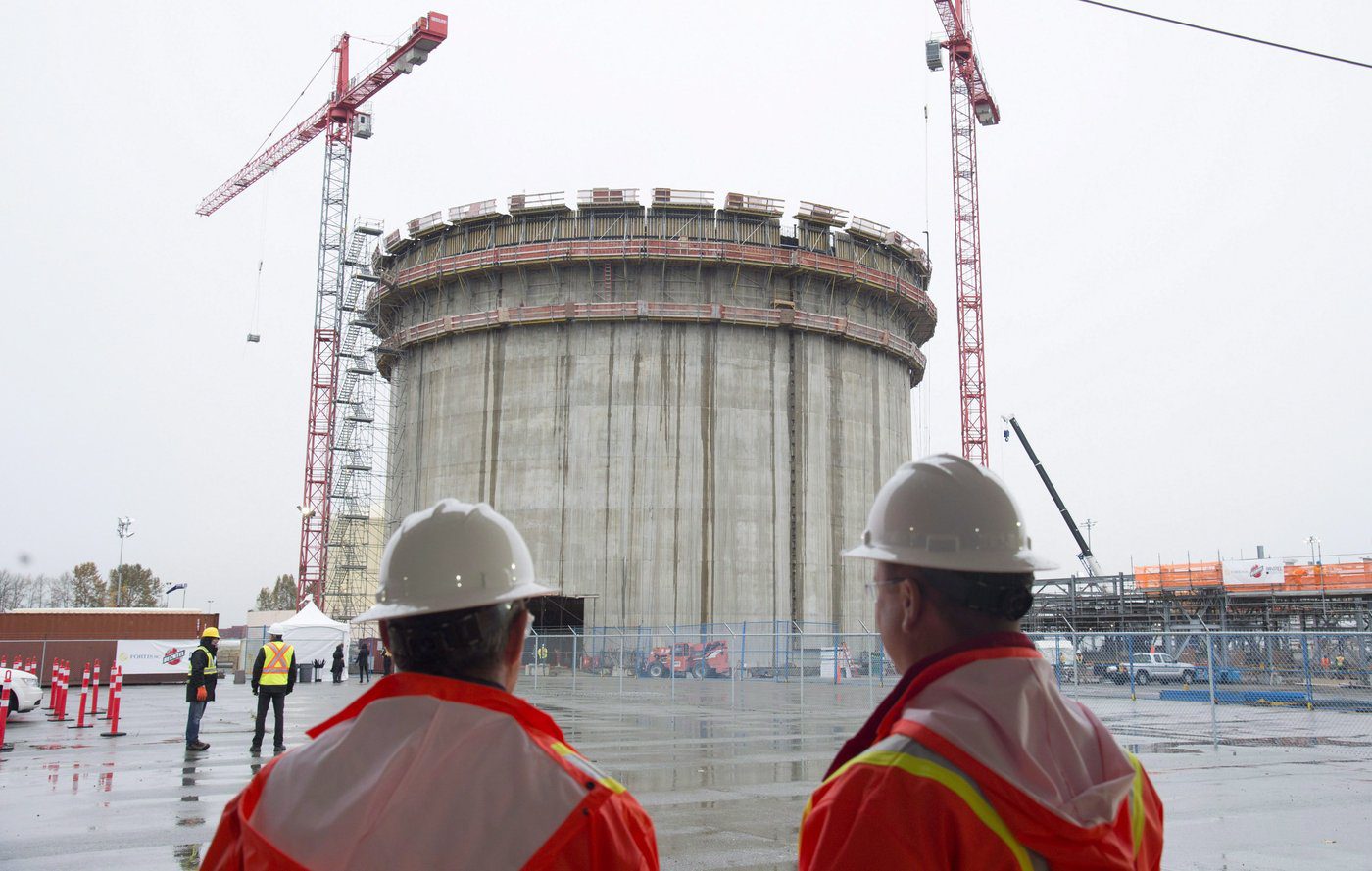
SURREY — British Columbia Premier David Eby says he helped a cabinet minister write her statement denouncing plans for the expansion of a liquefied natural gas plant neighbouring her riding, despite his government advocating for the project.
Kelly Greene, the minister of emergency management and climate readiness, posted a statement on Friday saying she was “disappointed” in the decision by FortisBC to move forward with the next phase of the Tilbury LNG project, citing safety concerns.
Greene represents the riding of Richmond-Steveston and says while some of the concerns raised by her community may be mitigated by plans that are in place, the project “raises concerns about a possible safety incident,” at the site not far from her riding.
The province announced it had issued an order-in-council on Friday that exempts the Phase 1B Tilbury expansion from the need to obtain a certificate of public convenience and necessity under the Utilities Commission Act.
The government touted the expansion of the facility to produce more LNG as a move to help meet rising demand at the Port of Vancouver and improve access to LNG fuelling for vessels that travel the coast and across the Pacific.
It is uncommon for ministers to publicly speak out against such a decision, but Eby says his government has a “big tent,” which allowed Greene to criticize the plan.
“This is an issue that has been important to Kelly Greene as an MLA for her community for a long time. We worked together on her statement, so she was able to continue the advocating, and I supported her ability to do that,” he said on Tuesday during an unrelated news conference.
Normally, developers need to obtain a certificate of public convenience and necessity from the B.C. Utilities Commission before starting or expanding a public utility plant or system.
Energy Minister Adrian Dix said on Friday that skipping that step would save time and allow the expansion to proceed, clearing the way for investments, the creation of 1,100 jobs during construction and $260 million in tax revenues.
The government said the project would remain subject to all other applicable regulatory approvals and permitting requirements before construction, which could start by the middle of next year with operation starting as early as 2031.
This report by The Canadian Press was first published July 28, 2026
— with files from Wolfgang Depner
The Canadian Press

