



On Jul. 17, British Prime Minister Keir Starmer
that his government would allow 16-year-olds to vote in the United Kingdom’s next general election.
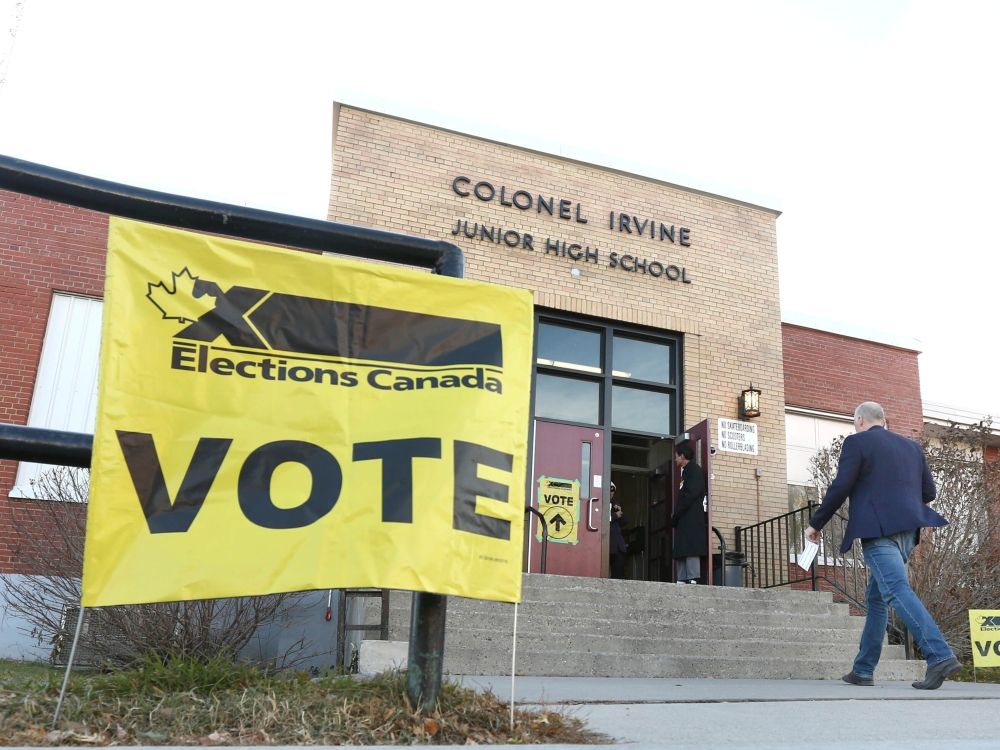
Spurred on by the decision of the British government, Canadian activists seek the same outcome here. They wish to sell the public on the idea that our electoral system is unjust because 16-year-olds cannot vote.
Over the past two weeks, newsrooms have been abuzz with this issue.
the excitement of CBC journalists and the barely-concealed
of CityNews at the thought of it. Having just turned 17, I cannot share their enthusiasm. The prospect of 16-year-olds getting the vote in this country disturbs me, and it should worry any responsible citizen of Canada.
There are many reasons why people advocate for lowering the voting age, but most of them represent only their own political interests, not those of the teenagers whom they assert are victims of an injustice. Teenagers have historically shown an affinity for left-wing politics, and proponents of lowering the voting age are well aware of this. They have a clear incentive to give 16-year-olds the vote: the hope of guaranteeing progressive election victories for years to come. This is the issue. Enfranchising 16-year-olds is never about correcting an injustice against youth. It’s about plain old politics, and activists advancing their own agendas.
I have heard many arguments from those who propose lowering the voting age. Unfortunately, each is successively less logical than the last.
One common argument is that 16-year-olds can vote for federal party leaders if they’re party members, so they should be given the right to vote in general elections. While that seems defensible on its face, it falls apart once one considers that party leaders, to win actual power, must face the real electorate which is made up of adults. Fourteen-year-olds can vote in party leadership elections. Perhaps they should have the vote too? I think not.
Others argue that our objective should be to increase voter turnout, and lowering the voting age would accomplish this. The problem with this line of reasoning is that voter turnout is calculated as a percentage of eligible voters, not as a percentage of the total population. If we were to inject young voters into the electorate, we would simply increase the number of voters that have to cast ballots to achieve the same turnout, not significantly improve it.
Supporters of this argument might respond with a
Scottish study
which found that teenagers allowed to vote at 16 are more likely to continue voting into their 20s. It’s difficult enough to get teenagers to attend school
these days
, but even if the study’s conclusion is true, turnout for the sake of turnout alone is not a noble goal if it does not represent an improvement to the function of our democracy. This country does not need an influx of uninformed new voters who largely get their news from TikTok.
There are many other cases for lowering the voting age that make equally little sense. Some propose that since 16-year-olds can drive, it’s only fair that they have the vote. Ask these people how driving and voting are alike and they will seem perplexed. Another absurd notion is that 16-year-olds can consent to sex, therefore they must be mature enough to vote. It’s witless.
More creative individuals have
that the right to vote for 16-year-olds could be given as a reward — in exchange for passing a civics test, for example. I wonder how much this test would cost taxpayers, and what might be considered an appropriate level of knowledge for teenagers to vote. If voting were a privilege for academic 16-year-olds, teenagers not allowed to vote would be forever discouraged from it. Critically, voting isn’t meant to be a reward for the smart — its purpose is to give Canadian adults an equal say in determining the direction of the nation, irrespective of their qualities and flaws. If the safe way to give the vote to 16-year-olds is as a prize, then it shouldn’t be given to them at all.
Moreover, if you allow 16-year-olds to vote, they should be allowed to run for office. But how would 16-year-old parliamentarians do their job, since we also expect teenagers to be in school?
The crux of the argument for lowering the voting age is that teenagers have a stake in our country, and there is no way for them to have their voices heard other than the vote. Isn’t this piece proof to the contrary?
Elections are fickle things. They have real consequences for everyone, including teenagers. Much can change in four years. Beyond the tired old arguments, Canadians need to consider the cardinal question of trust.
I am uncomfortable with the prospect of anyone my age influencing four years of vital policy. Do you trust that impressionable teenagers will settle on the right vision for Canada? I would have been delighted to vote in the last election, but this isn’t about my self-interest — it’s about the national interest. If you wouldn’t trust your 16-year-old child to manage the finances of your household, you shouldn’t trust 16-year-olds with the deciding vote over the purse strings of the nation.
The voting age exists for a reason — I should know. Now isn’t the time to change it.
National Post
Daniel Manandhar is an incoming Grade 12 student in Ontario.

