



As the
Herald
’s incomparable Don Braid
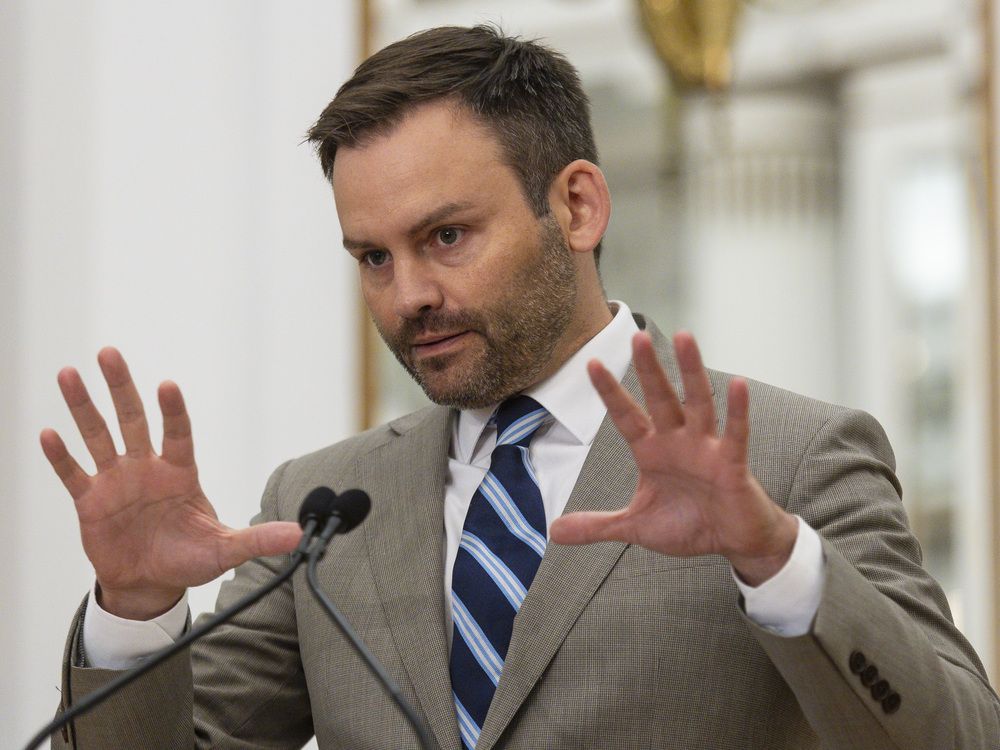
, there was an extraordinary moment of ecumenical outreach in Alberta last week, as Paul St-Pierre Plamondon, leader of the resurgent Parti Québécois, visited Calgary and pressed the flesh with some Alberta separatists. Plamondon was invited for a “fireside chat” by the University of Calgary School of Public Policy, and
rehearsed familiar arguments for Quebec separatism
. Quebec never asked for the constitutional settlement of 1982, or for that matter the one of 1867; the French language is, as ever, in precipitous decline on this continent; the federal government, unhealthily dependent on ethnic clientele-building, makes lunatic policy decisions and implements them crookedly, etc., etc.
Plamondon has, to a greater degree than past PQ leaders, followed a policy of aspirational proto-diplomacy, engaging with separatist groups abroad: and now he finds himself sweet-talking Alberta’s ragtag band of separatists, insisting that Alberta has a “genuine identity” and that its secession movement is “legitimate.” He conferred privately with the leaders of the Alberta Prosperity Project, which crowed about Plamondon’s anointment of them as the true revolutionary vanguard of Alberta separatism. (In the 1980s, genuine momentum for Alberta separatism died fast, partly because of political radicals’ inevitable tendency to splinter.) And he reminded Albertans that Quebec secession is the shortest road to eliminating fiscal equalization, calling it “toxic” and a hindrance to growth within Quebec itself.
There is an obvious possibility that fraternizing with Plamondon is a tactical error for the Albexit crew. As the PQ leader acknowledges, he has almost nothing in common ideologically with Albertans (which is all the more reason, logically, for the two provinces to cease being yokemates). He is, a little nonsensically, dismissive about pipelines as a source of conflict between Alberta and Quebec.
I’m not bullish about the future of Alberta separatism
per se
, which Braid always writes about with undisguised anxiety. What ought to be noticed outside Alberta is the possibility that Plamondon is sowing seeds for exterior support in a third Quebec referendum. Organized support from the rest of Canada was 99 per cent pro-federalist in 1980 and 1995: how sure are we that this would be true in 2028 or whenever?
It might not make much difference either way, but as a plain matter of fact, the motivating power of “national unity” as an ideal is not what it once was. For a decade our federal government treated the national flag as a source of disgrace, Canadian history as a genocidal conspiracy and immigration policy as an infinite source of discounted labour. And even the claims of the Canadian state to be a source of win-win economic-scaling arrangements have become depressingly threadbare. It’s little wonder Plamondon is out looking for friends.
National Post

