



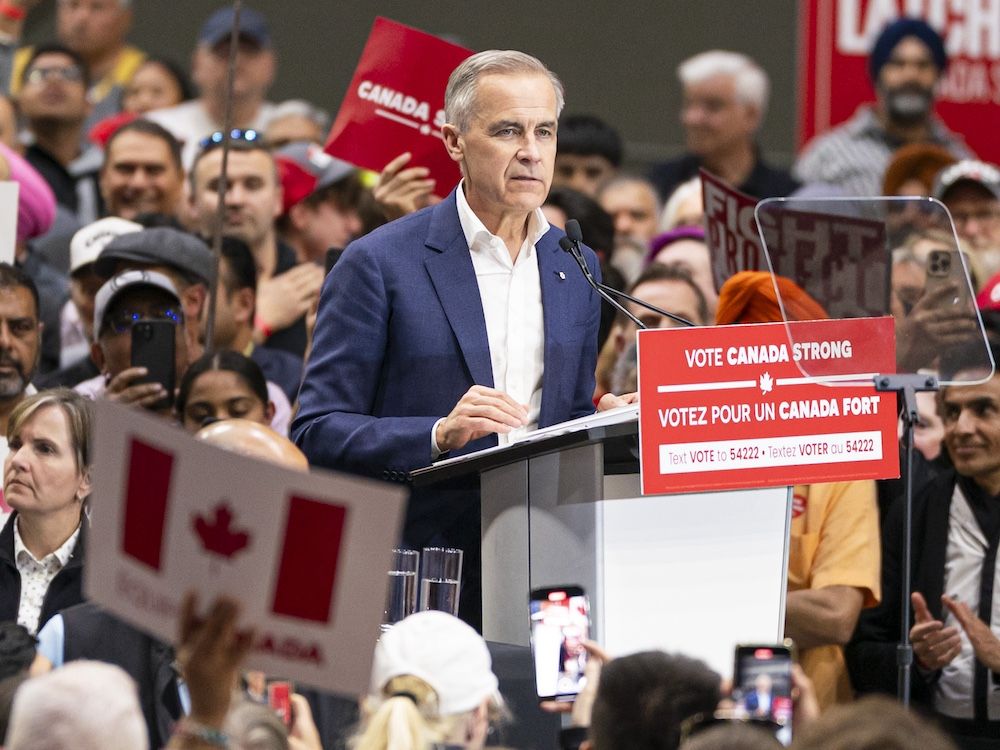
What do you suppose it is like to be Michael Ignatieff right now? Gosh, he must really think the good Lord has it out for him. In 2006, as a stylish liberal intellectual with a star reputation in Europe, he rolled up his sleeves and ran for the Commons seat in Etobicoke — Lakeshore. His ultimate ambitions were no secret, but he thought he had better learn the ropes first, get yelled at on a few doorsteps and absorb the sights and scents of an actual Canadian neighbourhood. In 2009, the suffering Liberals turned to him as a new leader and anointed saviour, with other dignitaries flinging themselves out of his path to make way.
As you’ll recall, this didn’t go at all well for them, even in Etobicoke — Lakeshore. And, of course, Ignatieff immediately cleared out of Canada altogether, having learned that the moment just wasn’t right for a national rescuer-figure on horseback. I’ve pointed out specifically that Ignatieff had truancy problems that today’s Liberal leader doesn’t, but he did, after all, attempt to serve a parliamentary apprenticeship. He knew it wasn’t customary to barge into the Commons for the first time already clothed in the power of a prime minister. He was aware that the keys to the kingdom wouldn’t simply be tossed to him in desperation. Poor devil.
The political polls suggest that … well, things may have changed since the Count’s college try. I am very agnostic about the Canadian polling profession, and this is not just because I am a migrainous, despairing middle-aged Albertan whose youth was spent bathing in the weird cauldron of the Reform party. Even if you are willing to give our pollsters a few tons of benefit of the doubt on ethics, they are working in a Canadian environment of preposterous data poverty, period.
Assuming they’re not “herding” inveterately, mistakenly following the scent of each other’s bovine flatulence, and assuming they’re not just torturing their mid-election numbers with an eye to future work contracts, there are inherent limits to the resolving power of their forecasts. In Canada, these limits are as low as it goes. And, frankly, I’ve read a few times too often in recent years about hair-raising last-minute surprises in other countries’ elections.
But surprises can go both ways, and there can be no doubt that the current election has been affected by an illiberal mood of post-Trump panic. The Canadian conservative movement has been punching itself in the face because the federal party’s current brain trust prepared for an election that was going to involve heavy litigation over a decade of
harmful, sophomoric, economically stagnant Liberal government.
The shared sense that this would be a useful and appropriate exercise has fled us altogether, along with the valuable instinct that governments ought to be changed like underwear from time to time (and, indeed, for analogous hygienic reasons). A serious exterior threat from a great power has eradicated all memory of our own recent past, and extinguished any contrition Liberal voters might otherwise feel.
This ought to bestir the heebie-jeebies of a liberal-minded person at least a little. Mark Carney has genuinely relevant credentials to serve as a prime minister of Canada, but if you were actively hoping we would get the Goldman Sachs neoliberal monster version of Mark Carney, you cannot be pleased that he is throwing the famous “fiscal anchors” into the ocean without their chains while blathering arrogantly about how he has “managed economies.”
Our whole modern world is significantly defined by the laser-bright line between fiscal and monetary functions of the state. Carney, as he would be the first to tell anyone he didn’t believe to be thick as a brick, has successfully managed currencies — and has no experience of the inherently more complex handling of public treasuries. The one thing he seems to be sure of is that he has an uncontestable personal claim to the use of our future federal revenue; the sovereign right, that is, to take out a third mortgage on Canada to go with the second one his predecessor bought.
Vote how you like if you haven’t voted yet, but I hope you’ll acknowledge that this could go very, very poorly. Or, one supposes, it could just be more of the same: more urban decay and grotesque street crime, more failed industrial planning, more ad-hoc voter bribery and more insane housing and immigration policy.
National Post

