



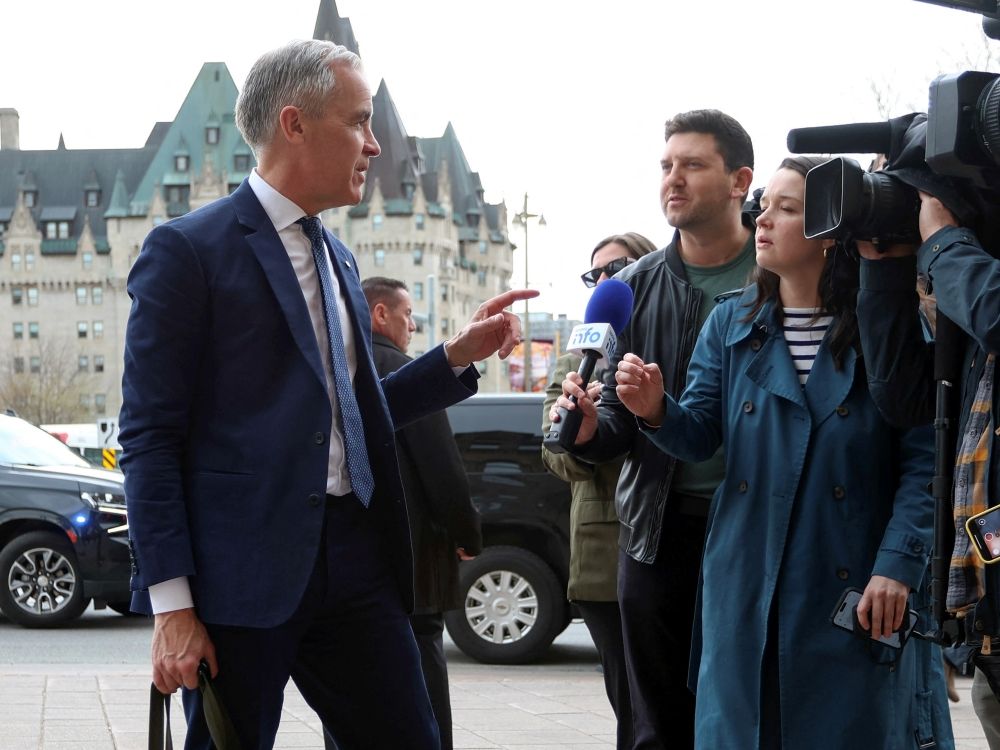
I think we have to admit from time to time that Westminster-style parliamentary democracy can have a schizoid quality. Canadians voted in a general election last night amidst an atmosphere of looming dread and economic panic. We were obviously desperate for safety and stability: voters of the left-wing luxury-beliefs parties turned against their leaders, and toward Mark Carney, with the savagery and single-mindedness of Cossacks having a pogrom. (Sympathy for federal New Democrats isn’t a natural impulse for me, but hoo boy. Some of those riding totals, man.)
But safety and stability aren’t on the ballot in their own right, and the result of our collective desire for these things, as often happens, is a House of Commons that offers instability and uncertainty. The Liberals have fallen just short of a majority in their own right, and are led by a man who has not yet felt the caress of a parliamentary pew. He articulates a grand vision of Canada which promises everything to everyone, while guaranteeing fast economic growth: this would be surely be hard enough with a Commons majority, even if you believe he has the right recipe tucked away in his desk.
Which I don’t, but, Lord, let me be wrong. Carney enjoys awesome, even frightening power within his own party, and the opposition on his left flank is seven-eighths dead, but he will have to bargain for legislation with lower beings, establish actual policy priorities and assemble a cabinet. The newspapers will be filled with guesswork about what this might look like, and reporters will be snatching at the smallest micro-hints.
Some Carney voters are surely betting that he’ll govern like a Conservative, but his rhetoric hews closer to a mid-20th-century industrial-planning approach than to a free-enterprise one. Even I feel a thrill when he talks of re-dedicating ourselves to building, to reshaping the continent for the 21st century, but what are we building? More insta-fail electric-vehicle battery factories? A toy train for the Golden Horseshoe?
The Conservative opposition is now bound to have a difficult year, with their leader inexplicably, inexcusably ejected from the Commons. Dedicated haters of Pierre Poilievre won’t find anything at all inexplicable about the Carleton disaster, but there will need to be a proper autopsy. Especially since Poilievre’s party gathered more vote share nationally than any right-wing party — or combination thereof! — has achieved since the days of Mulroney.
Even in Ontario, Poilievre’s Conservatives got
over a million more votes
than the hyper-critical Ford PCs did in a provincial election 60 days earlier, and they are headed toward a higher vote share within the province. So is Poilievre a generational leader potentially on the brink of a dynasty, or an unloved boob who got caught flat-footed by a change in public mood? I promise you that the quarrelling over that question is well underway.
I assume the CPC will keep its unlucky leader, which leaves only the question, “So then what?” The Liberals don’t have to call a by-election until six months
after someone decides to resign
to make way for Poilievre. And maybe I ought to say “if someone decides.” It’s not essential for a party leader to have a Commons seat, but it would certainly be ideal, especially with the Commons hung.
The Conservatives are bound to find themselves adopting more of a team approach to the Opposition job by default, and maybe this ought to have been considered while it was still optional. Even by Canadian standards, the CPC campaign was very leader-focused, and was obviously predicated on the idea that the people really wanted Poilievre and would like him more as they saw more of him. (And, again, this may actually have happened!) Now there’s a chance the CPC’s House leadership performs well over the next year or so — and then has to fade into the wallpaper behind the guy who already lost.
Questions abound. Can the New Democrats recover a sense of purpose, and find a leader who isn’t either an empty suit or an overgrown student radical? How far can the rump NDP go in cutting Commons deals with Carney without first deciding what they’re for and who is to be in charge? The Bloc Québécois suffered a surprising catastrophe, and while everybody outside Quebec finds their behaviour frustratingly predictable, how will they reconcile their Quebec-nationalist mission with a Canadian-nationalist frenzy? Who’s going to be Speaker of the House? And what demented utterances might spew forth from the Trump administration in the next 12 or 24 or 72 hours? How trying it is to live in interesting times.
National Post