



Last weekend on NBC’s Meet the Press, President
Donald Trump kiboshed the notion that he might seek a third term as president
. That doesn’t mean he won’t go on CBS’s Face the Nation next weekend and say the opposite, of course, but it’s a reminder that Trump, who’s currently breathing most of the oxygen in Canadian politics, won’t be around forever. And when he’s gone, all the problems that gave credence to Conservative Leader Pierre Poilievre’s “Canada is broken” narrative will still be around. Housing. Law and order. The opioid crisis. Foreign interference in our politics. Landlocked natural resources. We are an inefficient and economically dysfunctional federation, to the point where breaking down
internal
trade barriers is a tall order.
If Prime Minister Mark Carney wants to go down in history as something other than the federal version of former premier Kathleen Wynne — who snatched victory from the jaws of defeat for the Ontario Liberals, then four years rode them into the ground
like Major Kong in Dr. Strangelove
— he is going to need help, and I don’t mean from a bunch of self-styled communications geniuses. The government-by-comms era has to be over if Carney is going to leave the country any better off than he found it.
Carney needs to cobble together a solid cabinet,
which is to be unveiled Tuesday
, that is noticeably different than Justin Trudeau’s cabinet was. Based on April 28’s election results, turning the page on Trudeau was clearly the Number 1 priority for
huge
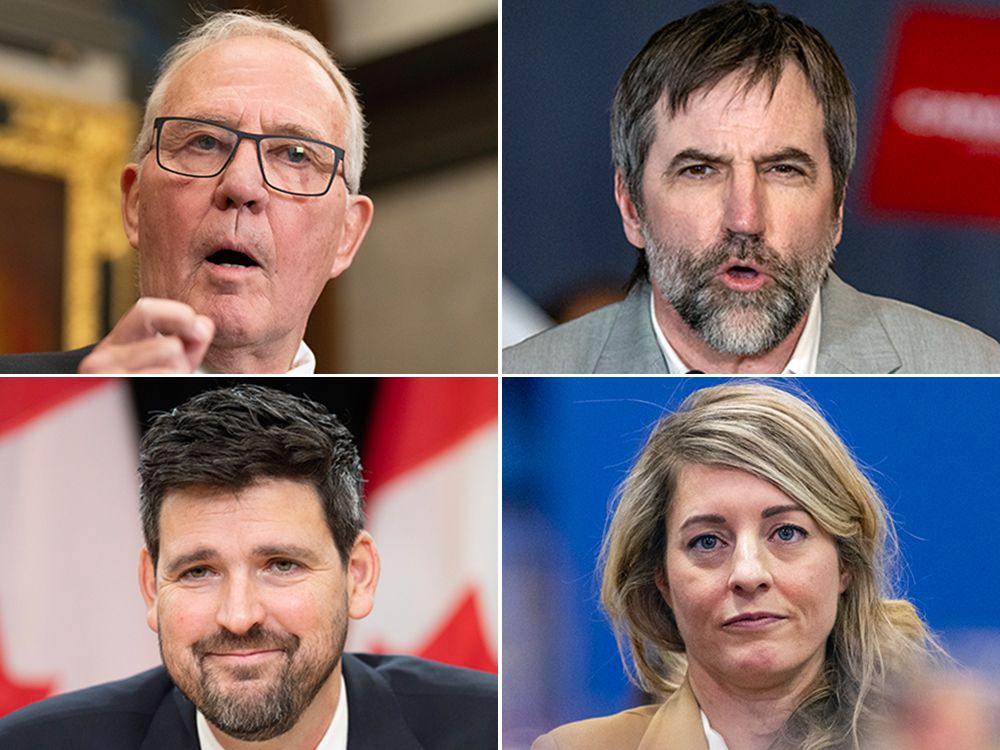
numbers of Canadians. There are voices we just don’t need to hear from anymore: Bill Blair, Steven Guilbeault, Mélanie Joly and the narrowly re-elected Sean Fraser come to mind, but three of those made it into the
provisional cabinet Carney quickly assembled in March
.
Blair has no business there after
his alleged meddling in the RCMP’s investigation into the 2020 massacre in central Nova Scotia
, or
after taking 54 days to sign a warrant allowing CSIS to investigate foreign interference
in Canadian politics. Really,
his handling of the G20 debacle in Toronto in 2010
, during which he was chief of the city’s police force, should have long ago thwarted any political ambitions he had in the first place.
Guilbeault is popular in Quebec, but he makes very little sense to the rest of Canada (and seemingly vice versa). His current position as Carney’s Quebec lieutenant might make sense going forward. His reinstallation by Carney in March as heritage minister — now dubbed Minister of Canadian Culture and Identity — does not make any sense. He was a disaster there before, failing completely to defend Trudeau’s anti-internet agenda in English Canada, and there is no reason to believe he would be any better at it now. (Ideally, of course, Carney would simply abandon Trudeau’s anti-internet agenda.)
Former housing and immigration minister Fraser, who decided not to run again to spend more time with his family, then changed his mind when he saw Carney’s numbers suddenly improving — and then
nearly lost Central Nova to the Conservatives
— is always mentioned as one of the most talented communicators in the Liberal caucus. Communicating, alas, doesn’t actually get anything done. It doesn’t build houses, for example, and it doesn’t un-bugger up immigration.
What does Carney do with Chrystia Freeland, who’s currently slumming it at transport and internal trade? A terrible public communicator but one who can forge private alliances across party lines —
notably with Ontario Premier Doug Ford
— she might be a good choice to keep on in the latter job. Internal trade is terribly unsexy and, I imagine, exhausting work, but it’s something Canada needs to get done as a basic matter of national self-respect.
Carney should be looking for substance here, not tone. And while I wouldn’t be so naïve as to suggest Carney stock his cabinet according to aptitude rather than MPs’ personal characteristics — he has already said he’s aiming for gender parity and naturally all of Canada’s regions will need to be represented — Carney is blessed with some experienced new options that don’t carry Trudeau’s baggage with them: f
ormer Quebec finance minister Carlos Leitão in suburban Montreal; former Alberta status-of-women minister Stephanie McLean in Victoria; former Saskatchewan environment and northern affairs minister Buckley Belanger in northern Saskatchewan; and Corey Hogan, a former deputy minister under NDP and UCP governments in Alberta, in Calgary.
Assuming Carney appoints ministers with some basic level of aptitude and managerial competence for their portfolios, the real key might be whether they’re allowed to flex those muscles. One of the chief complaints about the Trudeau government was that very little got done without explicit sign-off from the Prime Minister’s Office. There only being so many people at the PMO and so many hours in a day, lots of stuff simply didn’t get done. That included lots of entirely uncontroversial but
crucially important stuff, like appointing judges so accused criminals don’t
go free for lack of a speedy trial.
“Government by cabinet is back,”
Trudeau laughably promised in 2015
. It wasn’t, and Trudeau got nine-plus years in office anyway. Carney, who’s learning politics on the fly as the prime minister of a G7 nation under historic economic threat from its closest friend and neighbour, doesn’t have that option — not if he wants to last more than a few years, and certainly not if he wants to drag Canada out of its socioeconomic rut.
National Post
cselley@postmedia.com
Get more deep-dive National Post political coverage and analysis in your inbox with the Political Hack newsletter, where Ottawa bureau chief Stuart Thomson and political analyst Tasha Kheiriddin get at what’s really going on behind the scenes on Parliament Hill every Wednesday and Friday, exclusively for subscribers. Sign up here.

