



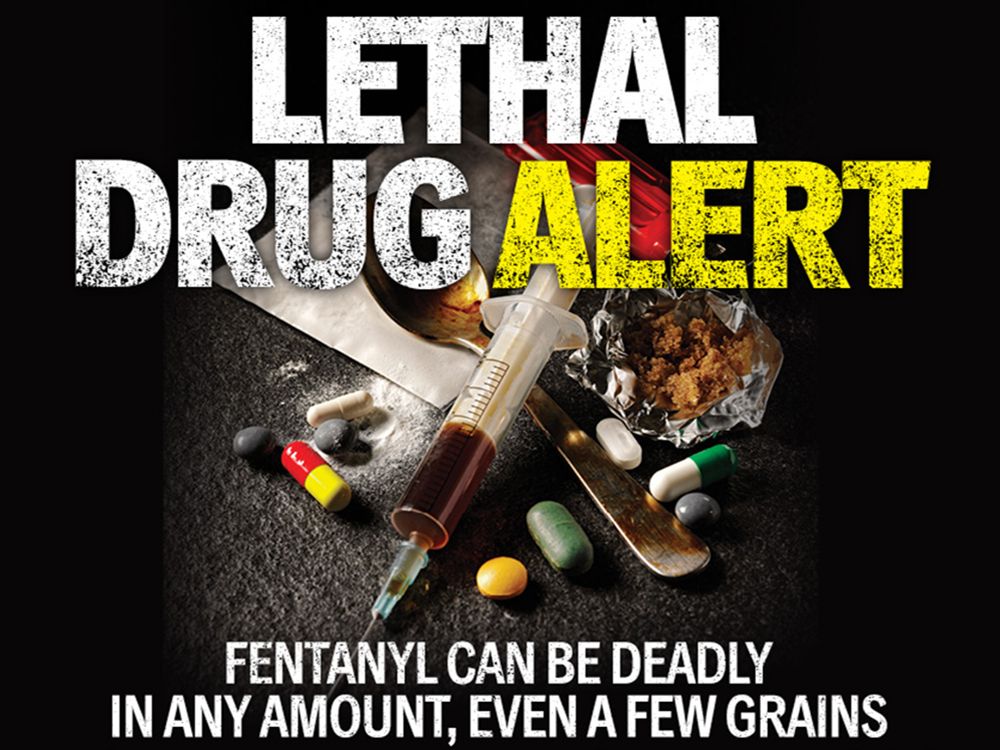
Good news keeps pouring in — relatively speaking, at least — on the opioid-overdose epidemic. “Overdose deaths plummeted in 2024,”
the New York Times reported recently
: Whereas roughly 81,000 Americans died from opioid overdoses last year, the year before it had been more like 107,000.
Give it another five years, at this rate, things will be back to their somewhat less horrifying pre-COVID routine: More like 6,000 people a month lost in the U.S., as opposed to double that.
The same basic ebbing trend is presenting itself in jurisdictions all over North America:
,
,
,
,
,
Only four U.S. states didn’t report a decline in deaths between 2023 and 2024, the Christian Science Monitor
.
In many ways it’s not surprising. It didn’t always seem that way at the time, but the massive surge in overdose deaths we saw concurrent with the pandemic was always going to subside along with the COVID-related factors behind it: despair in general and unemployment specifically, lack of social supports and overall isolation. (Say what you will about supervised injection sites, it’s simply much riskier to shoot up alone.)
Naturally, government policy has played a role as well. The problem is how many self-interested policymakers might now be eager to take too much credit for that.
“We are encouraged by this progress and see it as evidence that public health strategies rooted in care and harm reduction are working,” Democratic New York State Senator Nathalia Fernandez
in Governor Kathy Hochul’s self-congratulatory press release. (Headline harm-reduction efforts in New York State include free naloxone kits and “test strips” with which
users can test their supply for fentanyl
. They do not include safe-injection sites, save one licensed in New York City, or so-called “safer supply” of opioids to drug addicts.)
On the other side of the aisle, President Donald Trump is taking credit for his tough-on-drugs approach. And somewhere in the middle you have
the so-called “Alberta model,”
which aims to focus more on treating and curing addictions rather than on maintaining them. Its proponents, including Premier Danielle Smith, have highlighted supposedly positive results
when good news arrives on the overdose front
… though they have gone a bit quiet when negative results crop up.
One thing you will quickly notice looking at opioid-overdose statistics, however, is that they don’t conspicuously discriminate according to politics or policy. If red states (and blue provinces) have been more drawn to a law-and-order approach and blue states (and red provinces) more toward harm-reduction efforts, the results have been utterly grisly pretty much across the board.
And there’s a pretty simple factor that explains that: How much fentanyl and other super-powerful synthetic opiate supply is out there relative to less powerful non-synthetic opiates like heroin.
“Of all apparent opioid toxicity deaths in 2024,
74 per cent involved fentanyl,
” Public Health Canada reported this summer. “This percentage has increased by 42 per cent since 2016.” That’s huge. There isn’t one cause for the post-2019 pandemic-era opioid catastrophe, but if you had to pick one, fentanyl would be it.
Now fentanyl’s prevalence in the market is tanking. Possible reasons on the supply side include that dealers have began questioning the wisdom of killing so many of their clients. More darkly, on the demand side, some researchers suggest that only so many people are genetically vulnerable to fentanyl addiction in the first place … and a lot of them are already dead.
Some researchers are amazed by the development: “It has been a complete shock to see the (fentanyl) numbers declining in the way they have been,”
Nabarun Dasgupta of the University of North Carolina at Chapel Hill recently told NPR
. None are amazed by the lifesaving effects, however. This isn’t complicated.
Imagine shifting the entire Canadian population of alcoholics over to backwoods moonshine overnight, seeing what happens for five years or so, and then shifting those who survive back to their previous tipples of choice. Trust that public health would improve.
The danger, as always, is complacency — especially on the policymaking side — and I worry that our relative success fighting the opioid epidemic recently allows us that luxury. It is most depressing to see some conservatives, including GTA MP Roman Baber, not just turning against safe-injection sites but far more established and uncontroversial forms of harm reduction such as
.
It helps no one — no one — for addicts not to have clean needles. If needles were single use, you could argue it’s facilitating addiction, but alas, they famously are not single-use.
It’s important to remember, too, that people do still contract HIV, including from drug use, which was the main reason clean needles really took off in the first place.
And I mean, like a lot of people contract HIV. More people than I could even believe at first:
In the 10 years beginning 1981
, Canada recorded an average of 3,872 new HIV cases, or roughly 140 per million per year. It’s around half that nowadays, but growing. And while the prognosis for HIV is a hell of a lot better than it used to be, it’s still something you really don’t want for you and your kids.
Incidentally, according to the World Health Organization,
Gen-Zers don’t use condoms very much
. It has always been easy to write off the opioid epidemic as someone else’s problem until it isn’t. Let’s not forget that.
National Post
cselley@postmedia.com

