




OTTAWA — More than one year after Industry Minister Mélanie Joly ordered the government rip out all Chinese surveillance giant Hikvision gear from its properties, multiple key federal organizations refuse to say if they have done so.
In statements provided over the last two months, the Canadian Space Agency, Employment and Social Development Canada (ESDC), Environment and Climate Change Canada, Agriculture and Agri-Food Canada and Parks Canada all declined to say if they continued to use Hikvision cameras at their offices.
Furthermore, two government agencies — the National Research Council and the Windsor-Detroit Bridge Authority — told National Post that they continue to use Hikvision cameras.
That’s despite a clear order from Joly over one and a half year ago that she wanted all those devices out of every single federal government office.
“The silence actually to me is the story itself,” said Dennis Molinaro, a former federal national security analyst and author of Under Assault: Interference and Espionage in China’s Secret War Against Canada.
“The products are ordered out, and refusing to say … whether the cameras are actually removed undercuts the government’s own findings.”
In June 2025, Joly issued a federal ban on Hikvision Canada — a global leader in surveillance camera gear that is partly owned by the Chinese government — due to national security concerns. She gave the company 120 days to pack its bags and shut down its Canadian operation.
According to the minister, the company’s work in Canada created an unacceptable risk of espionage and mass surveillance which raised significant concerns among the federal security and intelligence community.
Hikvision is the most valuable manufacturer of surveillance equipment in the world, but also one of the most controversial. It is partly state-owned by the Chinese government and benefits from PRC subsidies that allow it to sell its equipment cheaper than most competitors.
But over the last decade, the company has been linked to multiple major cybersecurity vulnerabilities, allegedly used by the Chinese government for mass surveillance of Uyghurs and other minority groups, and has been blacklisted governments around the world over espionage concerns.
The ban also extended to federal departments, agencies and crown corporations, who were henceforth barred from purchasing or using any Hikvision equipment.
“The Government of Canada is further conducting a review of existing properties to ensure that legacy Hikvision products are not used going forward,” Joly said, all the while “strongly” encouraging Canadians to “take note of this decision and make their own decisions accordingly.”
Hikvision is currently challenging the ban in Federal Court and has dismissed the government’s claims as baseless and unfounded.
“Since entering the Canadian market, we have followed all applicable laws and regulations, and will continue to defend our position that Hikvision products and technology have not endangered the national security of Canada or any other country in which we operate,” Hikvision said in response to the June 2025 order .
In September 2025, a judge refused to temporarily suspend the application of the order pending a final judicial decision, citing the “serious public interest harms” linked to the national security risks posed by Hikvision.
According to a 2024 document tabled in Parliament, over a dozen federal departments and agencies declared using Hikvision gear. Many more said they had previously purchased or used equipment from the company but had since stopped, sometimes citing security concerns.
Contacted by National Post in recent weeks, the majority of the federal bodies who declared Hikvision gear on their properties in 2024 said they had complied with the June 2025 to remove the equipment. That included Justice Canada, Via Rail, Veteran Affairs Canada and the Military Police Complaints Commission.
But a slew of departments and agencies, including some who host troves of sensitive personal data such as ESDC or conduct classified research and work like the Canadian Space Agency, refused to say if they’d complied with the 2025 order.
In all cases, they pointed to Hikvision’s lawsuit against the government to justify their silence.
But more surprisingly to national security specialists is the fact that the National Research Council (NRC) and Windsor-Detroit Bridge Authority continue to use such gear, in apparent violation of Joly’s 2025 order.
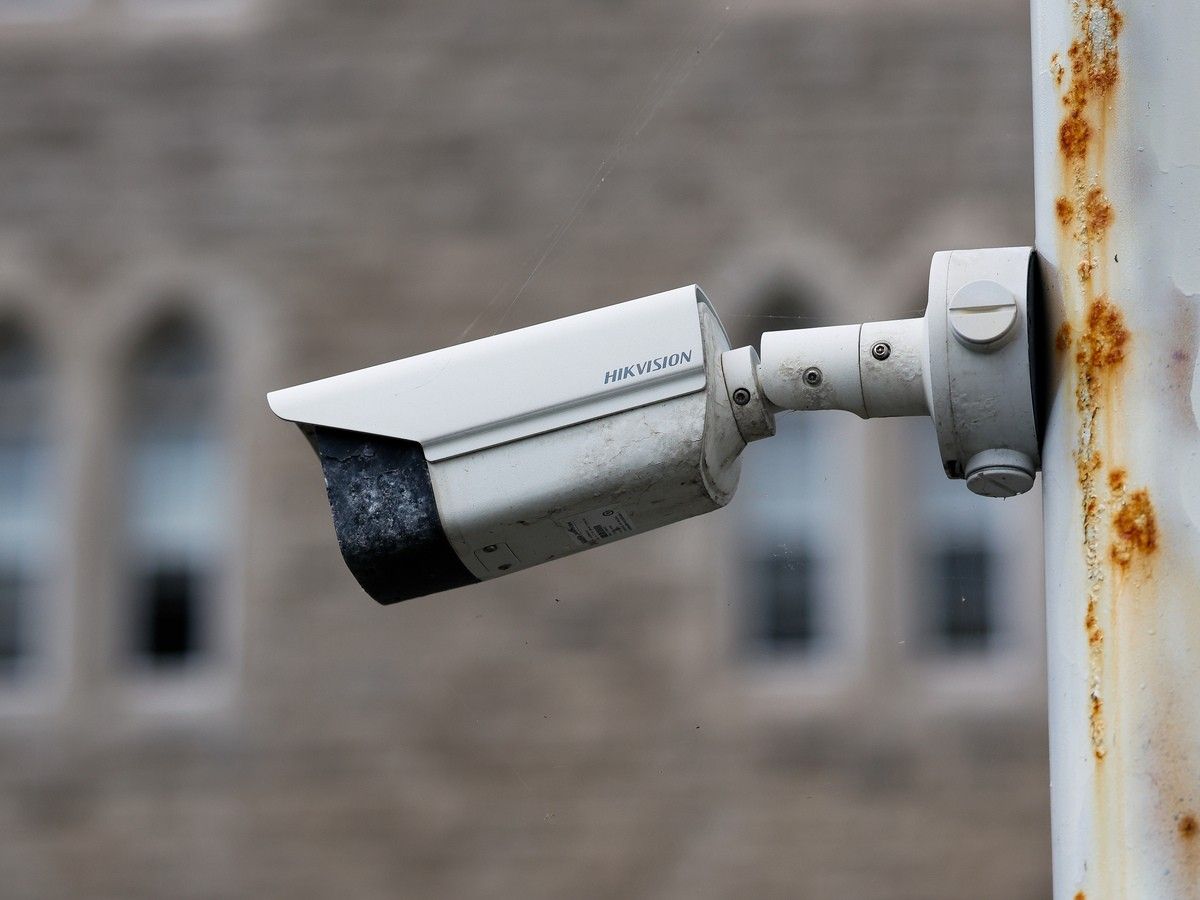
“The cameras referenced in the 2024 (document) remain in use at WDBA’s community office, which serves as a space for WDBA to share non-confidential information with the public. The cameras will no longer be in service as of November 2026,” said bridge authority spokesperson Heather Grondin.
In a statement, NRC spokesperson Pamela Pilon said the organization removed all Hikvision gear from its security systems in 2025, but continues to use them to monitor “non-sensitive experiments and work areas.”
“None of the NRC’s remaining Hikvision cameras are connected to the internet or NRC networks,” Pilon said. “The cameras used in research will be eliminated this year.
Neither of those explanations satisfied Molinaro or Andrew Kirsch, a former CSIS intelligence officer and founder of risk consultancy Kirsch Group.
“You’d like to think that if the government’s going to implement a ban, at the very least the government can follow it, right?,” Kirsch said.
“If it’s important enough for us to want to look at it, it may be important enough for someone else to want to look at,” Kirsch said.
For Molinaro, the Chinese government’s or hackers’ interests in espionage isn’t just towards classified or sensitive information. Seeing who may be transiting through a federal office, everyday conversations or finding out more about NRC experiments can all be extremely valuable to a foreign intelligence service.
Andrew Elvish, vice-president at Montreal-based security software firm Genetic, said that his company has essentially barred clients from connecting Hikvision hardware to their tech because of the risks.
“If you should wish to make a terrible technology decision, you will have to sign a waiver to hold us harmless when the sh-t hits the fan, as we believe it surely will, and (you) did that against our own financial interests,” Elvish said.
“These cameras, they’re not just cameras,” he continued. “They are computers, and … they are designed intentionally to be insecure computers on a network, so that they can gain a toehold.”
According to Sami Khoury, a recently-retired top government cybersecurity official, it would be “doable” but challenging to use such cameras in a safe way.
“If your networks are not properly segmented, you run the risk of the vulnerability being exploited indirectly,” he explained.
National Post
cnardi@postmedia.com
Our website is the place for the latest breaking news, exclusive scoops, longreads and provocative commentary. Please bookmark nationalpost.com and sign up for our politics newsletter, First Reading, here.