



The Ontario municipal elections were held on Monday. Many columnists and political commentators wondered if the electorate was going to favour either political change or the status quo. It turned out that the former was definitely in the air in some communities, but it was far from everywhere.
Recent results in B.C. had witnessed a fair amount of political upheaval in its municipal elections, particularly in Vancouver. The same thing occurred in its provincial election, which saw the BC Conservatives win a majority government and take power for the first time since 1928. Conversely, the Alberta referendum on separatism was soundly defeated by 75.05 to 24.95 percent. Of the remaining nine ballot questions in Alberta pertaining to political and constitutional matters, while all the results were relatively close, five of them ended up with a “yes” vote.
What happened in Alberta and B.C. wouldn’t be necessarily replicated in Ontario – or any other province, for that matter. At the same time, it did show that some Canadians in certain parts of the country were actively looking for something different. Not necessarily as a radical departure, but rather an adjustment in representation with respect to political, economic and constitutional matters.
There was definitely a desire for political change when it came to mayors in some of Ontario’s cities, counties, districts and regional municipalities.
The first major upset of the night was Alvin Tedjo defeating Carolyn Parrish and Bonnie Crombie to become the new Mayor of Mississauga. The three main mayoral candidates shared a similar political ideology. Tedjo had run unsuccessfully to become a Liberal MPP and Ontario Liberal leader, Parrish was a former Liberal MP, city councillor and the incumbent mayor – and Crombie was a former Liberal MP, Ontario Liberal leader, city councillor and Mississauga mayor.
Tedjo was well behind in the early stages of this race. He worked hard to win over Mississauga voters with an energetic campaign and fresh ideas. “He promised to implement a two-year city-wide residential property tax freeze on the city’s portion of the bill,” wrote CP24’s Joshua Freeman, and “also promised to increase the property tax rebate for seniors and to make city programs more affordable and accessible for families.” Tedjo rode a wave of political change in his city, defeated his more experienced opponents – and now has a unique opportunity to become a force in Mississauga politics.
Meanwhile, two long-serving mayors both lost on Monday. George Minakakis upset Gord Krantz to become the new Mayor of Milton. Krantz, an 89-year-old businessman and former city councillor, had first won in 1980 and was Canada’s longest serving mayor. Carrie McEachran then beat Mike Bradley to become the first female Mayor of Sarnia. Bradley, a former alderman and media commentator who unsuccessfully ran as a federal Liberal in 1984, had sat in the mayor’s chair since 1988.
Several other incumbent mayors were also defeated. Former Ontario NDP leader Andrea Horwath, who had become Mayor of Hamilton in 2022, finished a distant third in her re-election bid. Drew Dilkens, the Mayor of Windsor since 2014, lost to Fred Francis – the younger brother of former mayor Eddie Francis. Jim Diodati failed in his bid for a fifth term as Mayor of Niagara Falls. Wayne Redekop, the Mayor of Fort Erie since 2014, lost for the first time in over a decade. First-term Waterloo Mayor Dorothy McCabe went down to defeat, too.
In fairness, there were incumbent mayors who bucked the trend for political change.
Mark Sutcliffe was re-elected in Ottawa with a comfortable 44.6 percent of the vote. Patrick Brown earned a third term in Brampton with a solid 54.9 percent. Alex Nuttall won a second term with an impressive 66.62 percent. Steven Del Duca was re-elected in Vaughan with a commanding 81.5 percent of the vote.
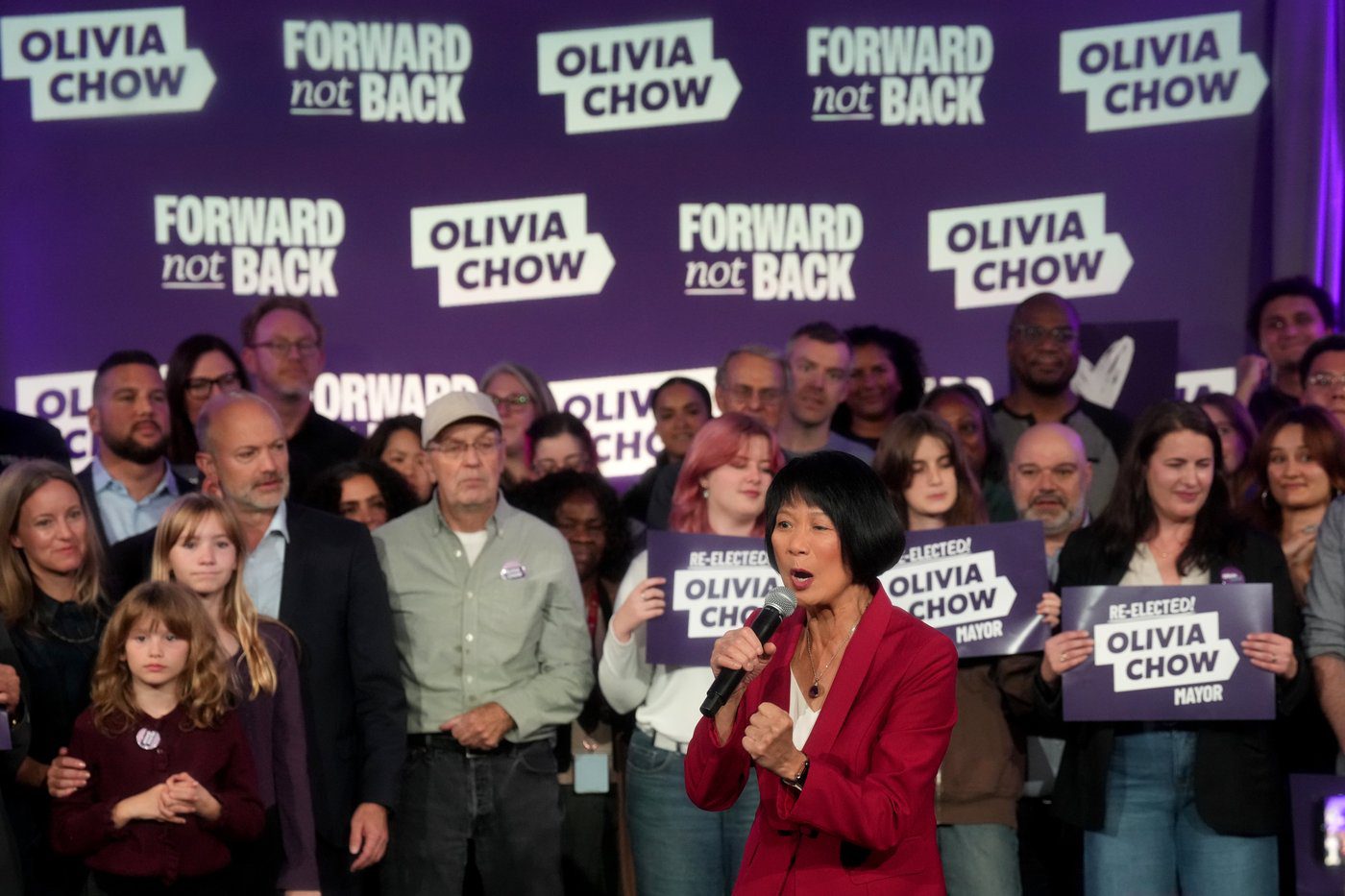
The ultimate vote for the status quo would surely be Toronto Mayor Olivia Chow. She defeated city councillor Brad Bradford by 54.16 to 41.11 percent.
In spite of the fact that Chow has been a disastrous mayor from a political and economic perspective, she led for most of this race. Toronto is a liberal and progressive city, which means that a left-wing candidate like Chow has natural appeal and a good-sized political base to draw from. Bradford was able to make up some significant ground in the final few weeks of the campaign and had the lead in a couple of late polls. This period of political indecisiveness on the part of some Toronto voters was short-lived, and Chow ultimately won by a solid margin.
Chow’s victory, more than any other successful incumbent mayor in the province, proved that the status quo was just as strong as political change in the Ontario municipal elections. Some communities were ready to overhaul the system, while others were perfectly content to keep things the way they were. Plus ça change, plus c’est la même chose.