



The speed with which the B.C. Conservative party contained its internal chaos to put together a professional campaign team in time for David Eby’s hilariously self-serving snap election is impressive. The party had devolved to such a state of dysfunction that it very well could have been facing electoral oblivion.
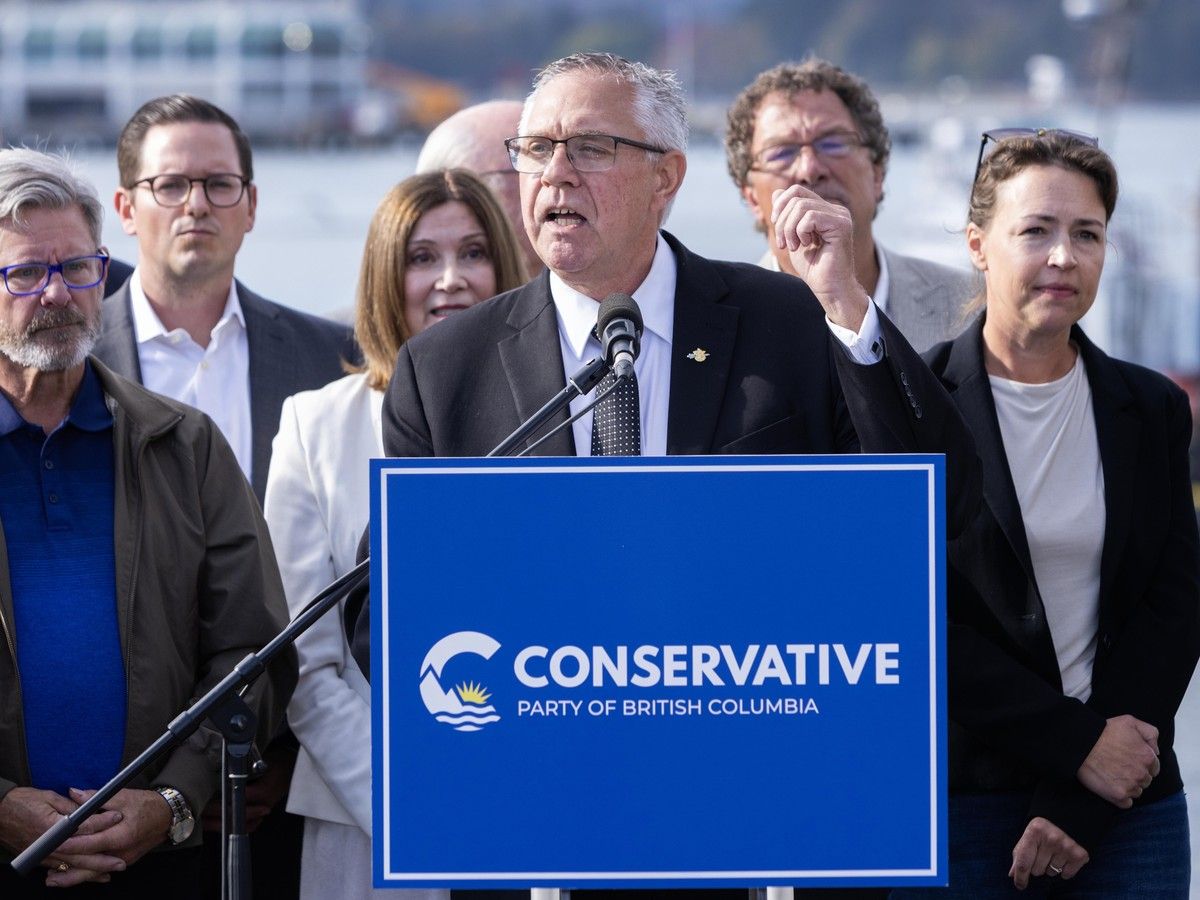
After former leader Kerry-Lynne Findlay was persuaded to step down on Sunday amid a full on caucus rebellion, the party’s board of directors moved quickly and appointed the aggressively normal Lorne Doerkson as interim leader, who then persuaded most MLAs who had fled to return to the fold, recruited some other competent candidates and hired experienced campaign staff.
That professional infrastructure could be more than enough to embarrass Eby and toss him out of office two years early. Indeed, the Conservatives are now leading the NDP, 43 per cent to 35 per cent, according to an Angus Reid poll released Thursday.
However, the underlying problems that plagued the Conservatives, and are plaguing conservative parties across the Western world, are not going away. The tension between what party members expect and what party leadership can deliver is as unsolvable a problem as it ever was.
Even if the Conservatives win the election and Doerkson becomes premier, according to the party’s constitution and bylaws, he could be ineligible from becoming the permanent leader. A leadership election must be called within a year of Findlay’s resignation, and the rules state pretty clearly that “An Interim Leader may not be a Leadership Candidate.”
So, under a strict reading of the rules, Doerkson could lead the party to victory only to be swiftly shown the door. Now that could theoretically lead to a situation where the premier and party leader are different people. Either way, this is a set up for further dysfunction.
After the NDP raised the possibility that voters cannot count on Doerkson staying on as leader, giving the party’s past instability, the Conservative board put out a sensible statement on Wednesday.
“When Mr. Doerkson leads the Party to victory on October 24, he will remain Leader,” the statement read. “The Board will pursue the appropriate means under the Party’s Constitution and Bylaws and the Societies Act to give effect to this intention.”
That the board cannot change the constitution without membership approval is a valid point, but promising a solution to this unusual problem was obviously the right thing to do.
It was the right thing to do that is, unless you are a B.C. Conservative member who feels disenfranchised. Kerry-Lynne Findlay’s supporters are angry, and, honestly they have every right to be. Even though she was, by all accounts, gutting the party from the inside out, and the party board was right to pressure her into resigning, if that is what happened, to a rank and file member, it might look like a stitch up.
Much of the reaction on social media to the statement that Doerkson would remain leader if he won the election was quite negative. As with any social media controversy, it is hard to tell who is, or was, a B.C. Conservative member, but I imagine, at least some of the people posting angry responses are.
“The coup is complete with the unelected leader put in place by B.C. United,” read one post, referring to the B.C. United party that the Conservatives merged with in 2024. Another post read, “How do I withdraw my membership and get a refund?” And, yet another, read “This is an organized coup and a liberal takeover of the BC Conservative Party.”
And it sort of goes on like that. I don’t want to draw too many conclusions from social media griping, and a divide between the professional party and the wider membership, particularly among members who signed up specifically to vote in a leadership race is pretty common. B.C. Conservative party members increased from 7,000 to 42,000 during the race that elected Findlay this past spring.
But the divide between different conservative factions, in B.C. and elsewhere, has become more stark in recent years, and it isn’t clearly an ideological divide either.
Findlay’s platform was near identical to second-place finisher Caroline Elliott, but Elliott was (unfairly) branded a liberal interlocutor by her opponents because some of the staff that worked on her campaign had worked with Ontario Premier Doug Ford, who some conservatives find to be a disappointment.
When I speak to conservatives across the country who were drawn into politics during the Covid years, they were driven by a deep sense of mistrust in institutions, a mistrust that is entirely deserved, I might add.
For years, governments have pushed narratives that white people are inherently and inevitably racist, that individuals should not expect to have a good mortgage-paying job, if it is in a resource sector. Schools often tell children that they can choose their gender, or they transition students in secret. In B.C., courts have ruled that people may not have title to their property, and the NDP government has signed over vast territory to First Nations groups, all without democratic accountability. People who objected to authoritarian Covid measures were branded conspiracy theorists, and even faced arrest or loss of employment.
These trends have served to attract people into politics who might not have otherwise been interested, culminating with the Freedom Convoy protest in 2022. While many media commentators will say that the rise of this movement is entirely due to the spread of misinformation, that misses the point that our institutions have served us miserably.
So when a vehicle intended to push back against the institutions pursuing an extremely progressive agenda, in this case the B.C. Conservatives, appears to falter in its commitment to democratic ideals, some people will be upset. We could point out that no leader, no matter how much membership support they have, can hope to keep their post if they alienate their entire caucus, which is as it should be. But I doubt that will be persuasive to people who feel their vote was erased.
Ideally, Canadian parties would return to the practice of leaders being selected directly by caucus, paired with more independence for riding associations. That way, a leader would be chosen by the people they are expected to lead. As that is unlikely to happen, as leadership races are valuable as membership drives and fundraisers, there could be more Kerry-Lynne Findlay style immolations to come.
Personally, I hope not, as B.C. needs a stable, sensible government, and right now the B.C. Conservatives are better equipped to offer just that than they were just a week ago.
National Post

