


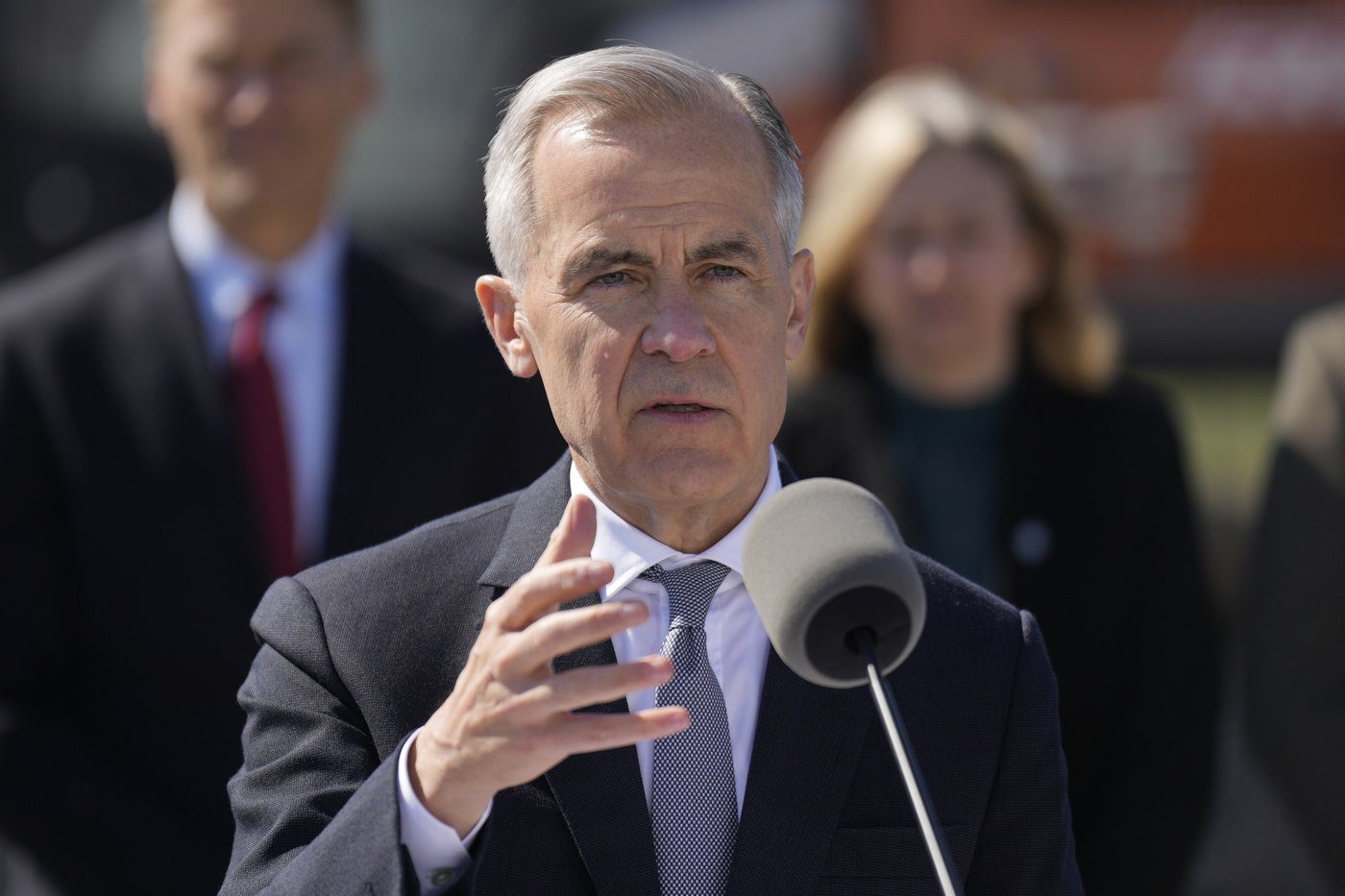
OTTAWA — Canada is not just sitting back “taking notes” or “instructions” from the Americans on how to go about trade talks after White House officials complained publicly about trade irritants, Prime Minister Mark Carney said Thursday.
The prime minister said the United States has raised most of the issues on bilateral trade but he’s focused on eliminating the American tariffs gripping key sectors of the Canadian economy.
“You know what’s an irritant? Fifty per cent tariff on steel, 50 per cent tariff on aluminum, 25 per cent tariff on automobiles, all the tariffs on forest products,” Carney said during an exchange with reporters in Ottawa on Thursday.
“Those are more than irritants. Those are violations of our trade deal.”
Carney also said he had never heard of any sort of “entry fee” required for Canada to enter negotiations with the White House to renew the continental free trade pact.
A Radio-Canada report on Wednesday said the Americans are demanding concessions from Canada as a precondition for starting negotiations on the Canada-United States-Mexico Agreement on trade, better known as CUSMA.
United States Trade Representative Jamieson Greer told a congressional committee Wednesday the White House is pressing for “changes” to Canadian trade practices.
Greer warned of possible trade “enforcement action” against Canada if American alcohol does not return to liquor store shelves here.
Carney noted it’s up to the provinces to decide whether to return American alcohol to store shelves, and that they only removed the products in the first place in response to President Donald Trump’s blistering tariffs. Alberta and Saskatchewan have since restarted U.S. liquor imports, while other provinces have not.
Ontario Premier Doug Ford promptly dug in his heels on Wednesday, saying American alcohol will “only go back on shelves when the U.S. removes its tariffs.”
Conservative Leader Pierre Poilievre downplayed the question of what to do with liquor stores not stocking American booze, arguing the bigger picture on bilateral trade matters more.
“I don’t think we need to spend three or four days debating whether we should drink bourbon or not. I think we should discuss whether 2.6 million Canadians are going to have their jobs,” Poilievre told reporters in Ottawa on Thursday.
“The way to get those jobs secured is to get a tariff-free trade deal with the U.S.”
The Conservative leader said Carney should not “squander any more leverage” after making “a series of upfront concessions” to the White House.
Janice Charette, Canada’s chief trade negotiator, said on Tuesday Canada has already made some significant concessions by dropping the digital services tax, issuing millions in refunds to tech companies and ending retaliatory tariffs.
She said her mandate is to protect the “fundamentals” in the existing trade pact and seek relief from U.S. tariffs, but warned it’s not clear Canada will return to “the beautiful tariff-free existence we had.”
Carney indicated Canada may be prepared to wait out the Americans as his government works to shore up the domestic economy and diversify its trading partners.
“We’re ready to go into detailed negotiations. We’re also ready to wait, if that’s what has to happen,” Carney said.
Canada’s former top trade negotiator Steve Verheul said earlier this month Canada is in a “good position” heading into talks to renew CUSMA and that “time is on our side” because pressures on the U.S. will only “increase over time.”
“It’s really a question of Canada being prepared to wait this out a bit,” Verheul said on April 8.
U.S. Commerce Secretary Howard Lutnick recently dismissed that idea as “the worst strategy I’ve ever heard.”
Bloc Québécois Leader Yves-François Blanchet said playing out the clock — hoping that Trump’s position will be diminished if the Republicans get clobbered in the November midterm elections — is not the best way to start negotiations.
“It might be a naive way to see the way Mr. Trump thinks or acts. Let’s use this opportunity to start a real negotiation,” Blanchet told reporters on Parliament Hill Thursday.
Blanchet said Canada should “not wait for something not to happen, in the hope that it will be better for us.”
This report by The Canadian Press was first published April 23, 2026.
— With files from Sarah Ritchie and David Baxter
Kyle Duggan, The Canadian Press