


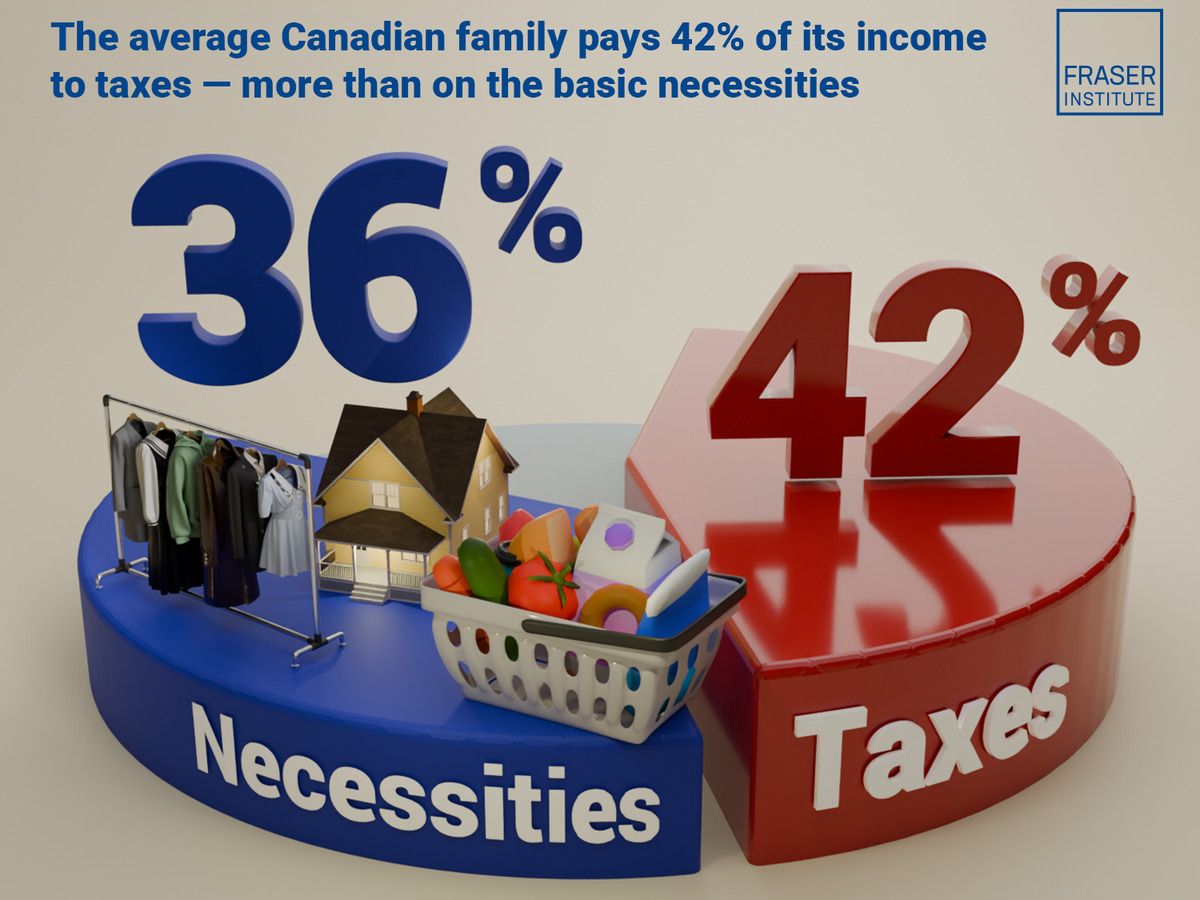
The average Canadian family spends more of its income on taxes than it does on the basic necessities of food, shelter and clothing, a new report reveals.
Numbers from “Taxes versus the Necessities of Life: The Canadian Consumer Tax Index, 2026 Edition” by The Fraser Institute found that the average family loses 41.9 per cent of its income to a variety of taxes, while food, shelter and clothing combined eat up just 36 per cent.
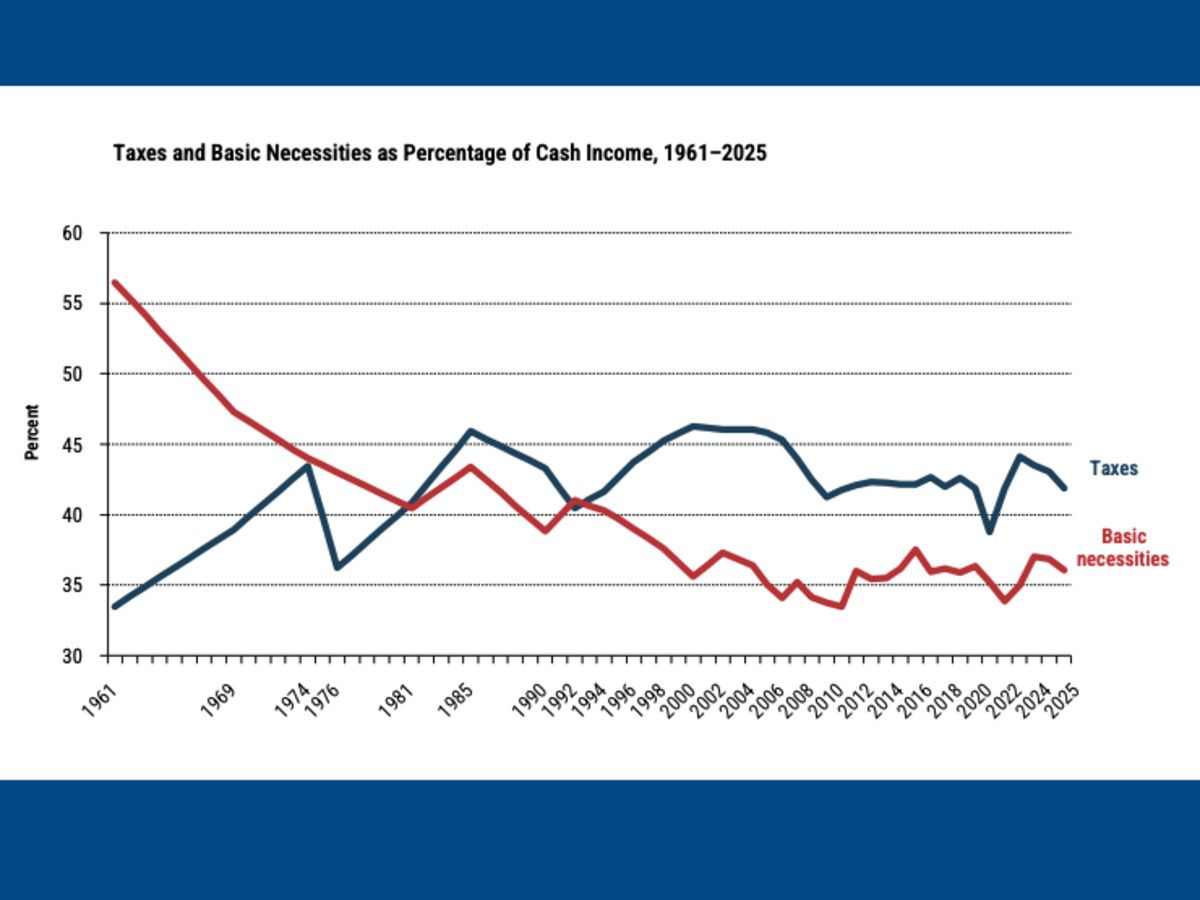
It wasn’t always this way. Back in 1961, the first year for which the report has data, just 33.5 per cent of the average family’s income went to taxes, while more than half (56.5 per cent) covered basic necessities.
The report notes that, until about 1980, Canadians paid less on taxes than they did on the three categories of basic necessities. Taxes then outstripped necessities as a percentage of income until about 1992, when they were briefly about the same. But since then the gap has widened to where we see it today.
“At a time when the cost of living is top of mind across the country, taxes remain the largest household expense for Canadian families,” said Jake Fuss, director of fiscal studies at the Fraser Institute and co-author of the report.
“While Canadians can decide for themselves whether or not they get good value for their tax dollars, they should understand how much they pay in taxes each year and how much the tax burden has grown relative to other necessary costs they must pay.”
The report also breaks down taxes by type, with more than half the tax burden taken up by income taxes (31.7 per cent) and payroll and health taxes (22.3 per cent).
Next on the list are profit taxes (14.2 per cent), sales taxes (13.7 per cent) and property taxes (8.5 per cent). The remainder, about 10 per cent, includes liquor and tobacco taxes, fuel and vehicle licensing taxes and import duties.
Last year the average Canadian family earned an income of $121,111 and paid total taxes equaling $50,721 or 41.9 per cent. In 1961, in comparison, the average family had an income of just $5,000 and paid a total tax bill of $1,675 or 33.5 per cent.
In absolute terms, that’s about a 30-fold increase over the years, with the total tax bill of the average Canadian family growing by 2,928 per cent since 1961.
Data in the report shows only three times in which taxes as a percentage of income fell, the last during the pandemic, when wages continued to rise modestly while tax revenues fell. Aside from those blips, it has been a steady march upward.
The report also notes that taxes have grown much more rapidly than any other single expenditure on the list. Costs for shelter increased by 2,349 per cent between 1961 and the present, while food prices climbed 952 per cent, and clothing just 526 per cent in the same period. Even the Consumer Price Index, which measures the average price that consumers pay for food, shelter, clothing, transportation, health and personal care, education, and other items, grew 946 per cent in that period.
Even taking inflation into account, the average tax bill has more than doubled in the time covered by the report. In constant 2025 dollars, the tax bill in 1961 amounted to $17,518. But by last year it had grown to $50,721, an increase of 189 per cent.
Our website is the place for the latest breaking news, exclusive scoops, longreads and provocative commentary. Please bookmark nationalpost.com and sign up for our daily newsletter, Posted, here.