


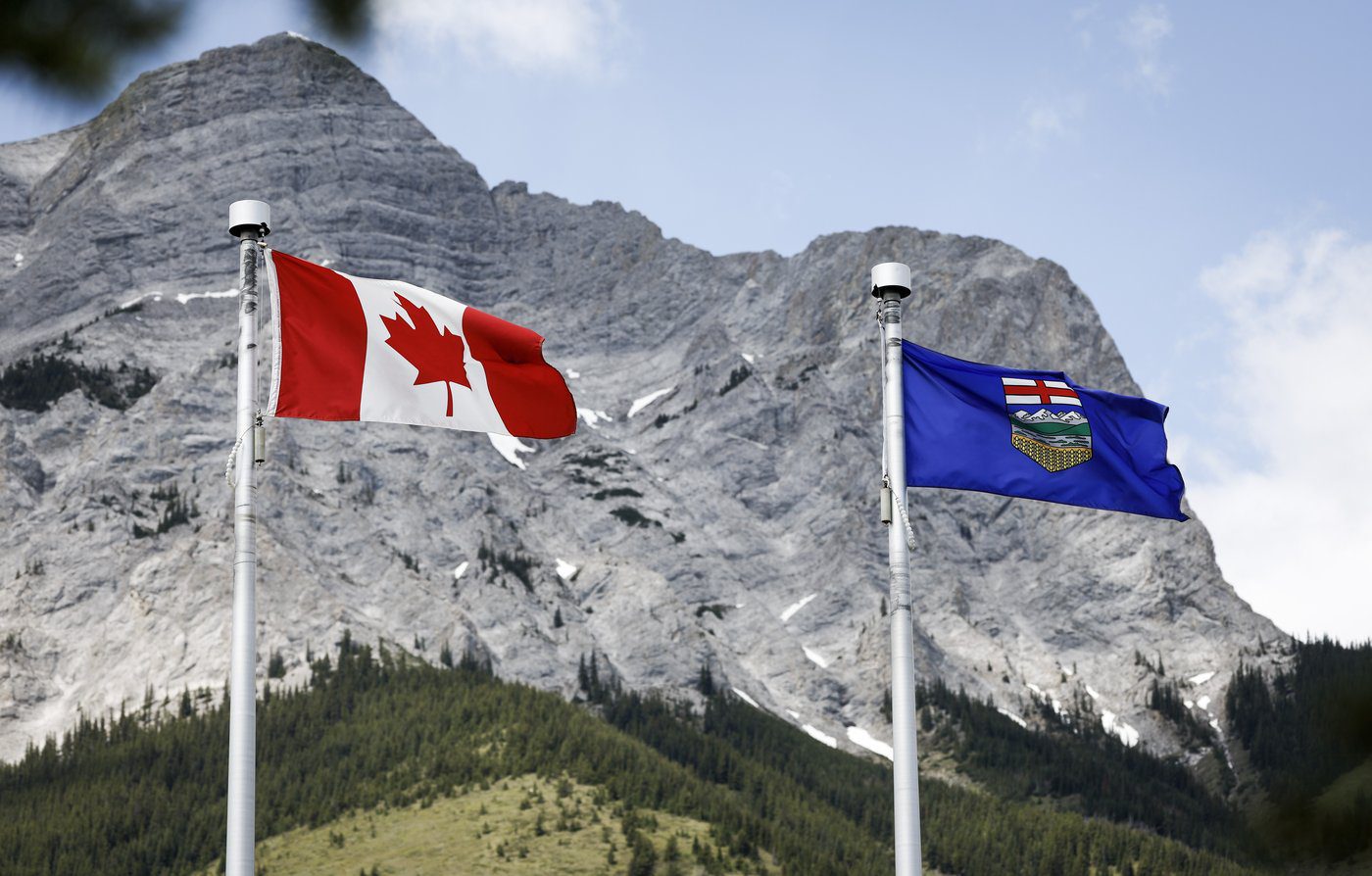
CALGARY — Alberta business leaders have signed on to an open letter from the Calgary Chamber of Commerce warning of the dire economic consequences if the province were to separate from Canada.
“We must remain at the table and prioritize relationships, opportunities and stability that have helped make this province and this country prosperous,” reads the letter released Tuesday along with an analysis into the trade, labour and fiscal implications of separation.
“Alberta can be proud of Its identity while remaining confident in its future within Canada.”
Among the signatories to the letter are the heads of AltaGas, ATCO, AltaLink, Capital Power, Keyera, BHE Transmission and Chirp Foods Inc., Canada’s largest McDonald’s franchise business. Tourism Calgary and Calgary Economic Development have also signed, as well as a former CEO of Trans Mountain Corp. The chamber said more are expected to join.
In three weeks, Albertans vote on 10 referendum questions, including one on whether the province should remain in Canada or begin the process of holding another referendum on separation.
The study by University of Calgary economist Trevor Tombe estimates trade costs would rise by five to eight per cent — the range the United Kingdom has seen since its withdrawal from the European Union.
It said Alberta is the most trade-exposed jurisdiction in the country, with nearly one in three workers having jobs in sectors significantly vulnerable to such disruptions.
The higher trade costs would translate into to job reductions of up to 175,000 in Alberta and an up to $62-billion annual hit to the economy, the report said.
Alberta would also find itself with a $9-billion fiscal shortfall if it were to separate, Tombe concluded. Closing the gap would require a 13 per cent sales tax, a 10 per cent corporate income tax hike or a 40 per cent cut in the transfers Alberta businesses and individuals now receive, like the Canada Child Benefit and old age security.
“When you hear something like GDP contracting, it seems like an abstract statistical notion, but this translates directly into real incomes and wages. How much goods and services can you afford to purchase with an hour of work?” Tombe told reporters.
Chamber president and CEO Deborah Yedlin said Alberta splitting from Canada would be like scoring on its own net, just to send a message.
“I grew up with this notion of the Alberta advantage — no sales tax, low taxes, good education, health care, social services. All of that would disappear and we would not be able to sustain that level of support for Albertans,” she told reporters.
“That, in turn, turns into a negative feedback loop, and you don’t get the investment, you don’t generate the tax revenue, you can’t provide the services unless you change how you operate, and that’s just not something anybody really wants to see.”
The vote also comes as “we stand on the doorstep of some significant opportunity,” Yedlin added. The world is clamouring for stable supplies of energy as wars rage in the Middle East and Russia. And the federal government under Prime Minister Mark Carney has made a raft of policy shifts embraced by businesses while demonstrating an eagerness to build new energy infrastructure.
Some people might be looking to send a message with a pro-separation-referendum vote after 10 years of former prime minister Justin Trudeau’s less oilpatch-friendly approach, Yedlin said.
“It’s easy to look in the rear-view mirror and it’s easy to be aggrieved and to focus on that. It’s much harder to be an optimist, but we’re at a point in time where we need to have that optimism … This is a different set of circumstances, a different environment for Alberta, for the energy sector and we do need to look forward.”
Yedlin said some business leaders may have been reticent to wade into the debate so far because they don’t want to alienate workers in the field sympathetic to the separatist cause.
“The reality is, though, that as an entity, you can say this is what you stand for. And at the same time, you respect the right of your employees to vote according to what they feel is important to them,” she said.
“Ultimately, where you need to be is on the right side of history.”
This report by The Canadian Press was first published Sept. 29, 2026.
Companies in this story: (TSX:ALA) (TSX:ACO.X) (TSX:CPX) (TSX:KEY)
Lauren Krugel, The Canadian Press

