


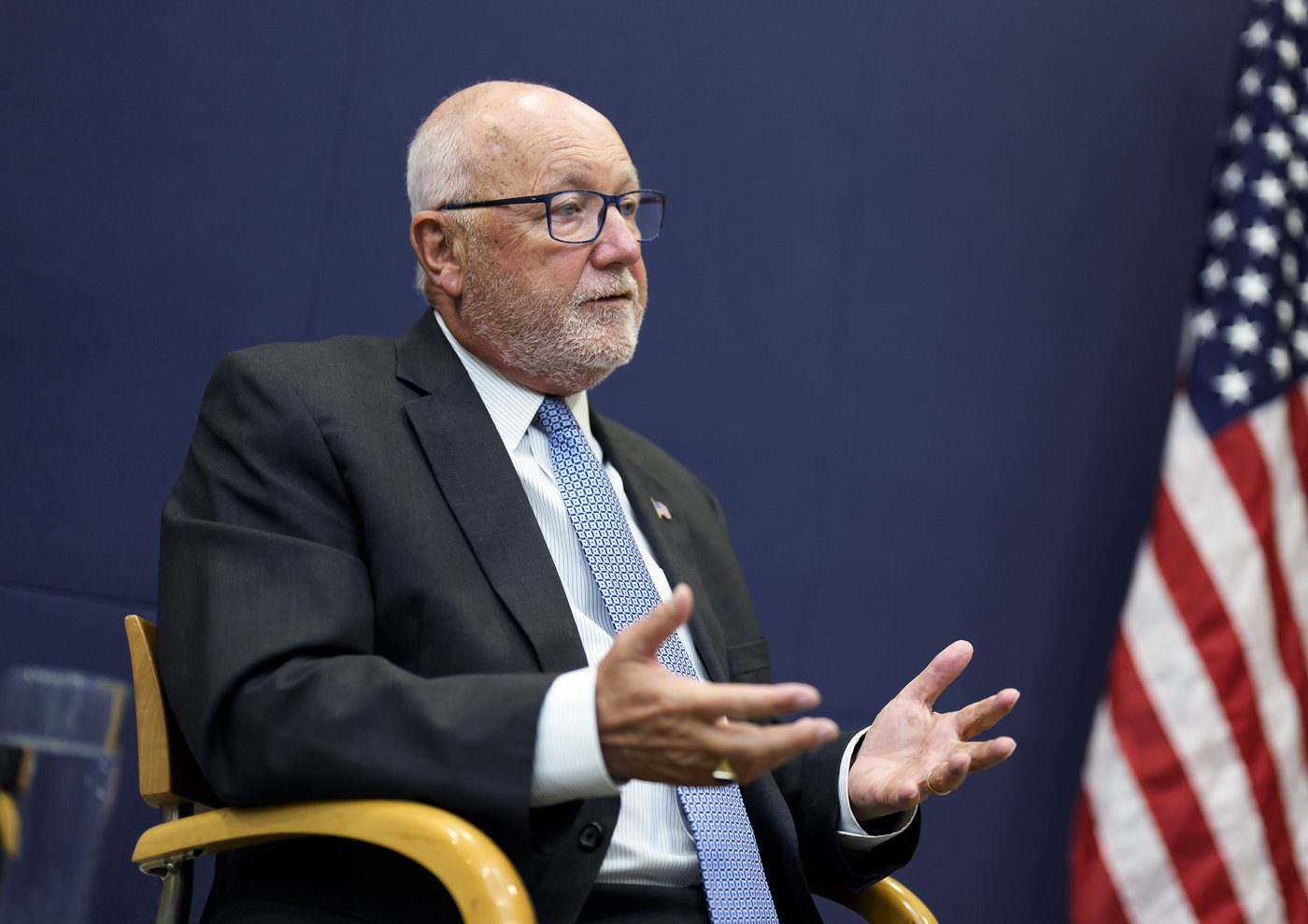
TORONTO — Canada-U.S. Trade Minister Dominic LeBlanc said he expects to see bilateral agreements negotiated with the United States as Canada and Mexico look to extend a critical continental trade pact.
“I would expect that we will have bilateral arrangements between Canada and the United States, between the United States and Mexico, sort of adjacent to the trilateral framework,” LeBlanc said at the U.S.-Canada Summit in Toronto on Thursday.
“If those agreements resolve issues that all three countries are trying to resolve, I’m hopeful that we might, at that point, have the extension.”
His comments come after U.S. President Donald Trump said Wednesday he is “not looking to renew” the Canada-U.S.-Mexico-Agreement on trade, known as CUSMA, ahead of a July 1 deadline to rubber-stamp a 16-year extension.
“We don’t need anything that Canada has, we don’t need anything that Mexico has, but they need everything that we have,” Trump said, pointing to cars, lumber and energy. “And they should have to treat us better.”
Canada and Mexico have both called for the 16-year extension. If the Trump administration blows past the July deadline, the trade pact stays in place subject to an annual rolling review for up to 10 years.
While the president could also give six months’ notice that the United States is pulling out of the agreement, comments from members of the Trump administration indicate that’s not likely to happen immediately.
Prime Minister Mark Carney said Canada is also looking for a bilateral agreement with Mexico.
Speaking to reporters at an unrelated press conference in Toronto, Carney said there has been progress in negotiations since LeBlanc met with United States Trade Representative Jamieson Greer in Washington last week.
LeBlanc and Greer will be connecting again on the sidelines of the G7 in France.
U.S. Ambassador to Canada Pete Hoekstra told the audience at the summit earlier Thursday that when Trump says the U.S. doesn’t need anything from its northern neighbour, he’s actually looking for ways to collaborate.
“When the president says we don’t need this from Canada, or there’s nothing we need, America has a tremendous amount of things where we have a need,” Hoekstra said.
He cited Carney telling the Economic Club of New York last month that a strong Canada makes America great. Ottawa should put on its “sales hat,” Hoekstra added, and make the case that it’s better for the United States to work with Canada.
Hoekstra said Canadians may not like the way Trump says things but Canada has an opportunity to go into the negotiations “very aggressively and say, ‘We know America has needs across the board and we’re here to partner with America and fill those needs because we are the best place for America to fill these needs.'”
Pointing to Canadian potash, Hoekstra said there aren’t a lot of other places where the United States can get the key ingredient for fertilizer. More than 80 per cent of the United States’ potash imports come from Canada; the alternative global suppliers are Russia and Belarus.
Hoekstra said it’s also more desirable for the United States to get resources like oil from Alberta and automobiles from Ontario.
He said the U.S. can get automobiles from other countries but Ottawa can make a compelling case that “the best place to get that car from is Canada” because of similar labour forces, work and environmental standards, similar pay scales and a long-standing integrated industry.
“Make us an offer,” Hoekstra said.
When asked about Hoekstra’s comments, Carney said Ottawa understands the United States has changed how it deals with trade and there are issues that need to be ironed out on both sides of the border.
The prime minister said certain sectors still enjoy a tremendous advantage through integrated industries but “we’ve got work to do to convince the U.S. side of that.”
While official CUSMA trade negotiations between Ottawa and Washington have yet to begin, talks between the United States and Mexico have started.
CUSMA was negotiated during the first Trump administration to replace the North American Free Trade Agreement. The president has since called the deal “irrelevant.”
The trade agreement has shielded Canada and Mexico from many of Trump’s tariffs. The current 10 per cent global tariff does not apply to goods that are compliant under CUSMA. That duty was set to expire after 150 days unless an extension was approved by Congress.
The Trump administration is now seeking a more permanent tariff solution.
A recent report from Greer’s office recommended an additional 10 per cent tariff on Canada, Mexico, the United Kingdom and some other countries and alleges they are not doing enough to enforce domestic bans on forced labour. The Trump administration must launch further public consultations before it can impose the tariff.
Carney said last week that Canada already has a very strong forced labour regime but legislation would be introduced to clamp down on it further.
The Liberal government put a new bill on notice Thursday related to preventing products of forced labour from entering Canada. It could be tabled in Parliament as soon as Friday.
Canada and Mexico are still being slammed by Trump’s separate tariffs on sectors like steel, aluminum and automobiles.
This report by The Canadian Press was first published June 11, 2026.
— Written by Kelly Malone in Washington with files from Kyle Duggan in Ottawa
The Canadian Press

