



For the past decade, the Liberals have made climate change their top priority. This commitment has come at the cost of not only watching as other countries pursued economic opportunities that we passed up, it has also sparked a national unity crisis, as Alberta’s anger has risen in response to Ottawa’s unwillingness to approve new energy projects.
So Canadians might be surprised to hear that despite all the talk about climate change and this country’s commitment to reducing carbon emissions, over the past few years, a huge new source of emissions has emerged — one that the Canadian government does not want to talk about.
That alone tells you that the source of the emissions is not the oil and gas industry. Rather, the source of these new emissions is this country’s massive wildfire problem, which started making headlines in 2023, the worst wildfire season on record, and has been bad ever since.
But what makes this issue even more concerning is that we lack the resources and strategy to fight these fires. Canada does not have a federal office that could formulate a national strategy for combating wildfires, nor do we have the personnel and equipment to combat them effectively. Rather, fighting wildfires is a provincial responsibility, one that the provinces have proven themselves incapable of doing effectively.
Given that, you might think that the federal government would be attempting to figure out ways to at least assist the provinces with a task they are clearly overwhelmed by. Sadly, you would be mistaken. Despite all that has happened over the past few years, the response of the federal government has been characterized by inaction. No major departmental changes have been made, no initiatives have been undertaken, nor have any major acquisitions been announced. And Canada still does not have a national disaster response agency.
First, though, a bit of recent history. Canada’s wildfire problem first attracted widespread attention in 2023, when massive fires broke out throughout much of the country. They burned through the summer and fall. Smoke from the fires gradually moved south, and ultimately affected not only major Canadian cities, but American ones, as well (recall the eerie photograph of Manhattan’s skyline being shrouded in a dense haze of smoke).
Air quality alerts became common, and people with asthma and other lung conditions were told to stay indoors for days at a time. For a country in which summers last only a few months, being told not to go outside adversely affected many people’s quality of life. Still, despite the warnings, the country’s emergency services were even busier than usual, as many people struggled with breathing issues.
The carbon emissions produced by the fires were stunning. A study published in the journal Nature in 2024 found that the fires released around 647 megatonnes of carbon. This number was larger than Canada’s total emissions from all other sources, and the combined number made us one of the largest emitters in the world in 2023 (a ranking the Liberals tried hard to ignore).
At the time, many noted that Canada lacked the capacity to fight the fires effectively, and thus the fires burned longer and caused more damage than they otherwise would have. In 2023, an aviation expert told CBC News that Canada had a total of about 60 “quality” water bombers (not including an additional 40 aircraft that are too small to be effective). Most of these aircraft are decades old, and they have the same maintenance challenges that any older aircraft have. As a result, many are unavailable at any given time.
In contrast, it might be instructive to look at the state of California, which has a population comparable to Canada but whose land mass is only one-20th the size (and which has similarly struggled with wildfires). The state also operates a fleet of around 60 firefighting aircraft, but many of them are newer and some, like its converted C-130 Hercules aircraft, have a far greater capacity than anything Canada operates. And in emergencies, the state can deploy modified civilian passenger jets, including McDonnell Douglas DC-10 and MD-87 aircraft, for even greater capability.
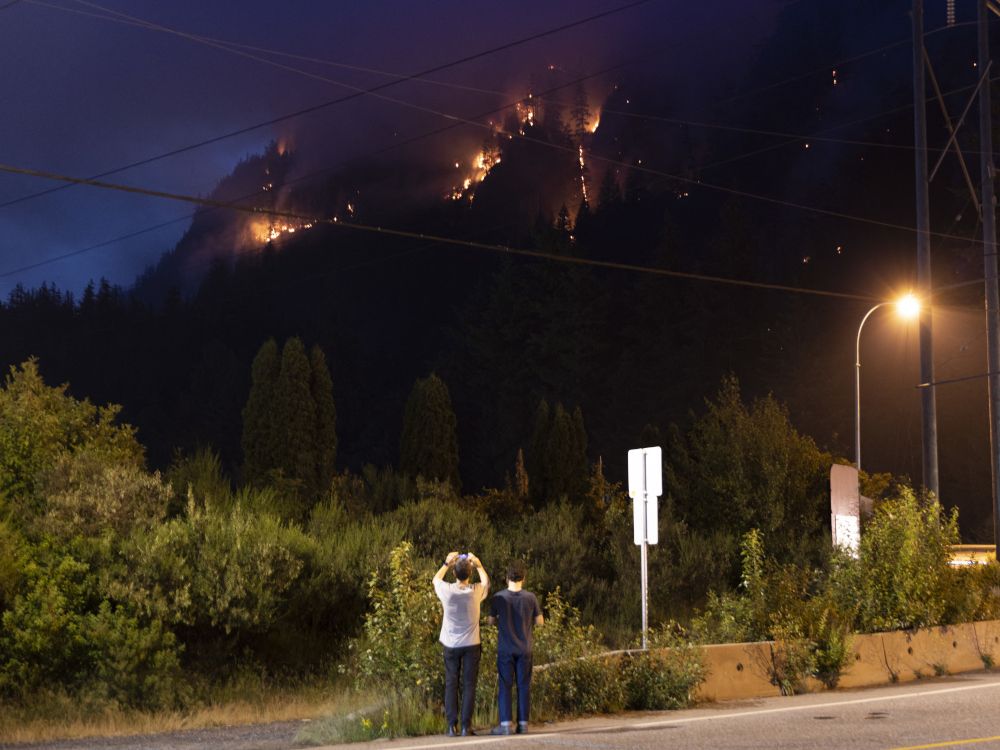
All of which brings us to this year, and the fires now burning throughout western Canada. They began in Manitoba and Saskatchewan (both of which have declared states of emergencies), but have grown to include Alberta, British Columbia and northern Ontario. Just like two years ago, tens of thousands of people have been evacuated and air quality alerts are becoming commonplace once again. And summer hasn’t even officially begun yet.
As with so many issues, Canada talks the talk on climate change, but as our lack of action on fighting wildfires demonstrates, we do not walk the walk. If this country truly took the issue of carbon reduction seriously, then the federal government would not only look at the oil and gas industry as a source of emissions, but also the country’s massive wildfire problem.
This is the third year in a row that such fires have blanketed significant parts of the country. With summers growing warmer and precipitation patterns becoming increasingly unpredictable, the federal government has so far given no indication that it sees itself as part of the solution. Rather, it seems to have thrown up its hands and settled on a strategy based on inertia and hoping the problem magically disappears.
That is obviously unacceptable. Ottawa needs to take serious and urgent action. It needs to establish a national office dedicated to fighting wildfires and purchase additional resources immediately. It needs to make wildfire containment and the efforts to combat such fires a national priority. In effect, it needs to demonstrate that Canada takes this issue seriously, and that we will not stand by and watch as huge chunks of this country literally go up in flames.
National Post
Andrew Richter is an associate professor of political science at the University of Windsor.

