



Twelve years ago, on Jan. 23, 2013, British Prime Minister David Cameron committed to holding a referendum on the United Kingdom’s membership in the European Union. “That is why I am in favour of a referendum, Cameron
. I believe in confronting this issue — shaping it, leading the debate. Not simply hoping a difficult situation will go away.”
Considering the simmering discontent towards the E.U. amongst Britishers, this was a very risky bet, and Cameron knew it. Some of his advisers were opposed. But, with polls showing a majority in favour of remaining in the Union, the Prime Minister was confident that he could win such a fight. Three years later, a referendum was indeed held… and against all odds, Brexit won. The U.K. has been suffering the economic consequences of that choice since.
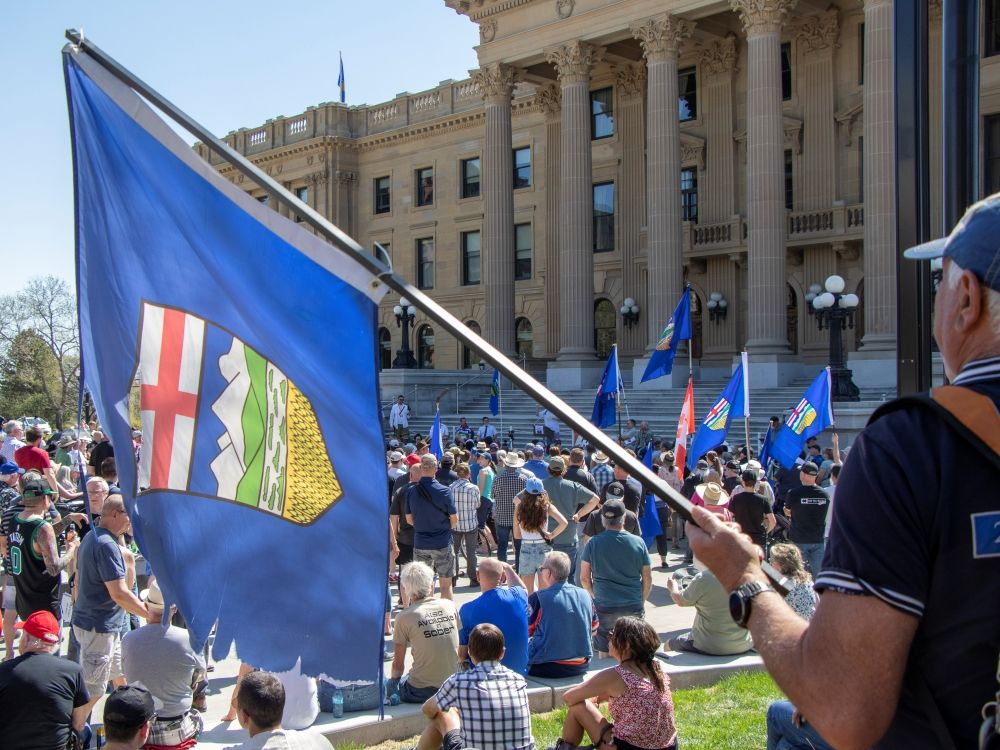
Alberta Premier Danielle Smith is following in Mr. Cameron’s footsteps, ignoring the fact that once the referendum genie is out of the bottle, no one can control it. We know that not only from Brexit, but also from the 1992 Charlottetown Accord referendum and from Quebec’s 1995 consultation on separation: once the campaign is launched, it takes a life of its own. Even the most talented politicians and the most rational arguments become nearly powerless in stopping the tsunami of public opinion.
I am not an expert on Alberta politics, but I do have sympathy for some of Albertans’ grievances. When I was chief editorial writer at La Presse, I took a strong stand in favour of the Energy East pipeline project. While I sat in the Senate, I opposed bill C-48 that imposed a tanker moratorium on the north coast of British Columbia.
I have lived through three referendums in Quebec. I know how unpredictable and divisive they can be. Even within families, the scars of those political fights take long to heal.
Premier Smith not only said that she would hold a referendum if a sufficient number of Albertans demanded one; her government recently
bill 54, a piece of legislation that will make it easier for separatists to mobilize and reach the required number of names on a referendum petition. The Premier appears to think, like David Cameron 12 years ago, that not responding in that way to the current anger of Albertans towards Ottawa would worsen the situation, including within her own party’s ranks. This looks eerily similar to Mr. Cameron’s motives.
In 1995, Jean Chrétien’s team decided that, considering favorable polling numbers, it was best that the Prime Minister not get involved in the referendum campaign. Then, three weeks before the vote, Premier Jacques Parizeau announced that the very popular Lucien Bouchard would be Quebec’s chief negotiator with the rest of Canada. Suddenly, the political winds turned, and the separatists took the lead in the polls. In the end, as we all know, Canada narrowly avoided Quebec’s separation.
Quebec separatist leaders have
the separation talk out of the Prairies with enthusiasm. Why wouldn’t they? They wish for Canada to be weak. A Canada that starts dislocating would be a huge boost to their chances of winning a third referendum on Quebec’s separation.
Notwithstanding its difficulties, Canada remains an extraordinary nation, a land of opportunity, tolerance and peace. Because it is such a large and diverse country, regional frustrations are unavoidable. Danielle Smith is right that those cannot be ignored. It is normal and fair that provincial leaders put pressure on Ottawa to address such problems.
However, using the threat of separation, as the Premier is presently doing, is unacceptable. One should not be playing games with our nation’s future. If, as she has stated, Smith is opposed to Alberta’s independence, she should be fighting it day in and day out, not fanning the embers.
André Pratte is a communications consultant and doctoral student in history at the Université du Québec à Montréal.
National Post

