



U.S. President Donald Trump said
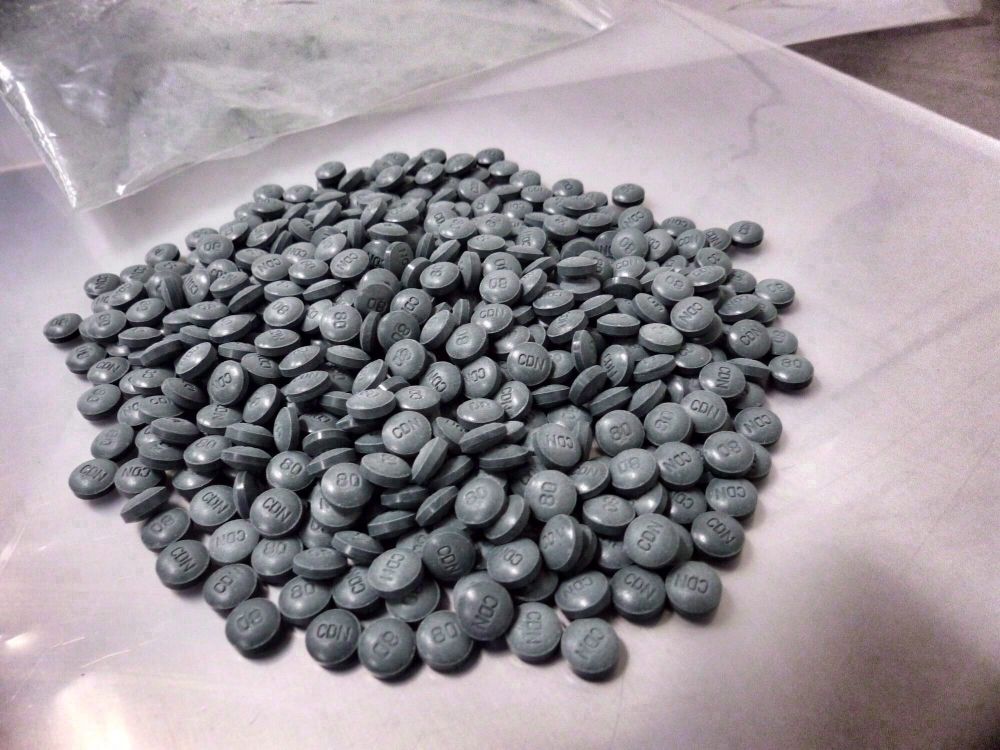
was his reason for slapping a 35 per cent tariff on our country, to take effect on Aug. 1. Whether that was a fair excuse or not, Canada is indeed doing an abysmal job of dealing with crime, including drug trafficking.
In June, a judge on the Supreme Court of British Columbia
a stay of proceedings in the case of Margaret Rose Conrad, who was tried for illegally possessing a conducted energy weapon (possibly a Taser), along with
for the purpose of trafficking. She racked up eight charges in total.
Conrad’s trial — which never began — was scheduled to end in August 2025, 33 months after she had been charged. This would have violated her constitutional right to a trial within 30 months (for cases heard in superior courts), which was set by the 2016 Supreme Court of Canada ruling of
.
In staying Conrad’s charges, Justice Douglas Thompson
that none of the delays that caused the presumptive timeline overrun could be properly blamed on the accused. One of these delays, he explained, was “rooted in the ongoing failure to make proper and timely disclosure of important evidence. It is unnecessary to say more. The analysis does not require a fault-finding as between police and Crown.”
The public, then, is left wondering what — or who — can be blamed for this mess. Police? Crown prosecutors? The judiciary or government? All of the above? And it is not an uncommon mess, either:
, our
by delays that have resulted in hundreds,
, of dropped criminal cases. This includes cases of murder, rape, assault, drug trafficking and drunk driving.
In November, the Supreme Court of Canada will hear an appeal of a case
, which
to how courts calculate trial delays (the Attorney General of Ontario will argue for an approach that would be more favourable to Crown prosecutors, according to a court filing).
Ideally, our justice system would move quickly and effectively enough that courts wouldn’t have to wrestle with questions about rights-violating delays. But Canada has had its elbows so far down that we must choose the ideal balance between violating the Charter rights of the accused and allowing likely (sometimes known) murderers, rapists and drug traffickers to get off, scot-free — all because our justice system moves at the pace of a sedated sloth.
Rather than fixing the problem, we instead have to decide which harmful societal effects we can best tolerate — whether they involve the violation of individual rights, or the collective harm suffered by society when criminals aren’t dealt justice. It’s pathetic.
If you had to pick a country to traffic drugs in, well, Canada might be looking pretty damn sweet right about now. This is not to suggest that we should behave like other countries, such as China — where
for drug-related charges in 2025 — but that we should, at the very least, have a justice system with the capacity to do its job and administer justice.
We should all hope that Trump is blissfully unaware of the abysmal state of our court system, lest he gain more fodder to fuel his efforts to dominate Prime Minister Mark Carney.
Recall that Carney promised Trump that he would crack down on fentanyl traffickers. His government’s
Bill C-2, the Strong Borders Act
, currently in first reading,
amendments to the Criminal Code and Controlled Drugs and Substances Act, among other laws,
combat transnational organized crime and illegal fentanyl.
Physician, heal thyself. The Strong Borders Act, and any of Carney’s promises to fight transnational fentanyl trafficking, will be wholly ineffective because we cannot even prosecute all of our domestic drug traffickers without being forced to stay a portion of their charges due to delay.
Canada can increase police powers, enable the health minister to regulate precursor chemicals to fentanyl and allow Canada Post to give easy police access to search mail —
all proposals included in Bill C-2
— but none of these actions will matter if we do not fix our terribly backlogged justice system.
We don’t need to fix this problem merely to appease a mercurial Trump, who could, and likely will, concoct innumerable grievances to justify future tariffs. No, we need to fix this problem because it is unbecoming of an advanced nation like Canada.
Are we a G7 country, or are we merely cosplaying as one? Our elbows-down justice system suggests we are becoming the latter.
National Post