



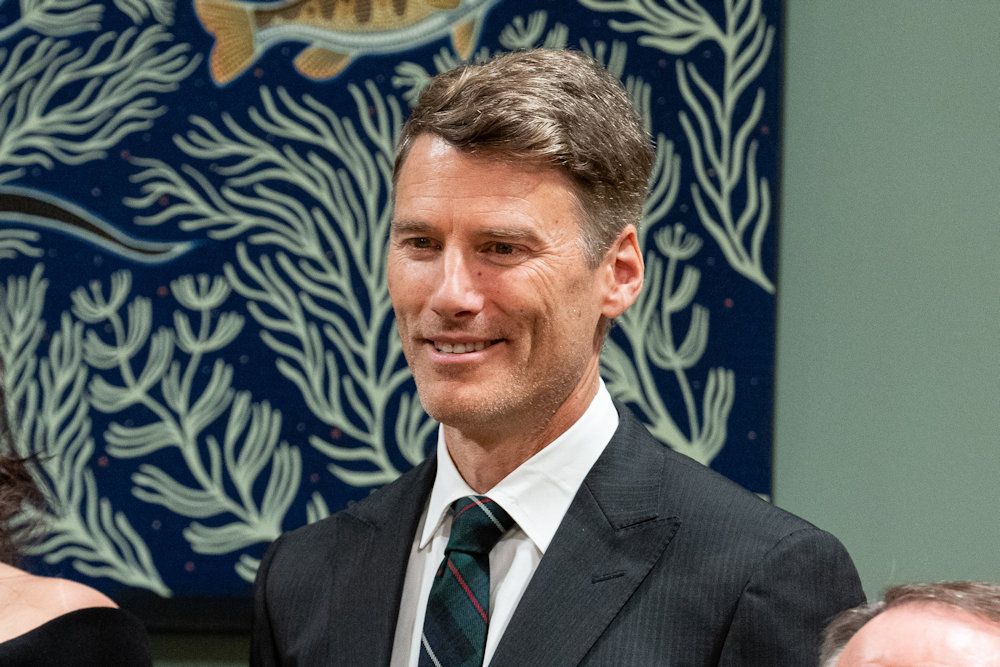
Canada’s new housing minister Gregor Robertson says that the prices of existing homes
, lest this negatively impact current homeowners, and that affordable housing should be provided through massive government subsidies instead. His position is economically illiterate and raises concerns about his fitness to lead this portfolio.
Anyone with a cursory understanding of economics knows that, in a regular market, the price of any given commodity will be roughly the same for both the buyer and seller. If you want people to have the option of purchasing $3 coffee, for example, you need cafes that are willing to sell coffee for $3 as well. While these dynamics are sometimes distorted — i.e. through taxes and subsidies — this is, for the most part, how transactions work.
So if you want the Canadian housing market to become more affordable for buyers, it naturally follows that sellers will have to accept lower prices, which, for existing homeowners, means that the value of their properties must decline. This is an obvious point that is well-understood
throughout the political spectrum
.
Yet, on his first day on the job, upon being asked whether prices need to go down, Robertson
and advocated for delivering more government-subsidized “affordable housing” instead. He later
that his opposition is rooted in the fact that, for most Canadians, their current home “is their most valuable asset.”
His comments betrayed a profound misunderstanding of the current housing market and its impact on the broader economy.
Canada is in the throes of an unprecedented housing bubble that has been stoked by two decades of bad government policies. Prices
since the early 2000s, after adjusting for inflation, thanks to
the construction of new homes and guarantees persistent market shortages. Those who bought early — meaning older Canadians — made huge sums of money at the expense of younger Canadians and newcomers, who will be stuck purchasing these overvalued assets.
It is now extraordinarily difficult for Canadians to buy their first property in major markets without
parental aid or an inheritance
. In cities like Toronto and Vancouver, it takes
to save for the minimum downpayment of an average home, even if you make $100,000 a year and save 10 per cent of your gross income. The problem is so dire that some have characterized Canada as an
where homeownership is predominantly a hereditary privilege.
Young Canadians are aware of this grim reality: according to a
by East Home Renovation, in Ontario and British Columbia fewer than 15 per cent of non-homeowners aged 18 to 44 believe they will ever own a home.
This status quo is ossifying the economy. High housing costs have made Canadian employers less competitive: they
skilled workers to high-cost cities, and must pay low-skilled workers
to compensate for unreasonable rents. Overinvestment into real estate is also
exacerbating the national productivity slump
: while other countries plow their capital into research and development, we park our money in condos.
There is clearly an urgent moral and economic impetus for lower housing prices. Simply keeping them flat and letting wages “catch up” will not be enough, and would, according to
by housing expert Mike Moffat, only restore affordability to key markets after 15 to 50 years.
The housing minister’s refusal to accept these truths suggests that the Liberals either do not understand housing economics, or that they prioritize the interests of existing homeowners, who comprise an enormous voting block, over the well-being of the country as a whole.
Robertson’s proposed solution — mass construction of government-subsidized “affordable housing” — is not credible. While such homes can help a sliver of disadvantaged Canadians get on their feet, they are prohibitively expensive to build and cannot be provided at scale.
To illustrate: in 2020 the federal Rapid Housing Initiative
to support the construction of only 15,896 new units over four years — or roughly 4,000 units per year at a cost of around $240,000 per unit. In contrast, Canada’s private market launched
units in 2024.
Prime Minister Mark Carney has promised to
, but if only half of this expanded supply (125,000 units) consists of subsidized affordable housing, the costs to the federal government would be around $30 billion per year, bloating the annual operating deficit by 50 per cent.
There’s no way Canada can afford that. Even if it could, it is unclear why the country should take on so much debt-fuelled spending — which younger Canadians will have to eventually pay off — simply to protect the inflated equity of existing homeowners. Robertson’s solution would effectively constitute yet another intergenerational wealth transfer from younger generations to their better-off elders.
Worse yet, it would severely restrict housing options. There are around
in Canada, and approximately
of housing purchases are of existing homes. By intentionally keeping the overall market unaffordable, Robertson would lock new buyers out of these homes and force them to buy from a relatively small pool of subsidized alternatives.
When asked about housing prices last week, Carney said,
that this is “not a yes-no question” and the issue “relates to different time horizons.” He could’ve just given the middle finger to younger Canadians instead. At least that would’ve been more honest.
National Post